Monday, 28 May 2018

Last of Spring & Owls in the City

May was extremely busy for me and I literally had no time for birding, at all! I enjoyed the last of my free weekdays at the beginning of the month, including a nice productive morning at Tai Po Kau with two friends from the US, goodies includes a rather shy but very loud Speckled Piculet which gave us a short glimpse but drummed for over ten minutes, a very handsome Crested Serpent Eagle perched at close range, distant views of a singing Great Barbet and plenty of views of singing Hainan Blue Flycatchers. We also had a singing Hodgson's Hawk Cuckoo which didn't want to show itself and a Lesser Cuckoo which gave a brief flight view.

Plain Flowerpeckers were singing loudly, one of which gave good views. They are so tiny and quick that even at close range they are tough targets to photograph.

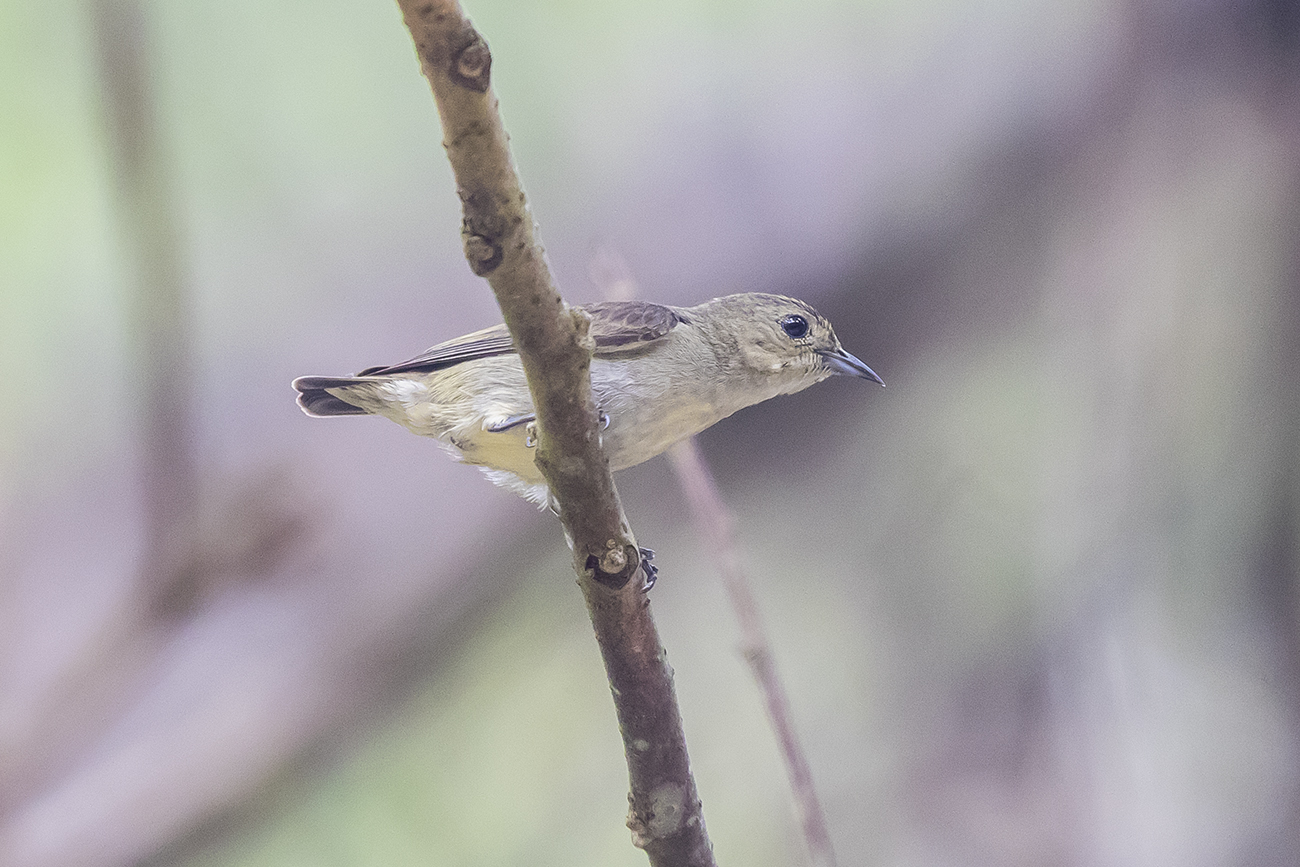
Plain Flowerpecker - plain but charismatic as always

Black-throated Laughingthrush gave fairly good views, as well as several other resident species. Two species of Minivets were seen, and a very photogenic Blue Whistling Thrush to end the morning.

Black-throated Laughingthrush

Grey-chinned Minivet - male

Blue Whistling Thrush

Earlier last month, a Collared Scops Owl nest was found at an urban park in Kowloon. It was actually first exposed when SPCA decided to make a video of their "rescue" of a baby owl which fell out of the tree hole. Naturally, it didn't take very long for people to figure out where the location was, and soon a huge crowd of photographers congregated at the park. It got slightly out of hand when people stayed throughout the night, using high intensity lighting to light up the nest for photographs...It wasn't until AFCD put someone on duty there that people stopped using artificial lighting.

I visited the pair just as the owlets started fledging, one of the adult was perched nearby, while two chicks were still visible in the tree hole. The authority had fenced off the area below the nest so no one get too close to the nest. The park itself was pretty noisy as it was without the birders and photographers, as residents with loud speakers play music as they danced during early morning. I don't think it was so much a problem to view or photograph the owls during the day, it's a shame that some people had to act selfishly and shine bright lights on the nest throughout the night, this certainly disturbs the owls and is not ethical.

It's also a shame that this perfect opportunity of public education on these wonderful birds was overshadowed by the incidents with the photographers. I saw parents with their children and elderly people casually strolling the park, it could have been such a good opportunity for some public education work to be done on how to handle with issues of nesting birds and how we should respect nature in our city. These owls could have been perfect ambassadors for such a task. I also think the LCSD (Leisure and Cultural Services Department) who is in charge of the park could have done a little more, simply by locking up the park at night and reopening it during the day for people to visit. Anyway, I truly hope these wonderful owls will grow up and prosper.


Collared Scops Owl - adult

Collared Scops Owl - owlets in the nest hole

I should be able to resume with some birding in the coming months, although it's a shame that the best of spring had already gone. I strangely dry spring this year, the draught certainly is not good for wildlife, especially amphibians...

Monday, 30 April 2018

End of April

You know the migrating season is coming near the end when you start seeing Grey-streaked Flycatchers, they are often the latest to arrive amongst the migrating flycatchers. They filled the hills of Ho Man Tin last week, I saw up to 3 at one time.


Grey-streaked Flycatcher

Hainan Blue Flycatchers had been seen regularly at Ho Man Tin as well, I finally caught up with the male there, although it was much shyer than the female I saw the week before.

Hainan Blue Flycatcher - male

I saw my 4th and 5th Narcissus Flycatchers on the 26th. A 1st year male was extremely well behaved and not at all shy which resulted in some pretty good photos. The female was also very cooperative and came down to eye-levels a few times, interestingly both birds had fairly pale legs for a Narcissus.


Narcissus Flycatcher - 1st year male


Narcissus Flycatche - female

Many first brood of birds had fledged, including up to 3 young Barn Swallows at Long Valley, they were still being fed by their parents, although they were perfectly capable of flying around already.

Barn Swallow

On the 30th I birded with Swedish birder Mikael Käll, his main target was the Chinese Grassbird and Russet Bush Warbler. We tried hard for the Grassbird but came up empty handed at both Tai Mo Shan and Robin's Nest. We had awesome views of two very friendly Russet Bush Warblers, the second one was especially showy and came to within 2m from us. Other good birds that day includes a Hodgson's Hawk Cuckoo in full view at Robin's Nest plus a flock of up to 13 Blue-tailed Bee-eaters which flew past the summit of Robin's Nest, shame I wasn't carrying my camera at the time! But certainly a view to remember!

Russet Bush Warbler - not shy at all...

Hodgson's Hawk Cuckoo - probably one of the best views I've had in a long time

Other than birds, Hoiling and I been out at night around Tai Po Kau on two occasions. Brown Wood Owls were actively calling, while we spotted a Collared Scops Owl just along the red walk, although it flew off before I could get my camera in focus. Slaty-legged Crakes were also calling around the hills. Other interesting animals we encountered includes a Chinese Water Skink which was extremely cooperative and even allowed me to place onto my palm.


Chinese Water Skink - a friendly little guy...

We saw very few snakes unfortunately, only a cute and docile White-spotted Slug Snake was found along the main road.


White-spotted Slug Snake

Frogs were also very active now, Gunther's Frogs were being very loud at the little pond. We also spotted Brown Wood Frogs and Green Cascade Frogs. Although I wonder if the lack of rain had affected some of the frogs breeding? Especially those that requires more seasonal streams or ponds to breed in.

Gunther's Frog

Brown Wood Frog

Green Cascade Frog

I know peak migration season had past, but I still have high hopes for May...Better keep an optimistic attitude!

Thursday, 26 April 2018

Waders Scanner

Upon hearing news of a Little Curlew at Mai Po from Wednesday to Friday, I headed over at my earliest convenience that was Saturday morning. It was a classic twitch where I was a day late...As I had work later in the afternoon, I only had time at scrape 16/17. It was so unfortunate that a friend of mine gave me news a little bit later that they had a Spoon-billed Sandpiper out at the mudflat. I was totally gutted...I did try to scan for the Spoonie when the waders flew into the scrape, but simply could not locate one amongst the huge flocks of Red-necked Stints...There were also lots of other waders coming into roost, including lots of Sharp-tailed Sandpipers and Curlew Sandpipers.

Flocks of Red-necked Stints...no Spoon-billed Sandpiper...

Sharp-tailed Sandpiper

The long staying Greater White-fronted Goose strolled past the front of my hide, it was the only one left overwintering here at Mai Po, it looks to be a pretty young bird and I think it's probably very lost without any older Geese to guide it through it's supposed northward journey. It's fate remains uncertain!

Greater White-fronted Goose

Some other birders tried for the Spoonie on Sunday, but no one spotted it again. I decided to give it another try on Monday. As I walked towards the gate to the boardwalks, I was greeted by a few Chinese Penduline Tits at the reed bed. Striated Herons had also returned, one perched long enough for me to grab a record photo.

Chinese Penduline Tit

Striated Heron

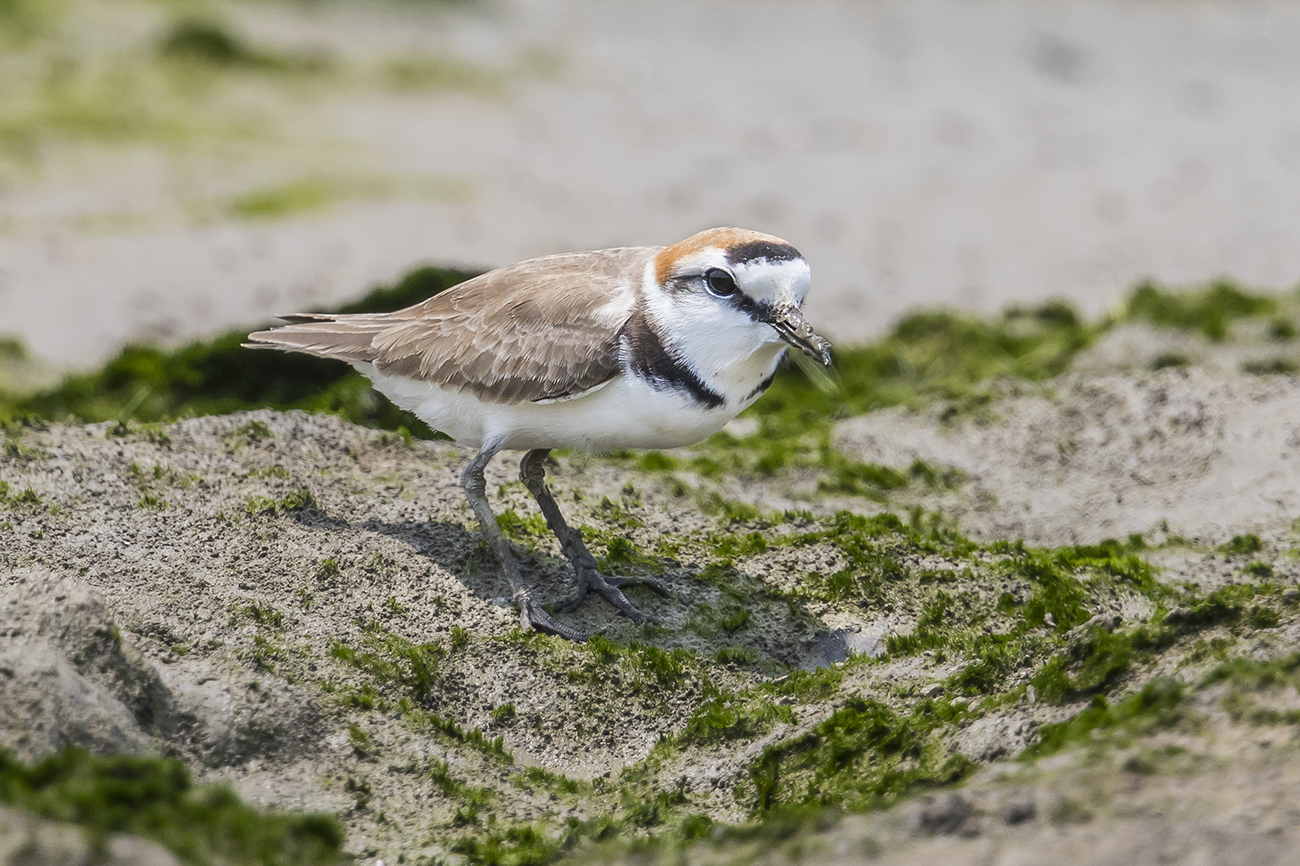
I arrived at the new hide at around 9:30am, there were a lot more people than I expected for a Monday...obviously everyone wanted to glimpse the rare Spoon-billed Sandpiper...I settled down and started scanning through the mudflat with my scope...A few Kentish Plovers were very close to the hide, both males and females in breeding plumage.

Kentish Plover - male

Kentish Plover - female

There were a few Grey-tailed Tattlers around, although not as many as I expected. Flocks of Long-toed Stints walked along the front of the hide as well.

Grey-tailed Tattler

Long-toed Stint

I scanned the flock of Red-necked Stints in the distance, sure enough saw a very good looking Little Stint in breeding plumage. As Little Stints moult into their very bright orange plumage, they become very obvious.

Little Stint & Sanderling

As the tide came in higher, other species started arriving. A few good looking Ruddy Turnstones strolled along the front of the hide, feeding on small crabs. While a few Sanderlings also gave good views at close range, they are very pale compare with other waders present, making them quite conspicuous.

Ruddy Turnstone

Sanderling

Both Mongolian Plovers and Greater Sand Plovers ventured to the front of the hide, here you can clearly see the difference in their structure and bill shape, Mongolian having a very stubby and short bill, while Greater Sand Plover have a much longer and stronger bill.

Mongolian Plover

Greater Sand Plover

I of course continuously scanned the large flocks of Red-necked Stints, hoping to find a Spoonie amongst them...All I got were Red-necked Stints with muddy bills...

Red-necked Stint

I spotted yet another Little Stint amongst the flock close to the bird hide in amongst the Red-necked Stints. This one was not as brightly coloured as the other one, but still a very handsome individual, especially when seen so close!


Little Stint

There were still plenty of Curlew Sandpipers around, I was able to get a few closeups of the few that ventured to the front of the hide. A single Red-necked Phalarope also made an appearance. As the tide came in higher and covered up all the mud, I knew my chances of finding a Spoon-billed Sandpiper was pretty much gone, so I decided to move to the middle hide to look for other waders.

Curlew Sandpiper

Red-necked Phalarope

Waders as the tide came in

I was just in time as the tide was still coming in at the middle hide, there I spotted a few very good looking Red Knots. This is another near threatened species that seems to be in decline in recent years, mainly due to habitat loss along the East Asian Australasian Flyway.


Red Knot

Another similar species that is facing the same problem is the Great Knot, now an endangered species. While another endangered species, a few Far Eastern Curlews roosted nearby, I counted a total of 8 individuals.

Great Knot

Far Eastern Curlew

I spotted 3 Nordmann's Greenshanks roosting amongst the Common Redshanks and Marsh Sandpipers. It is yet another endangered species for the day, with an estimation of no more than 1,300 individuals remaining in the wild, we are fortunate to still get them in small numbers in Hong Kong and can often pick them out with relative ease.


Nordmann's Greenshank

A single Swinhoe's Egret was also present, although this time it was much further away. There were still a lot of Black-faced Spoonbills around, I counted up to 30 birds. While two Eurasian Spoonbills had stayed on.

Swinhoe's Egret

Black-faced Spoonbill

Eurasian Spoonbill

I scanned scrape 16/17 one last time on my way out, most of the smaller waders were roosting and had their head tucked under their wings...not useful when you are trying to scan for Spoon-billed Sandpipers, I was left feeling quite defeated, but that's just birding sometimes, there are birds you won't be able to find no matter how hard you try.

Flocks of waders roosting at scrape 16/17

The day ended on a happier note, where I found quite a few Greater Painted Snipes strolling about in the open. It is breeding season for them, so they are currently very active. I won't be surprise if we see the males followed by a few chicks in a month or two.


Greater Painted Snipe - female