Showing posts with label Red-necked Stint. Show all posts

Thursday, 26 April 2018

Waders Scanner

Upon hearing news of a Little Curlew at Mai Po from Wednesday to Friday, I headed over at my earliest convenience that was Saturday morning. It was a classic twitch where I was a day late...As I had work later in the afternoon, I only had time at scrape 16/17. It was so unfortunate that a friend of mine gave me news a little bit later that they had a Spoon-billed Sandpiper out at the mudflat. I was totally gutted...I did try to scan for the Spoonie when the waders flew into the scrape, but simply could not locate one amongst the huge flocks of Red-necked Stints...There were also lots of other waders coming into roost, including lots of Sharp-tailed Sandpipers and Curlew Sandpipers.

Flocks of Red-necked Stints...no Spoon-billed Sandpiper...

Sharp-tailed Sandpiper

The long staying Greater White-fronted Goose strolled past the front of my hide, it was the only one left overwintering here at Mai Po, it looks to be a pretty young bird and I think it's probably very lost without any older Geese to guide it through it's supposed northward journey. It's fate remains uncertain!

Greater White-fronted Goose

Some other birders tried for the Spoonie on Sunday, but no one spotted it again. I decided to give it another try on Monday. As I walked towards the gate to the boardwalks, I was greeted by a few Chinese Penduline Tits at the reed bed. Striated Herons had also returned, one perched long enough for me to grab a record photo.

Chinese Penduline Tit

Striated Heron

I arrived at the new hide at around 9:30am, there were a lot more people than I expected for a Monday...obviously everyone wanted to glimpse the rare Spoon-billed Sandpiper...I settled down and started scanning through the mudflat with my scope...A few Kentish Plovers were very close to the hide, both males and females in breeding plumage.
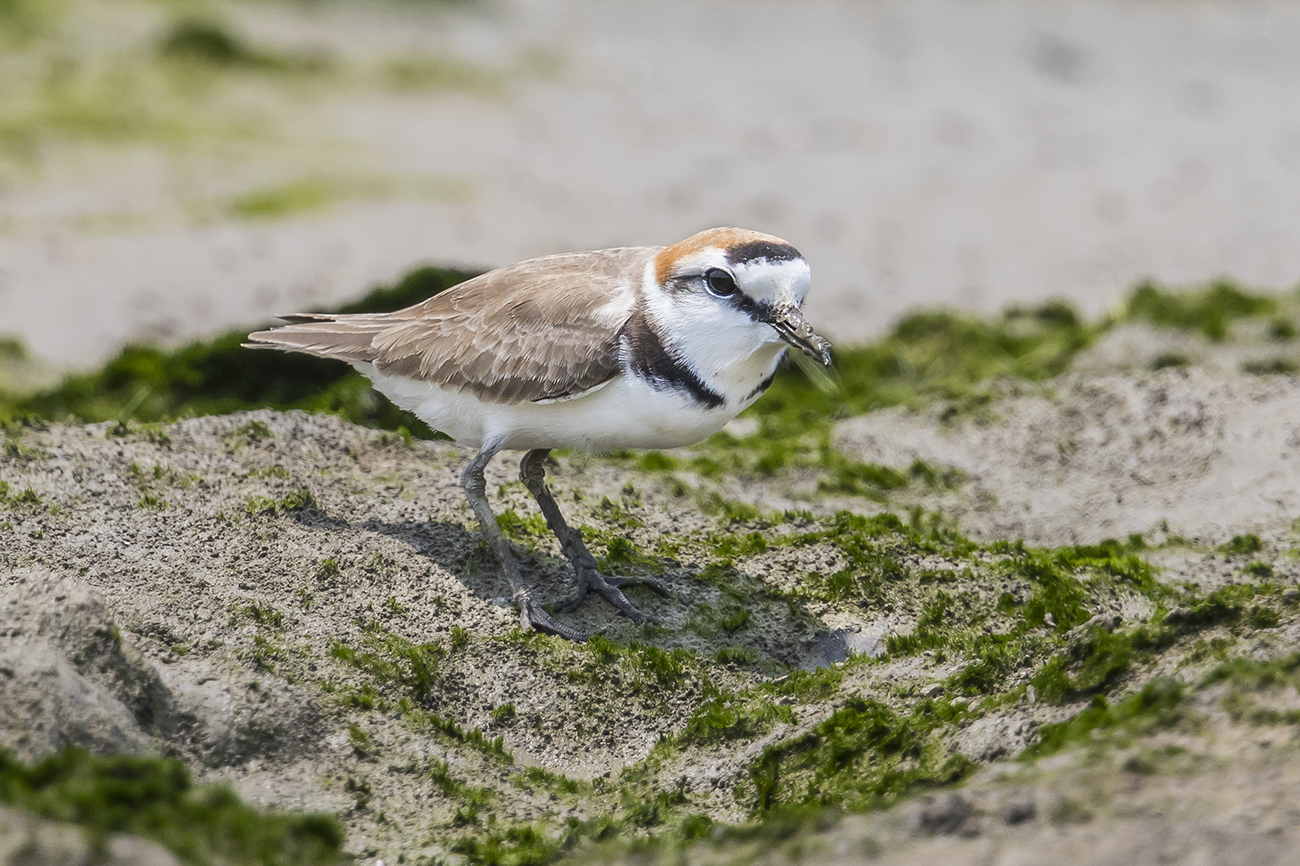
Kentish Plover - male

Kentish Plover - female

There were a few Grey-tailed Tattlers around, although not as many as I expected. Flocks of Long-toed Stints walked along the front of the hide as well.

Grey-tailed Tattler

Long-toed Stint

I scanned the flock of Red-necked Stints in the distance, sure enough saw a very good looking Little Stint in breeding plumage. As Little Stints moult into their very bright orange plumage, they become very obvious.

Little Stint & Sanderling

As the tide came in higher, other species started arriving. A few good looking Ruddy Turnstones strolled along the front of the hide, feeding on small crabs. While a few Sanderlings also gave good views at close range, they are very pale compare with other waders present, making them quite conspicuous.

Ruddy Turnstone

Sanderling

Both Mongolian Plovers and Greater Sand Plovers ventured to the front of the hide, here you can clearly see the difference in their structure and bill shape, Mongolian having a very stubby and short bill, while Greater Sand Plover have a much longer and stronger bill.

Mongolian Plover

Greater Sand Plover

I of course continuously scanned the large flocks of Red-necked Stints, hoping to find a Spoonie amongst them...All I got were Red-necked Stints with muddy bills...

Red-necked Stint

I spotted yet another Little Stint amongst the flock close to the bird hide in amongst the Red-necked Stints. This one was not as brightly coloured as the other one, but still a very handsome individual, especially when seen so close!


Little Stint

There were still plenty of Curlew Sandpipers around, I was able to get a few closeups of the few that ventured to the front of the hide. A single Red-necked Phalarope also made an appearance. As the tide came in higher and covered up all the mud, I knew my chances of finding a Spoon-billed Sandpiper was pretty much gone, so I decided to move to the middle hide to look for other waders.

Curlew Sandpiper

Red-necked Phalarope

Waders as the tide came in

I was just in time as the tide was still coming in at the middle hide, there I spotted a few very good looking Red Knots. This is another near threatened species that seems to be in decline in recent years, mainly due to habitat loss along the East Asian Australasian Flyway.


Red Knot

Another similar species that is facing the same problem is the Great Knot, now an endangered species. While another endangered species, a few Far Eastern Curlews roosted nearby, I counted a total of 8 individuals.

Great Knot

Far Eastern Curlew

I spotted 3 Nordmann's Greenshanks roosting amongst the Common Redshanks and Marsh Sandpipers. It is yet another endangered species for the day, with an estimation of no more than 1,300 individuals remaining in the wild, we are fortunate to still get them in small numbers in Hong Kong and can often pick them out with relative ease.


Nordmann's Greenshank

A single Swinhoe's Egret was also present, although this time it was much further away. There were still a lot of Black-faced Spoonbills around, I counted up to 30 birds. While two Eurasian Spoonbills had stayed on.

Swinhoe's Egret

Black-faced Spoonbill

Eurasian Spoonbill

I scanned scrape 16/17 one last time on my way out, most of the smaller waders were roosting and had their head tucked under their wings...not useful when you are trying to scan for Spoon-billed Sandpipers, I was left feeling quite defeated, but that's just birding sometimes, there are birds you won't be able to find no matter how hard you try.

Flocks of waders roosting at scrape 16/17

The day ended on a happier note, where I found quite a few Greater Painted Snipes strolling about in the open. It is breeding season for them, so they are currently very active. I won't be surprise if we see the males followed by a few chicks in a month or two.


Greater Painted Snipe - female

Wednesday, 4 April 2018

Fun With Waders

Flocks of waders, up to 6 species in this photo.

Visited Mai Po with Hoiling and my parents during the easter break. April is one of the best time of the year to look for migrating waders, you may easily see up to 30 species out at Deep Bay in a single day. We started fairly early, we chose to head out to the boardwalks straight away. I managed to spot an Asian Barred Owlet on the way, they have been breeding in Mai Po regularly and can often be seen perched by the access road early morning.

Asian Barred Owlet

We got to the new hide at around 9am, flocks of small waders gathered around the algae covered mudflats, such as Curlew Sandpipers, many were moulting into their beautiful breeding plumage. Red-necked Stints were also in good numbers.


Curlew Sandpiper

Red-necked Stint with Curlew Sandpiper

Large congregation of Red-necked Stints

More Red-necked Stints flew in as the tide rose higher, many individuals were moulting into breeding plumage with reddish necks and throat. This is also a good time of the year for Little Stints, so I scanned for any possible birds...I saw one bird that stood out from the rest, much brighter looking. On closer inspection orange edged tertiaries and greater coverts were quite prominent. Structurally it was also longer necked and not as hunched back as most Red-necked Stints.


Red-necked Stint - assuming breeding plumage


Little Stint - assuming breeding plumage

Things got more complicated when I saw this bird, hints of breeding plumage is showing on tertiaries and upper scapulars, but not much hints plumage wise...It had a very clean throat and greyish cheeks. Tibia looks long and knee not as thick as expect on Red-necked. The bill was not particularly thin or downward curved, but it is known that bill shaped can be overlapped between the two species. It does look longer necked and rather dainty with a more rounded shoulder...So, is it a Little? I think so, although I probably won't be quite confident enough to call it straight away in the field.

Little Stint - a rather difficult individual...

Things can get really complicated if you have pale throated Red-necked Stints with only a small hint of breeding plumage coming through on the tertiaries and scapulars...such as this individual below. Although the "hard" shoulder is quite apparent in this individual, it is also quite thick necked, the plumage especially scapulars and tertiaries are scarily similar, the most obvious difference is the reddish tones on it's cheeks and neck which the other bird lacks.

Red-necked Stint - one of those paler throats individuals

Another feature that seems to be reliable although not particularly practical infield will be the legs projection in flight. Little Stints have longer legs and it shows during flight, as their toes often extends beyond their tail. This subtle difference is likely too difficult for the naked eye to pick out due to their speedy flight, so a photo would definitely help in this situation.

Little Stint in flight (bottom right)

Little Stint (middle bird)

Back to some easier waders...A few Mongolian Plovers were around but none of which were willing to come close to the hide. Tereks were seen in smaller numbers while Common Redshanks were abundant. Eurasian Curlews were as prominent as always, towering over all the other waders.

Mongolian Plover - breeding plumage

Terek Sandpiper & Common Redshank

Eurasian Curlew

Many large gulls were still present, mostly Heuglin's Gulls, but there were a few more obvious Mongolians in the flock, although I spent little time scanning through them as the waders kept me busy! a macronyx Eastern Yellow Wagtails strolled around the front of the hide allowing decent views.

Heuglin's Gull

Eastern Yellow Wagtail - race macronyx

Once the tide got up to 1.9m we retreated back to the middle hide, here we were greeted by mainly Black-tailed Godwits, within the Godwits we scanned for other species, I was able to locate two Nordmann's Greenshanks within them, their black and white scapulars were very visible. This endangered species has a very small global population, likely no more then 1,300 birds in the wild.

Nordmann's Greenshank - the only two birds we saw

A few Asiatic Dowitchers were also present, their straight black bills were easy to pick out from the Godwits. A few Bar-tailed Godwits in their lovely brick red breeding plumage were also present.

Asiatic Dowitcher

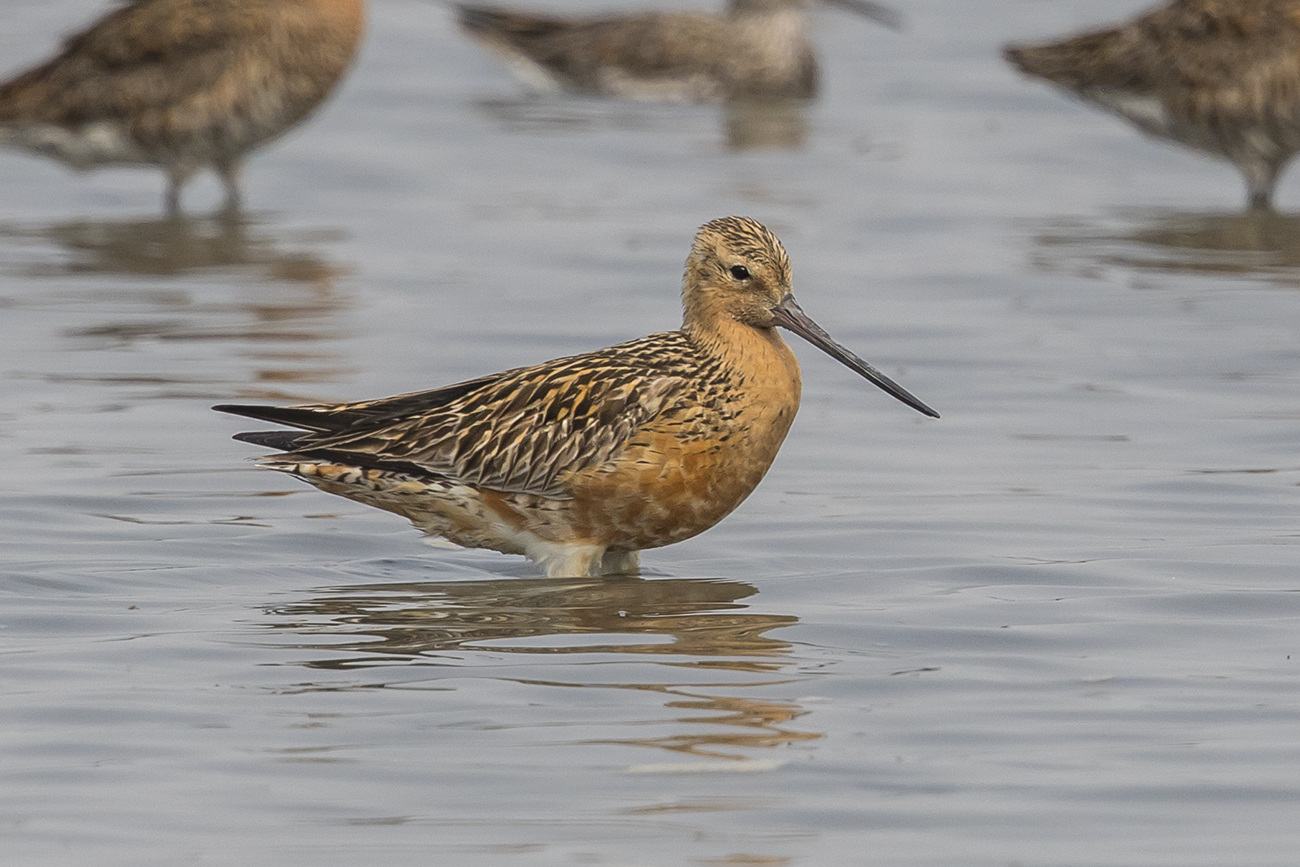
Bar-tailed Godwit - lovely brick red

A few Great Knots swam quite close to the hide as the tide rose higher. This medium sized wader is now listed as endangered like many other waders seen on the day, they are threatened by large areas of habitat destruction, reclamation along their migration routes and trapping.

Great Knot in comparison with Bar-tailed Godwit

Great Knots with Black-tailed Godwits

Great Knot with Marsh Sandpiper and Common Redshank

Here's a Great Knot next to a Marsh Sandpiper for size comparison, they are very chunky looking birds with powerful muscles, no wonder they are capable migrating long distances from Siberia all the way to Australia.

Great Knot with Marsh Sandpiper

Marsh Sandpiper

Another endangered species threatened by habitat loss; the Far Eastern Curlew, only one was spotted, it's buffish thighs and vents are often a good hint when not seen in flight.

Far Eastern Curlew

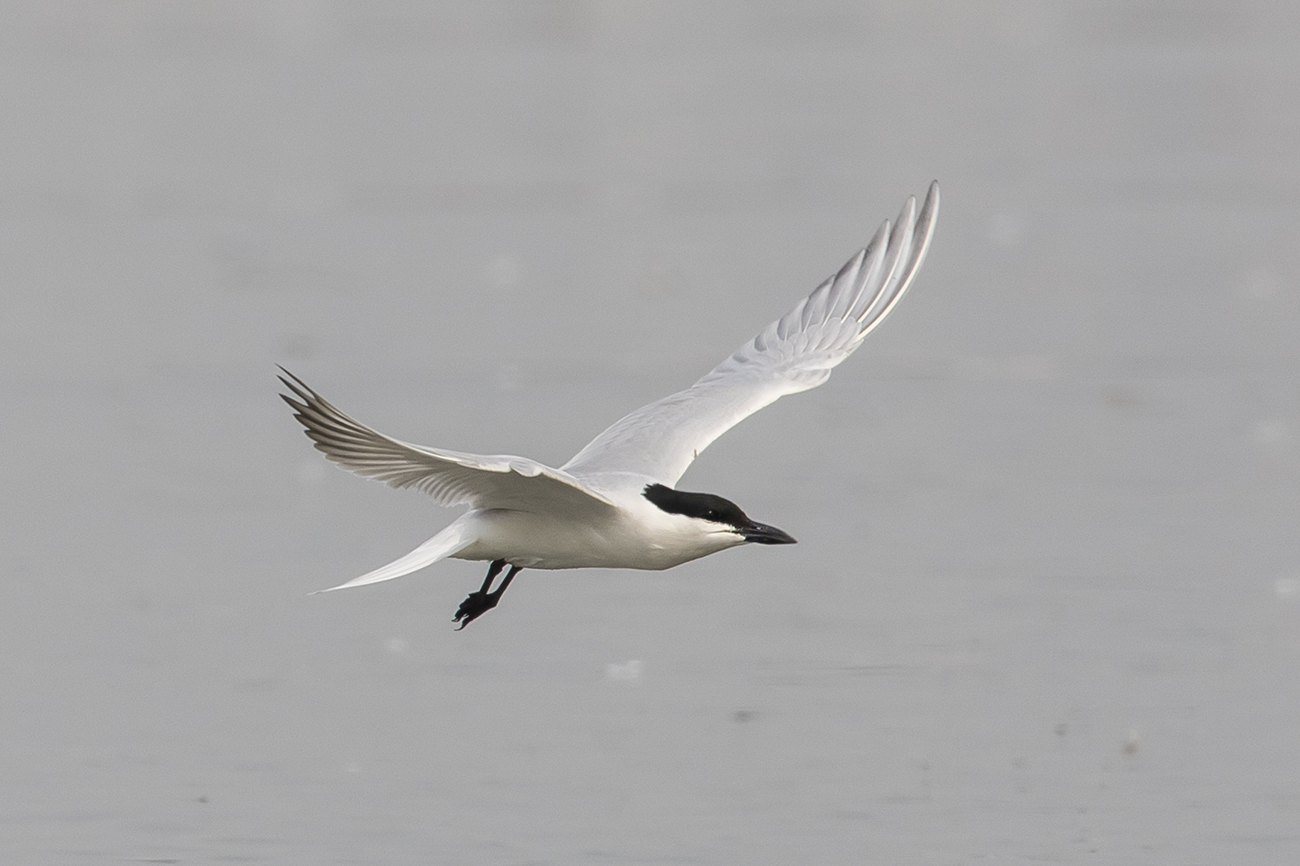
Gull-billed Terns numbers had increased in the last two weeks, most individuals wearing their 'face mask', only a few were still in process of moulting into their breeding plumage.

Gull-billed Tern - breeding plumage

Gull-billed Tern - assuming breeding plumage

A helicopter came by and flushed most of the waders up and away, so we scanned the remaining birds and found two Eurasian Spoonbills within the Black-faced Spoonbills. An Osprey also flew past with a large fish in it's talons.

Eurasian Spooonbill

Osprey with prey

Finally, the Black-tailed Godwits also flew off as the tide rose even higher, until the Pied Avocets were all that remained. My mum have not visited Mai Po for a long time, it was likely many years since she last witnessed a rising tide out at Deep Bay, and she said she noticed a significant drop in bird numbers. As we all know, mum is always right, and regrettably I must say she was absolutely right. Whereas there would have been up to a few thousands Pied Avocets back in the day, there were a mere few hundreds of them. Whereas waders once covered nearly all of the mudflats, there are now more empty spaces as ever...

Black-tailed Godwit

Pied Avocet

The truth is, you look over towards Shenzhen and you see skyscrapers being built month after month, their skyline extending as far left and right as your eyes can see. It's not difficult to link the steep declines to rapid urban developments on the other side of Deep Bay, along with other factors that are threatening waders elsewhere on a global scale, we may further lose a few more species as we've lost the Dalmatian Pelicans and Common Shelducks if we are not careful, both once regular or even common winter visitors to Deep Bay. It was a pleasant day out, but we couldn't help but feel a slightly sad undertone to our observations.

The rapid urbanisation of Shenzhen happening right before our eyes...

Later that evening we decided to head into Tai Sang Wai to again look for the Savanna Nightjar. We were greeted by a few Oriental Pratincoles yet again feeding in the middle of the road, but after some intense searching we failed to locate any Nightjars...

Oriental Pratincole

As we gave up on Tai Sang Wai we decided to give another location near Ma Tso Lung a try, I've only been there during the day but had always thought it looked good for Nightjars, and how I am glad to be right as we saw a Savanna Nightjar flew by right above us when we arrived. We later spotted a Nightjar perched on top of a lamp post, which I managed a few photos before it flew off, the night was not wasted after all!

Savanna Nightjar - certainly an interesting perch to sing from...