Showing posts with label Waders. Show all posts

Thursday, 25 April 2019

Deep Bay - Mudflats, Birds and More

Flocks of waders feeding together is a common sight at Deep Bay

April is always a good time to visit Deep Bay, the mudflat situated within Mai Po Nature Reserve can be especially rewarding, where you get  a wide array of waders on passage. The floating bird hide becomes one of the best places in Hong Kong to get up close to these amazing birds. Species such as Pied Avocets are never in short supply, where they often come really close to the hide.

Pied Avocet

Large waders such as Black-tailed Godwits are often some of the most numerous, within hundreds of Black-tailed Godwits you may find a few Bar-tailed Godwits with their up-turned bill. There is a good chance for Asiatic Dowitchers during April and May where these thick-billed waders are found amongst the Black-tailed.

Black-tailed Godwit

Bar-tailed Godwit

Asiatic Dowitcher

Common Redshanks are still very numerous at Deep Bay, while Spotted Redshanks numbers had decreased massively in recent years. It is quite alarming, although we still see quite a few the numbers are not what it used to be.

Common Redshank

Spotted Redshank

Far Eastern Curlews are also fairly easy to find at this time of the year, I counted up to seven in amongst the Eurasian Curlews. They are now listed as Endangered and warrant more attention in international conservation.  Curlew Sandpipers on the other hand is now listed as Near Threatened, they are still very numerous in Hong Kong.

Far Eastern Curlew

Curlew Sandpiper

Terek Sandpipers often perch on dead trees during high tide and doesn't like to get their feet wet. Most are passage migrants through Hong Kong although we do get the odd one wintering on rare occasions.

Terek Sandpiper

One of the most 'fun' part of looking at waders during spring is scanning through hundreds of Red-necked Stints. You often get a few surprises while doing that, such as this lone Sanderling which was feeding amongst the flock, it's slightly larger size and overall pale plumage was a dead giveaway.

Red-necked Stint


Sanderling

I tried very hard for Spoon-billed Sandpiper but ultimately failed. A few Little Stints amongst the Red-necked Stints were however nice to see. A few Sharp-tailed Sandpipers were also present.

Little Stint

Sharp-tailed Sandpiper

Lesser Sand Plovers as well as Grey Plovers were in good numbers, a few Pacific Golden Plovers and Greater Sand Plovers were around but didn't come close to the hide.

Lesser Sand Plover

Grey Plover

A few large Gulls remains at Deep Bay, mainly young birds that are in no rush heading back to their breeding grounds. All of them are presumably Mongolian Gulls. Other than the regular Whiskered, Caspian and Gull-billed Terns, a single Little Tern was noted, a regular migrant at Deep Bay.

Mongolian Gull

Little Tern

Black-faced Spoonbills were still in good numbers, I counted no less than 70 birds. The international census this year had revealed their most recent population had increased to over 4,000 individuals world wide, a successful conservation story that is rare these days.

Black-faced Spoonbill

Other than waders, Deep Bay supports a good range of raptors, including Peregrine Falcons, Western Ospreys and Eastern Marsh Harriers. All three can be seen out on the mudflat on a regular basis.

Peregrine Falcon

Western Osprey

Eastern Marsh Harrier

The 'brain-fever' song of the Large Hawk Cuckoo is almost unmissable during April, although seeing them well is another matter all together...I got lucky while out on a birding tour of one singing right at Mai Po car park, I even managed a few photos before it flew off! Black-naped Oriole is also a regular migrant in Mai Po, I came upon this beautiful male while out with Kenneth Lam, they are always delightful to see and encounter.

Large Hawk Cuckoo

Black-naped Oriole - male

The Mai Po egretry is one of the largest in Hong Kong, and the Little Egrets have wasted no time in raising this year's brood, with many chicks already near fledging!

Little Egrets at nest

Mai Po is not just good for birds, but a great place for wildlife in general. Periophthalmus magnuspinnatus, a newly found species of Mudskippers in Hong Kong back in 2015 are not difficult to find during high tide. While the Four-Spot Midget, a species of damselfly specialising in mangroves and brackish waters can also be found out at Deep Bay. The beautiful Hasora badra is also quite common in mangroves, their purplish sheen is especially impressive when you are able to get a closer look.

Periophthalmus magnuspinnatus
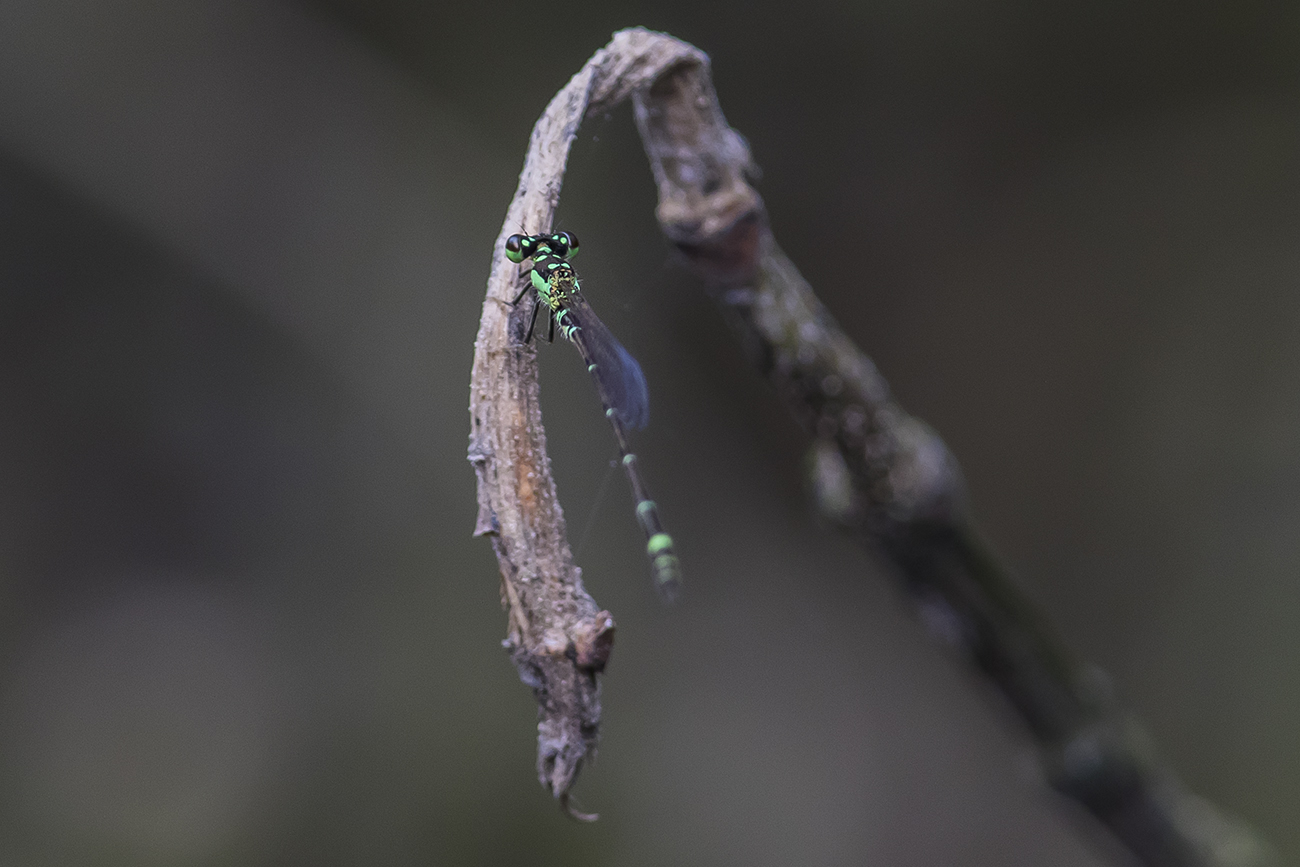
Four-spotted Midget

Hasora badra

Thursday, 26 April 2018

Waders Scanner

Upon hearing news of a Little Curlew at Mai Po from Wednesday to Friday, I headed over at my earliest convenience that was Saturday morning. It was a classic twitch where I was a day late...As I had work later in the afternoon, I only had time at scrape 16/17. It was so unfortunate that a friend of mine gave me news a little bit later that they had a Spoon-billed Sandpiper out at the mudflat. I was totally gutted...I did try to scan for the Spoonie when the waders flew into the scrape, but simply could not locate one amongst the huge flocks of Red-necked Stints...There were also lots of other waders coming into roost, including lots of Sharp-tailed Sandpipers and Curlew Sandpipers.

Flocks of Red-necked Stints...no Spoon-billed Sandpiper...

Sharp-tailed Sandpiper

The long staying Greater White-fronted Goose strolled past the front of my hide, it was the only one left overwintering here at Mai Po, it looks to be a pretty young bird and I think it's probably very lost without any older Geese to guide it through it's supposed northward journey. It's fate remains uncertain!

Greater White-fronted Goose

Some other birders tried for the Spoonie on Sunday, but no one spotted it again. I decided to give it another try on Monday. As I walked towards the gate to the boardwalks, I was greeted by a few Chinese Penduline Tits at the reed bed. Striated Herons had also returned, one perched long enough for me to grab a record photo.

Chinese Penduline Tit

Striated Heron

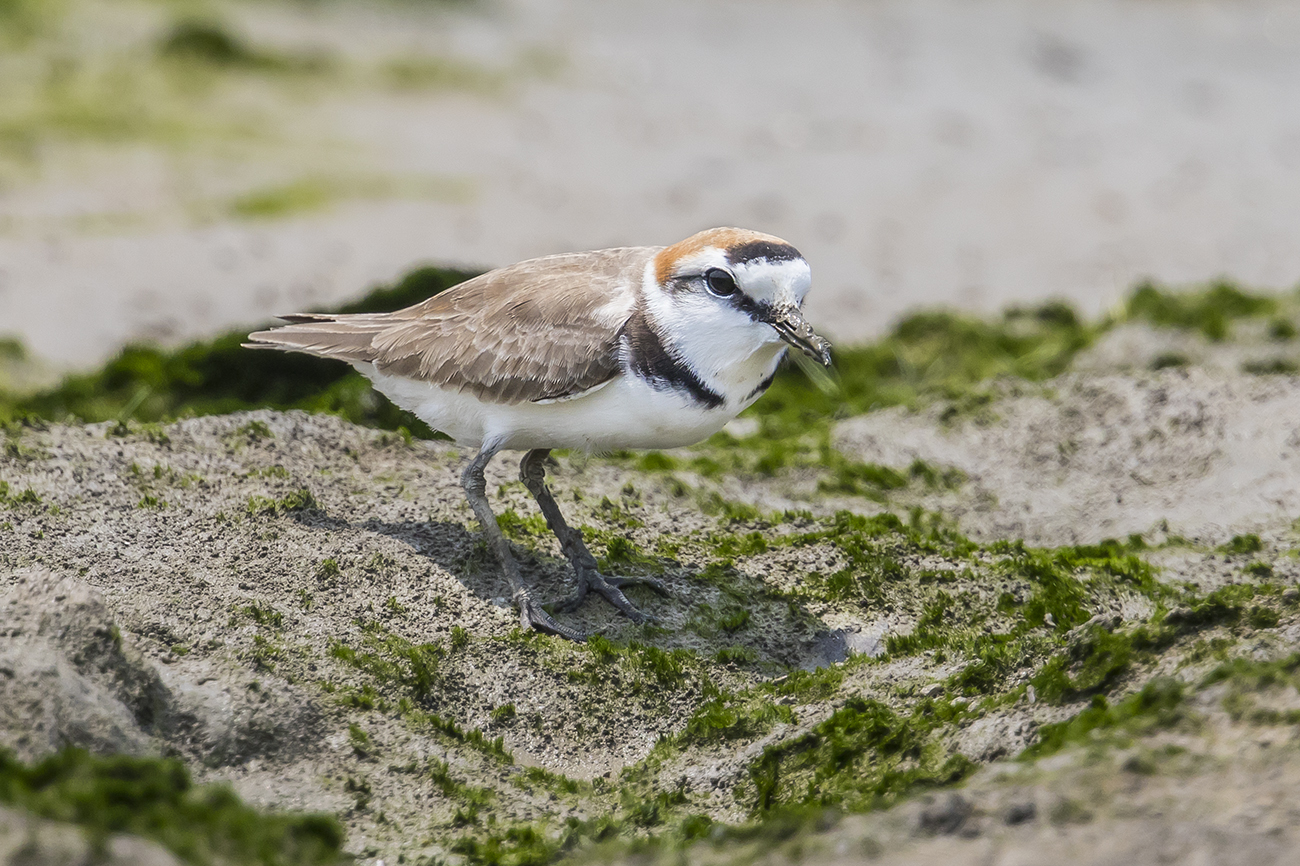
I arrived at the new hide at around 9:30am, there were a lot more people than I expected for a Monday...obviously everyone wanted to glimpse the rare Spoon-billed Sandpiper...I settled down and started scanning through the mudflat with my scope...A few Kentish Plovers were very close to the hide, both males and females in breeding plumage.

Kentish Plover - male

Kentish Plover - female

There were a few Grey-tailed Tattlers around, although not as many as I expected. Flocks of Long-toed Stints walked along the front of the hide as well.

Grey-tailed Tattler

Long-toed Stint

I scanned the flock of Red-necked Stints in the distance, sure enough saw a very good looking Little Stint in breeding plumage. As Little Stints moult into their very bright orange plumage, they become very obvious.

Little Stint & Sanderling

As the tide came in higher, other species started arriving. A few good looking Ruddy Turnstones strolled along the front of the hide, feeding on small crabs. While a few Sanderlings also gave good views at close range, they are very pale compare with other waders present, making them quite conspicuous.

Ruddy Turnstone

Sanderling

Both Mongolian Plovers and Greater Sand Plovers ventured to the front of the hide, here you can clearly see the difference in their structure and bill shape, Mongolian having a very stubby and short bill, while Greater Sand Plover have a much longer and stronger bill.

Mongolian Plover

Greater Sand Plover

I of course continuously scanned the large flocks of Red-necked Stints, hoping to find a Spoonie amongst them...All I got were Red-necked Stints with muddy bills...

Red-necked Stint

I spotted yet another Little Stint amongst the flock close to the bird hide in amongst the Red-necked Stints. This one was not as brightly coloured as the other one, but still a very handsome individual, especially when seen so close!


Little Stint

There were still plenty of Curlew Sandpipers around, I was able to get a few closeups of the few that ventured to the front of the hide. A single Red-necked Phalarope also made an appearance. As the tide came in higher and covered up all the mud, I knew my chances of finding a Spoon-billed Sandpiper was pretty much gone, so I decided to move to the middle hide to look for other waders.

Curlew Sandpiper

Red-necked Phalarope

Waders as the tide came in

I was just in time as the tide was still coming in at the middle hide, there I spotted a few very good looking Red Knots. This is another near threatened species that seems to be in decline in recent years, mainly due to habitat loss along the East Asian Australasian Flyway.


Red Knot

Another similar species that is facing the same problem is the Great Knot, now an endangered species. While another endangered species, a few Far Eastern Curlews roosted nearby, I counted a total of 8 individuals.

Great Knot

Far Eastern Curlew

I spotted 3 Nordmann's Greenshanks roosting amongst the Common Redshanks and Marsh Sandpipers. It is yet another endangered species for the day, with an estimation of no more than 1,300 individuals remaining in the wild, we are fortunate to still get them in small numbers in Hong Kong and can often pick them out with relative ease.


Nordmann's Greenshank

A single Swinhoe's Egret was also present, although this time it was much further away. There were still a lot of Black-faced Spoonbills around, I counted up to 30 birds. While two Eurasian Spoonbills had stayed on.

Swinhoe's Egret

Black-faced Spoonbill

Eurasian Spoonbill

I scanned scrape 16/17 one last time on my way out, most of the smaller waders were roosting and had their head tucked under their wings...not useful when you are trying to scan for Spoon-billed Sandpipers, I was left feeling quite defeated, but that's just birding sometimes, there are birds you won't be able to find no matter how hard you try.

Flocks of waders roosting at scrape 16/17

The day ended on a happier note, where I found quite a few Greater Painted Snipes strolling about in the open. It is breeding season for them, so they are currently very active. I won't be surprise if we see the males followed by a few chicks in a month or two.


Greater Painted Snipe - female