Brambling - a rare passage migrant in Hong Kong
Dave Bickerton whom we met in July last year for an afternoon birding was back in Hong Kong again for two weeks; mostly for business with a little bit of birding (I think that's what Dave wants people to think anayway!). So, we arranged a few days birding together around Hong Kong. Being April and likely one of the best time to be birding in Hong Kong, there are chances for all sorts of interesting birds and migrants, we took the chance to try for a few of them.
Day 1:
We met on the morning of 3rd of April, picking Dave and his wife Bernie from the Lai King MTR station and we drove straight to Mai Po Nature Reserve. Dave had reserved a day permit for the day and we were hoping to catch the incoming tide. It was Bernie's first and Dave's second visit to Mai Po, the first being his last visit in July; obviously not the best time to visit! So we had quite high hopes for the reserve! We were greeted by a few White-shouldered Starlings and Azure-winged Magpies at the car park.
White-shouldered Starling
It didn't take long for Dave to retrieve his day permit from the WWF office, once we gone past the AFCD warden's post we were greeted by a nice looking male Black-faced Bunting! A very handsome looking guy that gave great views for a few minutes. Dave got acclimated to the constant singing of Yellow-bellied Prinias, which are now busy nest building. Plain Prinias are just as visible now and will sing on an open branch occasionally.
Black-faced Bunting - male
Yellow-bellied Prinia - with nesting materials
Plain Prinia
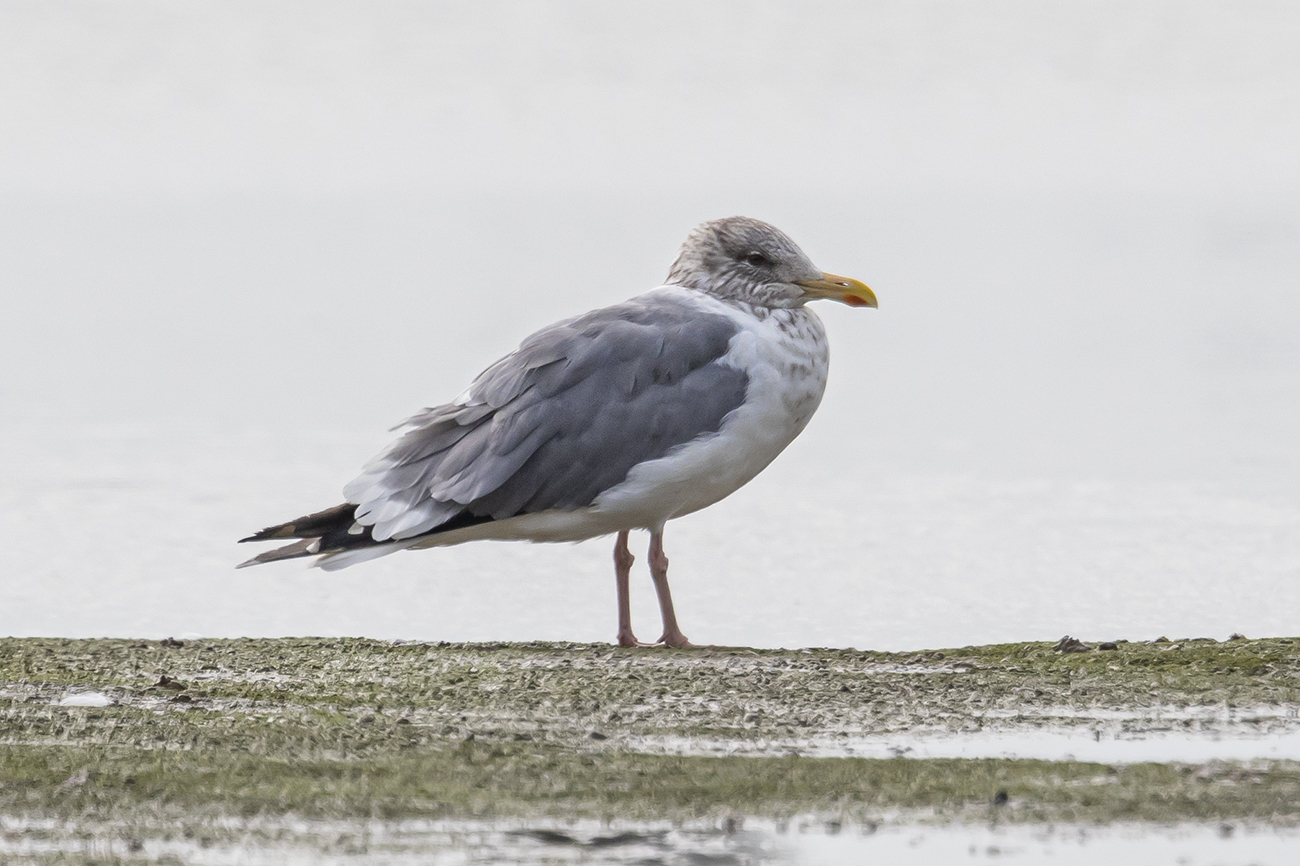
When we got to the furthest bird hide it seems we underestimated the tide and water came in quicker then expected. We still managed some waders and a few Gulls and Terns. We got Heuglin's Gulls, Mongolian Gulls and Vega Gulls altogether, along with two Black-tailed Gulls, all pretty far though. There were also good numbers of Caspian Terns. Other then the common waders, we got at least one Far-eastern Curlew amongst the Eurasian, looking very big with a very well marked vent. We added Grey Plovers and a single Ruddy Turnstone.
Mongolian Gulls with Caspian Terns and Curlews
Far-eastern Curlew (3rd left) and Eurasian Curlews, also a Bar-tailed Godwit to the right
Grey Plover, Avocet and Ruddy Turnstone
Once the tide came in and most waders left, we were entertained by a large group of Black-faced Spoonbills feeding in front of the hide, many of the adults in beautiful breeding plumage, they came very close and we all enjoyed amazing views of this globally rare bird.
Black-faced Spoonbill in breeding plumage
Black-faced Spoonbill - juvenile
Dave spotted an interesting gull inflight, but it was quite far, it's wings were comparatively long and slender, we came to the conclusion that it was a 1st winter Saunder's Gull. It was lucky we still got this one as most of the Saunder's Gulls had moved on and this was the only one we saw. We later saw what we think is the same Gull back out in the scrape, roosting amongst huge flock of Gull-billed Terns.
Saunder's Gull - 1st winter
Out at the scrape we got a large flock of Black-tailed Godwits, we scanned for other interesting waders but with little luck. There were a lot of Marsh Sandpipers, and we did manage to locate a few Nordmann's Greenshanks amongst the Common Greenshanks, with them assuming breeding plumage it's easy to pick them out just by looking at their plumage!
Black-tailed Godwit
Marsh Sandpiper
Nordmann's Greenshank amongst Common Greenshanks
After Mai Po I took Dave and Bernie to San Tin and Lok Ma Chau, where we added a few more species including a very confiding Sooty-headed Bulbul. The day ended well with a few Black Drongos perched nicely over a fishpond, and a beautiful view of the fishponds overlooking Shenzhen.
Sooty-headed Bulbul
Black Drongo
Overlooking Shenzhen
Day 2:
Ship docks at Aberdeen
We arranged to meet at the brand new MTR station of Wong Chuk Hang on the South Hong Kong Line, going to Aberdeen to catch a ferry to Po Toi Island. We met at 7:45am, half an hour earlier then the supposed departure of the ferry. Hoiling came along with us on the day to make up our four person group. Weather was good; perhaps a little too good and we were worried whether any migrants will stop on the island at all! But we went ahead, as with a dozens or so other birders all aboard the ferry.
On the way we saw little birds at sea, only a single Red-necked Phalarope flew by. Po Toi Island is traditionally the best place in Hong Kong for migrants, and only two days before our visit some lucky birders found a male Maroon Oriole! A mega rarity in Hong Kong! But as with many rarities that turn up on the island, it was only seen for two days. So, we will have to look for our own birds...We encountered very little in the first hour after landing, mainly Crested Mynas and Bulbuls, we did manage a single Pacific Swift. A few Black-faced Buntings gave obscured views behind the Sister's Cafe.
Black-faced Bunting
It wasn't until we found two accipitars circling above us that things started to pickup. A juvenile Crested Goshawk with a much smaller accipitar, I initially thought it was a Japanese Sparrowhawk, but the thicker tail bands and faint streaks on it's breast indicate it as a male Besra. We also got a single Grey-faced Buzzard circling around the harbour, another regular migrant passing through Po Toi.
Crested Goshawk with Besra
Grey-faced Buzzard
The lack of Flycatchers were made up with by a lovely looking young male Daurian Redstart. It was quite confiding and allowed some great views. It's not a great bird or a rarity, but it's a nice find in April, although I would have much preferred a Narcissus Flycatcher or something more exciting...
Daurian Redstart - male
And excitement we got! When a strange bird flew around us on the banyan tree, Dave saw that it was orange but the bird did not stay still enough for us to get a good look. I really thought we got a Narcissus Flycatcher or something like that as it's the most logical species, but I was so wrong when Dave finally got the bird in view and exclaimed "Brambling!". It was probably more excited for me then for Dave (who is from the UK), as he sees them all the time! But here in Hong Kong, Bramblings are quite a rare migrant that passes through mainly in March and April. The bird later came down on the ground to feed, giving us great views for five minutes or so before fluttering off, likely to continue on it's migration north.
Brambling - the bright spot of a quiet day on Po Toi
Things quieten down a little, with very little birds around except Yellow-browed Warblers. We managed to find a single Yellow-fronted Canary. This is a regularly seen bird in Hong Kong, although not native here they seems to have established themselves here, they have even made up their own migration route where they passes through Po Toi annually!
Yellow-fronted Canary
Things continued to be quiet, so we decided to get an earlier ferry off the island, a single Grey-faced Buzzard saw us off at the pier. It was afternoon tea at Stanley afterwards that was equally enjoyable.
Grey-faced Buzzard
Day 3:
Bernie left for UK earlier then Dave, we did have a very enjoyable dinner at Tai Fung Lau before she left, a very old restaurant for northern cuisines and one of our favourite eatery. Dave was very kind to treat us all for the dinner with Peking Duck and delicious sweet and sour fish!
After Dave was back from his working trip in China, we met up once again for one last day of birding before he fly out of Hong Kong. I picked him up at his hotel before 7am and we headed towards Tai Po Kau Nature Reserve. Dave had yet to get any of our forest species in Hong Kong, so Tai Po Kau was the obvious place to go, and I was glad we went. Things started off OK and we soon picked up beautiful Silver-eared Mesias and a few Blue-winged Minlas, we also got a few Grey-chinned Minivets in the distant. Red-whiskered Bulbuls posed for us at picnic area 1, when I heard the call of the Chestnut-winged Cuckoo! I mimicked it's two-note whistle and sure enough the bird flew in straight at us, but it didn't perch in an open branch for us to look at, although for the next few minutes we had a few more good fly-by views of this impressive looking cuckoo.
Red-whiskered Bulbul
Chestnut-winged Cuckoo
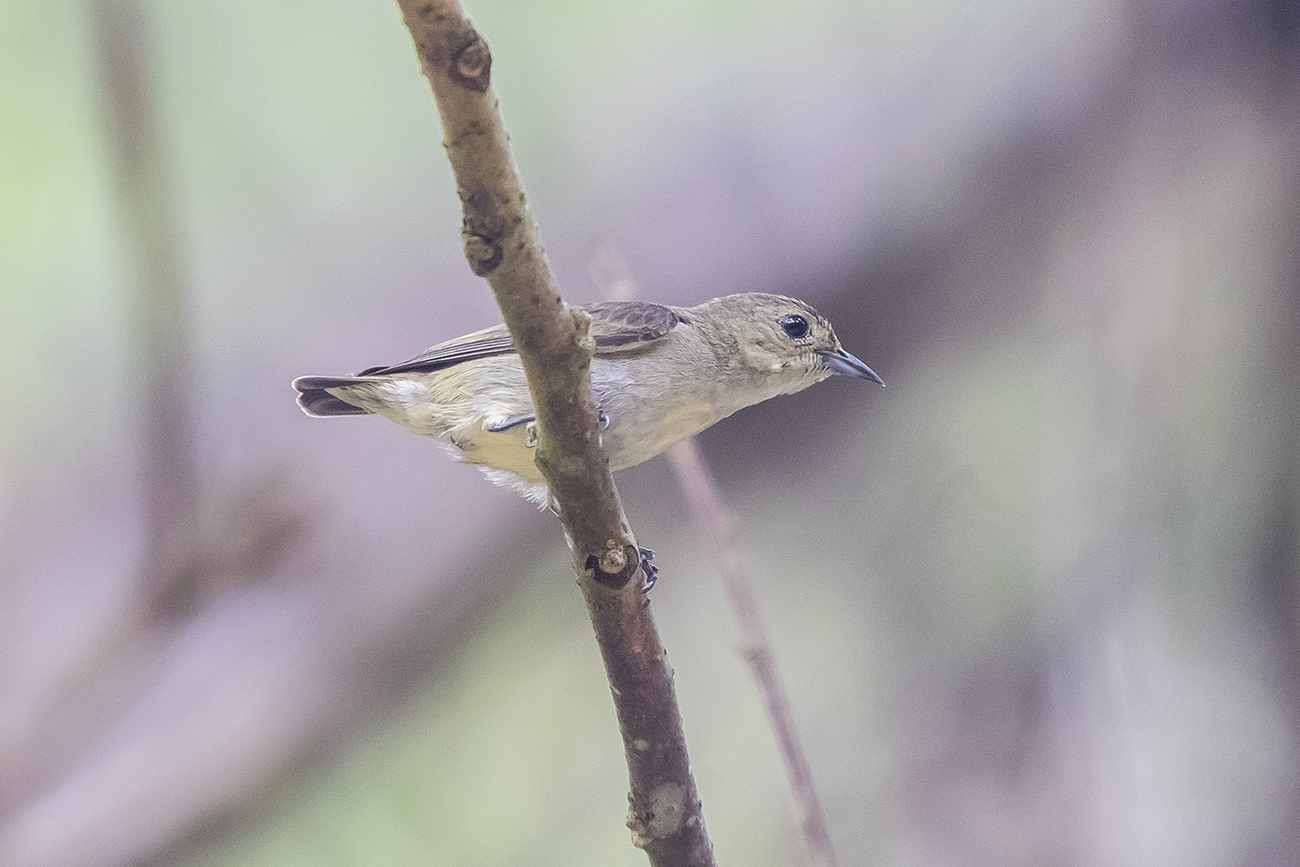
We encountered a Mugimaki Flycatcher in the distant but it never showed again despite some waiting, so we moved on and just as we were walking up the steps towards picnic area two I heard the familiar song of Plain Flowerpecker, I played a short burst of recording and brought in a single bird, circling above our heads for a minute or two! This is still considered a local rarity in Hong Kong with so little records in the last ten years or so, but I think once we know it's song we will no doubt see an increase of records for this species!
Plain Flowerpecker
Things quietened down a little as we reached the second picnic area, but when I heard a singing Hainan Blue Flycatcher we immediately went after it. It took us a while to get some acceptable views of the beautiful bird, but it was a little further along the path that we encountered a few more of these amazing looking flycatchers! A male came very close and gave eye-level views! It's very nice to have them back again for another year, hopefully they will have a successful year of breeding at Tai Po Kau.
Hainan Blue Flycatcher - male
A bit further on we encountered a single Streak-breasted Scimitar Babbler that showed very well but not long enough for a good photograph. A few Blue-winged Minlas and Huet's Fulvettas were far more obliging and gave great views.
Blue-winged Minla
Huet's Fulvetta
As Dave had booked himself another permit into Mai Po, we wanted to leave some time for the waterbirds, so we decided to head back down, on the way we picked up a song that sounded oddly like a Magpie Robin but different, it sounded familiar to me but I simply couldn't nail what it was until I spotted the bird making the noise. A beautiful Orange-headed Thrush, perched on an exposed branch singing it's heart out! What a view to behold and the best bird we could possibly get for such a short trip at Tai Po Kau.
Orange-headed Thrush - in song
On our way down we heard plenty of Crested Serpent Eagles calling above, and had one of them flying very low above, giving excellent views.
Crested Serpent Eagle
Before we headed into Mai Po we grabbed a quick breakfast at the cafe just outside Mai Po (egg and luncheon meat sandwich with tea) before heading into the reserve. We weren't there to catch the rising tide as we had spent our morning at Tai Po Kau, therefore we decided to stick to the scrape and scan for roosting waders. We were greeted by a large congregation of Little Egrets perched on the wire, they created an interesting composition.
Little Egret
The first two interesting things we saw in Mai Po were not birds, but a Checkered Keelback just outside the Education Centre and a single Javan Mongoose that came across our path, adding some diversity into our day.
Checkered Keelback
Javan Mongoose
On the scrape, plenty of Asian Dowitchers were around, a nice addition to our three day list of this uncommon spring migrant. We were also granted great views of a Far-eastern Curlew with it's massive bill out. We were in no shortage of Nordmann's Greenshank on the day, where we counted at least 8 on the scrape.
View of scrape 16 & 17
Asian Dowitcher
Far-eastern Curlew
Nordmann's Greenshank
The scrape was again patrolled by a Peregrine and a Eastern Marsh Harrier, both flushing the waders and terns on several occasions.
Peregrine Falcon
Eastern Marsh Harrier
We heard the "brain-fever" call of the Large Hawk Cuckoo constantly, and Dave was determined to find the bird. Having heard them but not seeing them on so many occasions I was already half given up when Dave suddenly exclaimed that he had the bird in view! We enjoyed great scope views and later managed to snuck up closer to it and got a few shots before it flew away.
Large Hawk Cuckoo
On our way out we were met by a nice looking Chinese Pond Heron in breeding plumage. It's the right time of the year to photograph these herons. A Dusky Warbler came in close for us to take a good look, many of them are now in song and should be heading north very soon for breeding.
Chinese Pond Heron - breeding plumage
Dusky Warbler
As Dave had to be at the airport by 4pm, I thought we would make a stop at the Magic Roundabout at the airport before I drop him off at the terminal. We did a quick stroll along the trees between the roads and added a single Hair-crested Drongo, a White-cheeked Starling, Long-tailed Shrike and 16 Oriental Pratincoles passing above! Not a bad way to end what was already a great day of birding, with a total of 108 species for the day!
It was overall a great three day's of birding, with many key species like Nordmann's Greenshanks seen many times and a few rarities here and there, it was great to share some of the local birds with visiting friends but also get inspired by information on birding from another corner of this planet.