Showing posts with label Radde's Warbler. Show all posts

Sunday, 27 November 2022

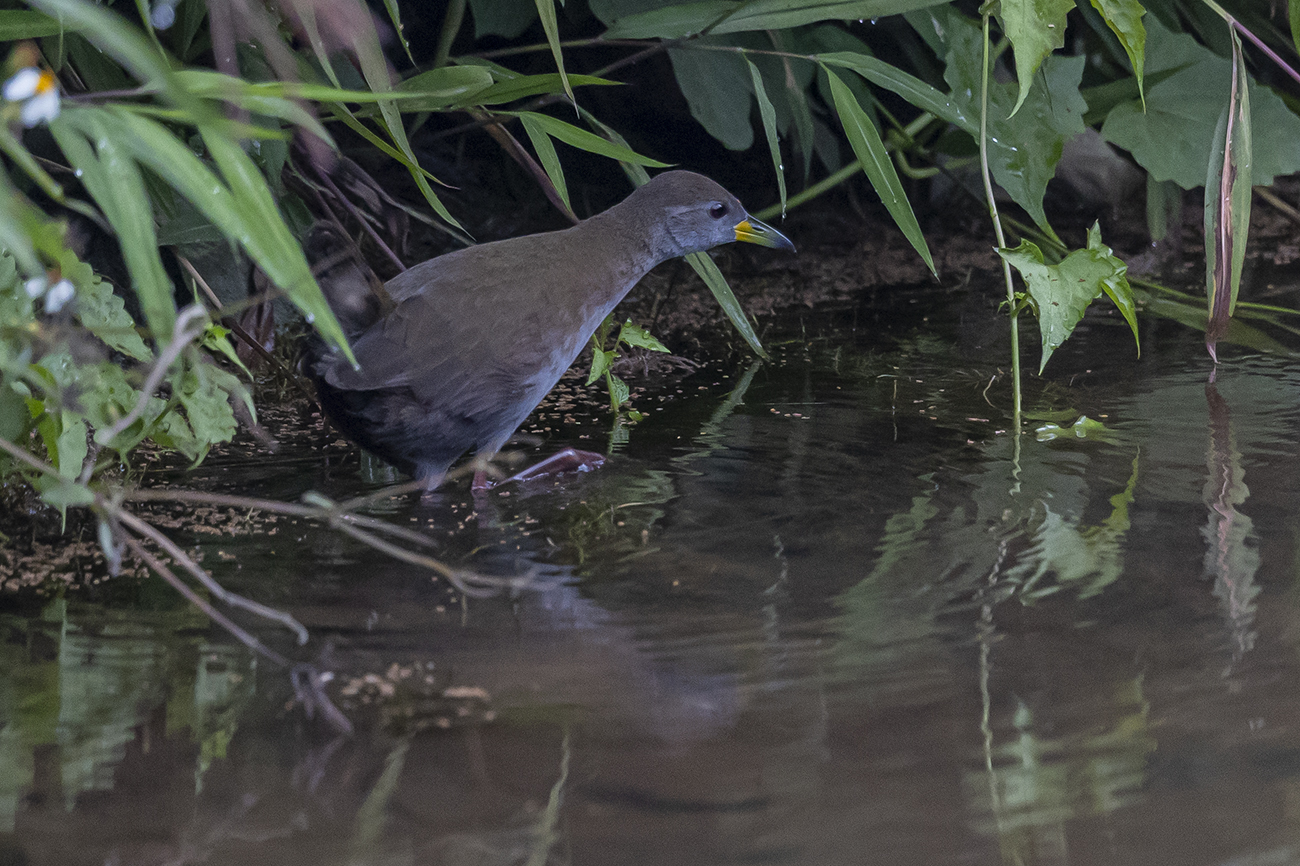
My 500th Hong Kong Bird - Brown Crake

Over the years I have missed several major rarities for various reasons, most notably between 2003 and 2009 I was mostly away from Hong Kong. Brown Crake was one of those rare birds that eluded my Hong Kong list for years, since the relatively easy one at Nam Chung back in 2009, theres not been any twitchable ones. So, when one was reported in Lam Tsuen it was an opportunity I dare not miss. I am not sure why this species is so difficult in Hong Kong, as it is a relatively common species in China, I've seen them several times in Jiangxi and Guangxi. This rather shy individual only show up in the morning and often while it's still quite dark. Luckily for us, this bird seems to appear like clockwork and appear briefly each morning.


Brown Crake

With this bird, I have officially reached 500 species on my Hong Kong list. This had been a target for me for quite some time. Glad that my 500th species was a great one! 

Brown Crake - my 500th bird in Hong Kong

I visited Wu Kau Tang one morning, walking towards Sheung Miu Tin, it was drizzling slightly and later turned to actual rain. Before the rain came in I managed a rather confiding Radde's Warbler, although the light conditions was horrendous for photos. Rufous-tailed Robins are now back and saw quite a few of these along the trail. Theres been a large influx of Indochinese Yuhinas of late, I've been seeing them everywhere including urban areas! So, I wasn't surprise to find quite a few flocks here. A Lesser Shortwing decided to show itself on this dim morning, while a relatively common species, I don't get to see them often enough.

Radde's Warbler

Rufous-tailed Robin

Indochinese Yuhina

Lesser Shortwing

I led a half day outing to San Tin and Tai Sang Wai recently, a rather enjoyable morning with a flushed Yellow-legged Buttonquail being the best bird, although it was too quick and there was no way I could have gotten a photo. A rather nice looking Eastern Yellow Wagtail amongst other more drab looking ones was quite unusual given the time of the year, but every so often we get some birds retaining some of the breeding plumage through the winter months. An Osprey circling above was one of the several raptor species we had that morning. Several Yellow-breasted Buntings were seen, two of which allowed relatively good views. Black-faced Buntings and Little Buntings both showed well.

Eastern Yellow Wagtail - race taivana

Osprey

Yellow-breasted Bunting - female

Black-faced Bunting - male

After the tour I returned to Tai Sang Wai briefly to hopefully relocate the Buttonquail, which obviously was not seen again. But, I did find a very confiding male Yellow-breasted Bunting feeding on the road, probably the closest I've ever been to this species! It was hard to resist taking more photos of this awesome bird, I ended up with hundreds of photos of it feeding, thought I shouldn't miss the chance of an up close experience with a critically endangered species.


Yellow-breasted Bunting - friendly individual

Saturday, 6 April 2019

Wood Warbler - Mega Rarity for Hong Kong

Wood Warbler - the star bird on Po Toi Island this week

On Tuesday, a few photos of a phylloscopus warbler at Po Toi Island surfaced and was immediately identified as a Wood Warbler. This species's natural range is Europe and parts of Central Asia, with a few breeding in extreme north west of China, most overwinter in Africa, therefore an occurrence to east China is extremely rare, and even more so in south China! This will be the 1st record in Hong Kong if accepted. I had other business to attend to on Wednesday, therefore I had to wait till the ferry on Thursday to give it a go. Naturally I was not alone, and was joined by many birders who also wish to catch a glimpse of this mega rarity

The warbler was last reported on the tree behind the toilet block, however the bird was not in view for over an hour. There were plenty of other migrants to keep everyone busy, including Ashy Minivets, Red-breasted Flycatcher as well as a Ferruginous Flycatcher all on one tree!

Ashy Minivet - male

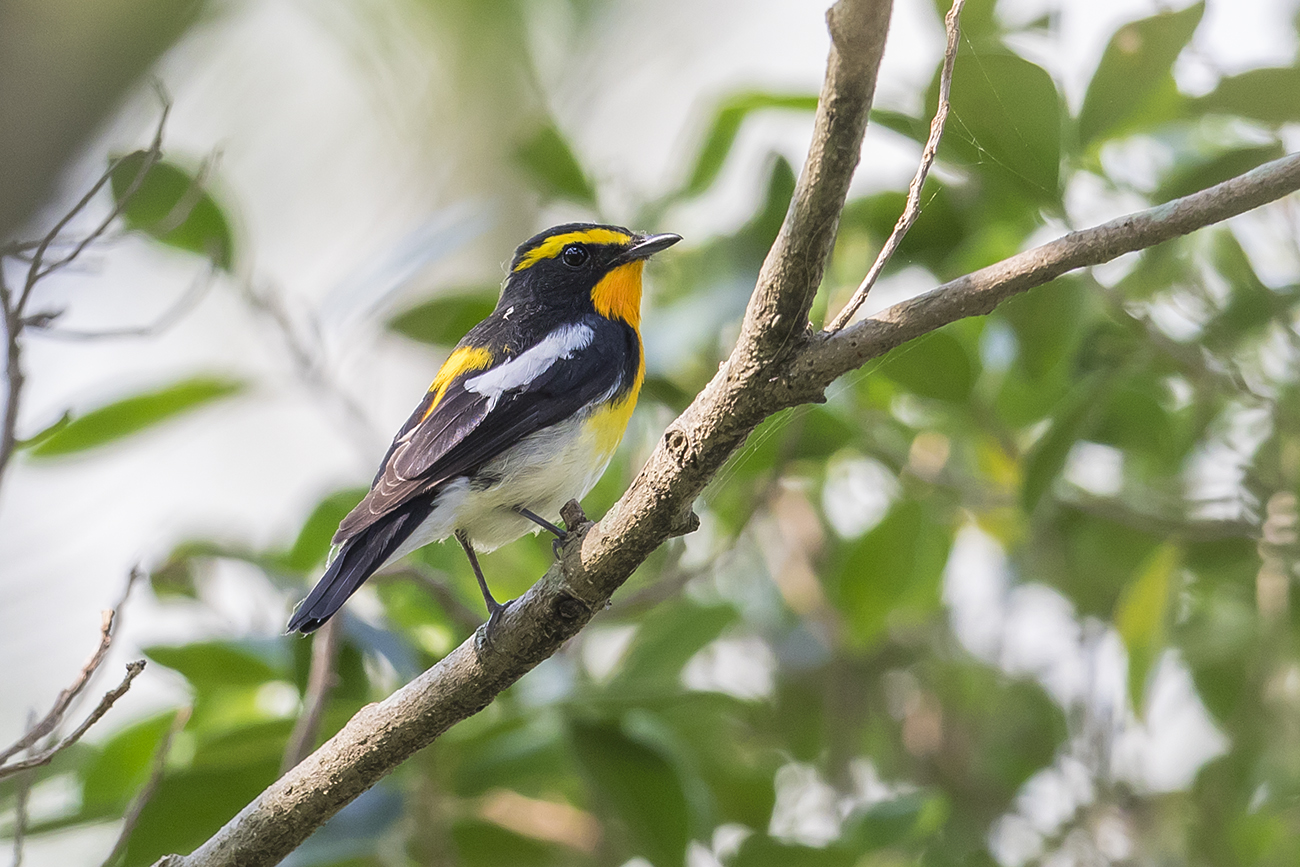
Red-breasted Flycatcher

Ferruginous Flycatcher

One of the better species of the day were up to three Bramblings, busily feeding on ants along the tree trunks, a behaviour I have never seen before! I guess migrating birds are not fussy about what they eat, anything that can build up their fat reserves are good to go! Although Bramblings are quite widespread globally they are fairly uncommon in Hong Kong, where we often get them as passage migrants.


Brambling

Kenneth and I ventured elsewhere to look for other birds, but had very little luck. Just as we were wandering aimlessly, we heard Peter Wong had relocated the bird on the same tree behind the toilet! We rushed back but the warbler already disappeared. It took another twenty minutes before the Wood Warbler finally showed itself! It was fairly large and long winged, with pale greenish back, yellow supercilium and throat, overall unmistakable! It was feeding on caterpillars in the ficus tree. Everyone enjoyed brilliant views of this rare vagrant, a happy ending for happy twitchers!


Wood Warbler - mega rarity at it's finest!

A few raptors were seen passing through Po Toi before we boarded the ferry, including a Eurasian Sparrowhawk which is a rare migrant. A Japanese Sparrowhawk also made an appearance and chased the Eurasian Sparrowhawk away before I could get a better photo...Finally, up to six migrating Grey-faced Buzzards was certainly the icing on the cake!

Eurasian Sparrowhawk

Japanese Sparrowhawk

Grey-faced Buzzard

Other than Po Toi Island, Ho Man Tin is also a migrant hotspot. I paid a quick visit on Friday and was not disappointed, yielding at least three male Narcissus Flycatchers! As usual, these beautiful flycatchers attracted the attention of few dozens of photographers...who as usual were trying to entice the birds to get to their preferred branches with meal worms. The flycatchers did not seem too interested, instead hawked for insects above their heads on the tree above constantly. A few photographers behaved badly and even went so far as threw branches at a Red-billed Blue Magpie which came past, as they fear the magpies may chase the flycatchers away...This is not exactly ethical and certainly not what bird photography is about! But, talking about respect to nature to them is like casting pearls before swine...


Narcissus Flycatcher - photographer's magnet!

Red-billed Blue Magpie

Other than the flycatchers, a long staying Radde's Warbler was still present, it is now moulting and look extremely scruffy. Radde's Warblers are mainly a scarce autumn migrant in Hong Kong, where winter and spring records is fairly unusual, so this individual had basically broken all the rules! Either way, it seems to be doing very well, here enjoying a small cockroach.

Radde's Warbler - with cockroach!

With spring migration well underway, anything can turn up these days! Watch out birders, as unexpected rarities may be just around the corner!

Sunday, 30 December 2018

Yellow-streaked Warbler - a 'Year Ender'

This late autumn and early winter period was far less impressive than last year, with a lot less rarities available, admittedly I was also more occupied with other things which meant less time for birds. A previously recorded Yellow-streaked Warbler at Mount Davis had been tempting me for a week or two, so I finally made the effort to go over there to check it out. It wasn't a difficult bird to locate, it was however an extremely difficult bird to identify correctly. As Yellow-streaked Warbler is notoriously similar to Radde's Warbler. I was attracted by it's 'tzic' like call which is reminiscence of a Bunting, it is most unlike the 'quip' calls that Radde's Warblers usually make.

Yellow-streaked Warbler - bird of the month for me

I observed the bird for a few hours, other than call, other features that is said to be the main criteria for identifying Yellow-streaked includes : darker breast band that is brownish, pale throat more demarcated, slightly pointier bill shape, browner upperparts, supercilium whitish behind eye and more distinct in the front. Comparing with photos of a Radde's Warbler I saw last year, all criteria seemed to be fit for this individual. I even managed a photo which shows the faint yellow-streaks on it's belly which give this species it's name.

Yellow-streaked Warbler

Radde's Warbler from 2017

Yellow-streaked Warbler - showing it's least prominent feature the 'yellow streaks'!

Despite all this, there's still been some uncertainty of this bird's identification, while it sounded nothing like Radde's Warbler, it's call was not exactly typical of Yellow-streaked either. Yellow-streaked Warbler have a call that begin at around 5.5kHz, while Radde's Warbler typically at 2kHz or lower. This bird however made a call that began at around 4.5kHz, as shown in this sonogram from my recording. Arguably it is far closer to Yellow-streaked than Radde's, but this variation had us baffled, although it could simply be a variation within the Yellow-streaked spectrum, just that nobody had recorded it so far.


The second remotely interesting bird that I encountered of late was a single Common Starling in Long Valley while leading a group of primary school students from Kau Yan School. I've not photographed one in Hong Kong for years, while a common sight in the UK and many parts of the world, it is far from being common in Hong Kong, being a scarce winter visitor.

Common Starling - a rare sight in Hong Kong

Chung Mei and Brides Pool produced far less interesting species than I expected. the annual Plumbeous Redstarts had returned, although I only caught sight of a female this time. A female Daurian Redstart proclaimed the car park it's territory. The only other note worthy species was a large flock of Indochinese Yuhinas.

Plumbeous Redstart - female

Daurian Redstart - female

Indochinese Yuhina

Tai Po Kau had been productive for most birders, with several highly sought after warblers being seen regularly, I however had not been so lucky on my previous visit, ended up with none! A few large groups of Rhesus Macaques had been actively feeding in the open, I am personally not a huge fan of these primates, as quite often they just scare the birds away.

Rhesus Macaque

Flock of Red-billed Leiothrix was very actively near picnic area 3, a species that is not encountered on every visit. Unlike the closely related Silver-eared Mesia, they quite often move in a flock of their own.


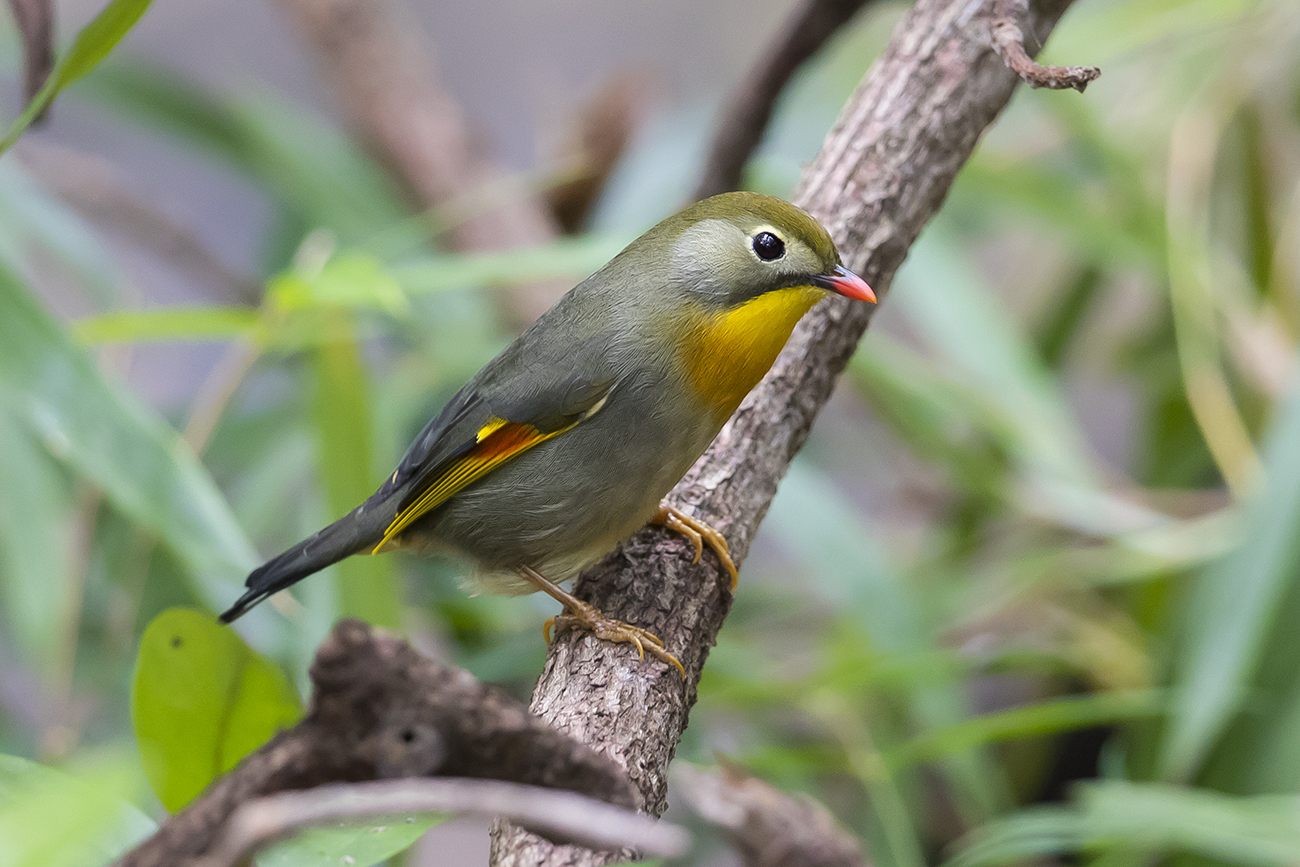
Red-billed Leiothrix

I ended up with a Two-barred Warbler which was too high up for photos and an Eastern Crowned Warbler which showed well, this species used to be just a passage migrant but had started wintering in Hong Kong in recent years. The bird that showed the best however was none other than a Rufous-tailed Robin.

Eastern Crowned Warbler

Rufous-tailed Robin

My year list stands at 304 at the moment, two less than last year's. Although a few birding trips had bumped my life list up to 1,470 species, I haven't scheduled as many trips next year but I expect it to surpass 1,500 on my next trip to Thailand in February 2019! I don't expect to add anymore species in the last two days of 2018, but I certainly look forward to more birds in 2019!

Friday, 30 November 2018

Speckled Piculet and A Failed Twitch

Speckled Piculet - another slowly increasing Hong Kong resident

Kenneth, Bee and I went to Tai Po Kau again on Monday, as they hope to find the Bay Woodpecker which I saw a few days prior. The Bay Woodpeckers never showed that day but plenty of other quality birds did. Including a Grey-headed Canary-Flycatcher which showed well again near the same area I saw before. While Mountain and Chestnut Bulbuls were both found in a fruiting tree and showed well.

Grey-headed Canary-Flycatcher

Mountain Bulbul

Chestnut Bulbul

The bird wave at picnic area 3 yielded a Speckled Piculet, it showed very well and allowed close views. This tiny woodpecker is now fairly regularly sighted at various sites but it's by no means common, so obtaining such good views is still considered a novelty.


Speckled Piculet

A fokiensis type Goodson's Leaf Warbler was present within the bird wave, it was very pale underneath, although the status of these type of birds are still uncertain, we often just leave them as Goodson's Leaf Warbler for the time being.

Goodson's Leaf Warbler - possibly race fokiensis

Along the red walk we spotted a White's Thrush, first for me this winter. There were also a lot of Rufous-tailed Robins, mostly hiding in the undergrowth but one decided to come out for us to get a good look.

White's Thrush


Rufous-tailed Robin

A rather late Dark-sided Flycatcher was quite nice, although it was out shined by two good looking Verditer Flycatchers, they are such pretty birds that I can't help but to marvel at their beautiful plumage every single time.

Dark-sided Flycatcher

Verditer Flycatcher - male

A late bird wave contained a few dark faced Black-throated Laughingthrushes. Scarlet Minivets were feeding low down, while Silver-eared Mesias were plentiful. A few Streak-breasted Scimitar Babblers also made an appearance.

Black-throated Laughingthrush - dark faced morph

Scarlet Minivet - male

Scarlet Minivet - female

Silver-eared Mesia

Streak-breasted Scimitar Babbler

While on Friday, I boarded a boat with a few 'twitchers' to Po Toi Island, where Peter Wong had found a Silver Oriole! A first for Hong Kong! All of us hope to catch a glimpse at this mega rarity...The day started off with an interesting encounter, we spotted a Pigeon being chased by a Peregrine Falcon, the Pigeon narrowly escaped and flew into our boat! It turned out to be a racing Dove, likely of Taiwan origin. The Peregrine on the other hand followed our boat for a little while...it knew the Pigeon was hiding inside, but soon gave up when the Pigeon stayed on the boat until we landed on Po Toi.

This pigeon pulled off a narrow escape...

Peregrine Falcon - this young bird will have no breakfast...

We stationed ourself at where Peter last saw the Silver Oriole, but there was no sign...There were however plenty of Bulbuls, including a few Chinese Bulbuls with darker heads, we wondered whether they could be the hainan race hainanus, although my guess is that they are probably just young Chinese Bulbuls which have yet to get 'white hair'...

Chinese Bulbul - a dark headed individual that resembles race hainanus

An unusually late Chestnut-winged Cuckoo brought some excitement, whether this individual will remain on Po Toi for the rest of the winter remains to be seen.


Chestnut-winged Cuckoo - a November rarity

There were a few warblers around, John Holmes found a White-spectacled Warbler towards the end of the day which I missed, although I saw a few Manchurian Bush Warblers and a Radde's Warbler.

Manchurian Bush Warbler

Radde's Warbler

Daurian Redstarts were active but not particularly cooperative, it took me a while to get a photo of this male. Pacific Reef Egret is a regular sight on Po Toi, a few often can be seen feeding near the pier.

Daurian Redstart - male

Pacific Reef Egret

We had an Oriole on the very same tree Peter Wong saw the Silver Oriole, although it was the 'Wrong' Oriole...Black-naped Oriole is not common at this time of the year, but it's simply not the bird we were hoping for. It's most unfortunate that I've missed most of the major rarities this season, but that's just how birding is sometimes. Besides, it's not always about the rarities in birding.

Black-naped Oriole - the 'wrong' oriole of the day...