Sunday, 22 April 2018

Passage Migrants : Narcissus Flycatcher

Narcissus Flycatcher - one of our colourful migrating flycatcher

Last Saturday was the annual WWF Big Bird Race, and the Sparrows got together again for another year of run around. It's all good fun, most of all it's for a good cause, to raise money for the management of Mai Po Nature Reserve. Unlike previous years, the tide on race day was very early, so we had to rush through Tai Po Kau at dawn and went straight to the boardwalk hide. 

We worked our way through the waders, and number of species certainly picked up from my last visit. One of my favourite bird was also on show, a Chinese Egret in breeding plumage, this beautiful creature is listed as vulnerable, there are probably no more than a few thousands in the wild. The egret came in quite close to the bird hide, as I left my camera in the car, Peter Wong who was in the bird hide with us let me took a few photos with his camera.

Chinese Egret

Scanning for waders through the scope.

I wasn't feeling all that well throughout the remaining day, by afternoon I was pretty sure I caught the flu. We actually saw very little birds of interest throughout the race, we kept looking for more migrants but many locations failed us. The Little Buntings at San Tin stayed on for us. While near the end of the day we found a few newly fledged Chinese Bulbuls near Fung Yuen.

Little Bunting

Chinese Bulbul - fledglings

I hung on till the end, where the race ended at Island House at Tai Po; a historical building now managed by WWF. I managed to stayed on for the award ceremony, probably due to all the adrenaline...In the end we tallied 156 species, which just managed to get us into first place by two species margin! The very same night I went to bed with a fever...

Island House

After a few days of rest, I was finally better again to venture out. The long awaited rain came while I was ill, and that certainly brought in more migrants. I heard that some flycatchers had been spotted at Ho Man Tin, so after some work on Wednesday I went there in the afternoon, hoping to glimpse those much anticipated flycatchers. I wasn't disappointed as I soon saw a male Narcissus Flycatcher, a 2cy male due to it's brownish coverts and primaries. It also doesn't have very thick eyebrows and overall quite shy. At the same location there was a female Hainan Blue Flycatcher, which seemed happily hawking around for insects. Fellow birders had Blue-and-White Flycatchers and Grey-streaked Flycatchers earlier that day, but they were probably gone before I arrived.

Narcissus Flycatcher - 2cy male

Hainan Blue Flycatcher - female

Other species worthy of note were at least two Pale-legged Leaf Warblers, their greyish crown contrasting with the olive greenish back can be seen clearly, although both birds did not make their diagnostic metallic 'tink' much.


Pale-legged Leaf Warbler

Common birds in the area includes the permanent casts of Red-whiskered Bulbuls, interestingly the team from Taiwan during the Big Bird Race chose them as their bird of the day, apparently they are very uncommon there...one man's trash is another man's treasure, surely we should appreciate them a bit more. Asian Koels are of course busy creating havoc at this time of the year, there's already been reports of several victims feeding their unrelated chicks.

Red-whiskered Bulbul

Asian Koel - female

I walked around the hill once without spotting much, so I went back to the spot where I saw the flycatchers. The female Hainan Blue was not shy and came fairly close. I again spotted a Narcissus Flycatcher, but I noticed a very prominent eyebrow on this individual, surely was another male! It's tertiaries and primaries were completely dark, making this an adult male.
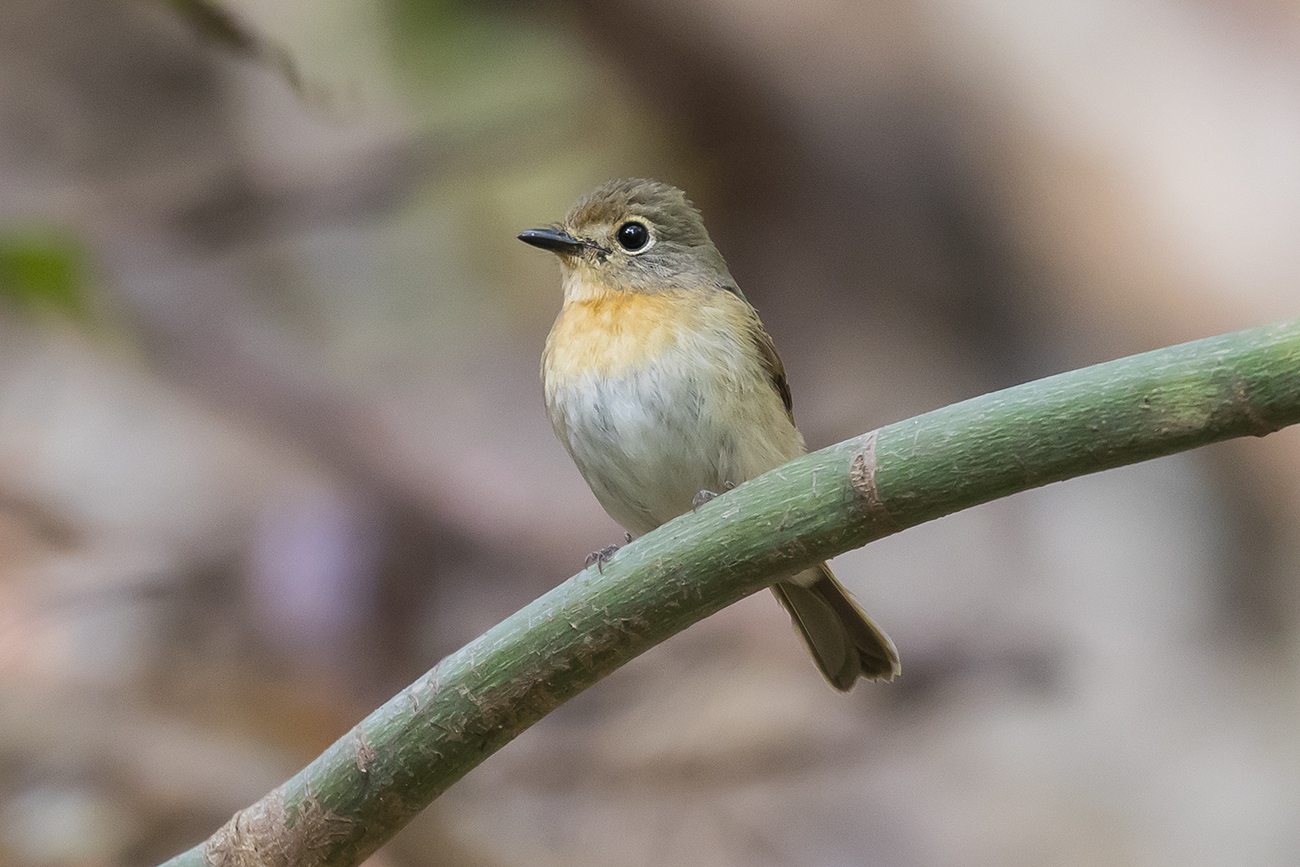
Hainan Blue Flycatcher - certainly wasn't a shy  bird.


Narcissus Flycatcher - adult male

With two species of flycatchers in the same area, I was expecting some kind of fight between them, as flycatchers are known to be quite territorial. Weirdly enough, the two birds never fought and seemed quite peaceful together, at one point they were even sharing the same branch together, perched just a foot away from one another!

Unlikely friendship?

For pretty much the rest of the afternoon, I spent most of the time just marvelling at this beautiful bird. It certainly wasn't shy for a Narcissus, and it regularly came out into the open. A very nice treat after the flu, of which I had completely forgotten about! That's why we always say, birdwatching is the best medicine for birders...


Narcissus Flycatcher - a good reason why we look forward to spring time...

Sunday, 15 April 2018

Quietness Continues

Spring had been eerily quiet, at least it seems so to me anyway. I have not seen a single Blue-and-White Flycatcher or even any Asian Brown Flycatcher so far! Could be just unlucky, but I usually encounter at least one or two during late March to early April...The weather certainly haven't helped much, it's been one of the driest spring in recent years, we barely had any rain at all.

Visited Shing Mun this week, again I was hoping to find at least one or two migrating flycatchers, but saw none. The long staying Slaty-backed Forktail however showed well, it was still frequenting the same stretch of stream as it was a few months ago. It's certainly nice to have this species around, I've always enjoyed watching them flicking their black and white tail up while hopping through the rocky streams. Around the same area I heard a Speckled Piculet calling but it never showed itself.


Slaty-backed Forktail

There are a lot of Damselflies around at the moment, I found many Indochinese Copperwings along the river, a beautiful species that is widespread in suitable habitats in Hong Kong.

Indochinese Copperwing - Mnais mneme

More Hainan Blue Flycatchers had arrived, I counted up to five birds at Shing Mun, all singing males. One of which was singing particularly close to the road and gave excellent views at eye-levels. They seems to be the only flycatcher species I have been seeing all spring.


Hainan Blue Flycatcher - male

The only other bird note worthy was a scruffy looking Two-barred Warbler. It did not make it's diagnostic call, although dark legs, pale lower mandible and strong second wing-bar looks to be a good fit.

Two-barred Warbler

At San Tin, a drained fishpond attracted good numbers of waders, I counted at least 11 species in the pond. There were a couple of Sharp-tailed Sandpipers around, as well as Curlew Sandpipers and Long-toed Stints. Red-necked Stints and Greater Sand Plover were in smaller numbers. There was also a single Terek Sandpiper, as well as the other common wader species.


Sharp-tailed Sandpiper

Curlew Sandpiper, Wood Sandpiper & Long-toed Stint

Red-necked Stint & Greater Sand Plover

Finally, Whiskered Terns are starting to return, we should see many of this elegant species filling up our fishponds really soon before they fly further north to breed. So, enjoy while they last!


Whiskered Tern - breeding plumage

Monday, 9 April 2018

Change of Wind

Swinhoe's Minivet - one of the migrant getting grounded by the strong northerly wind.

It's all about the wind when you are looking for migrants, during spring when all the birds are moving northwards, south easterly winds with good weather will often result in a lot of migrants flying past Hong Kong without stopping. So, a cold front during these times often result in some good birds being forced to land in order to conserve energy from the strong northerly winds. This was exactly what happened during the weekend.

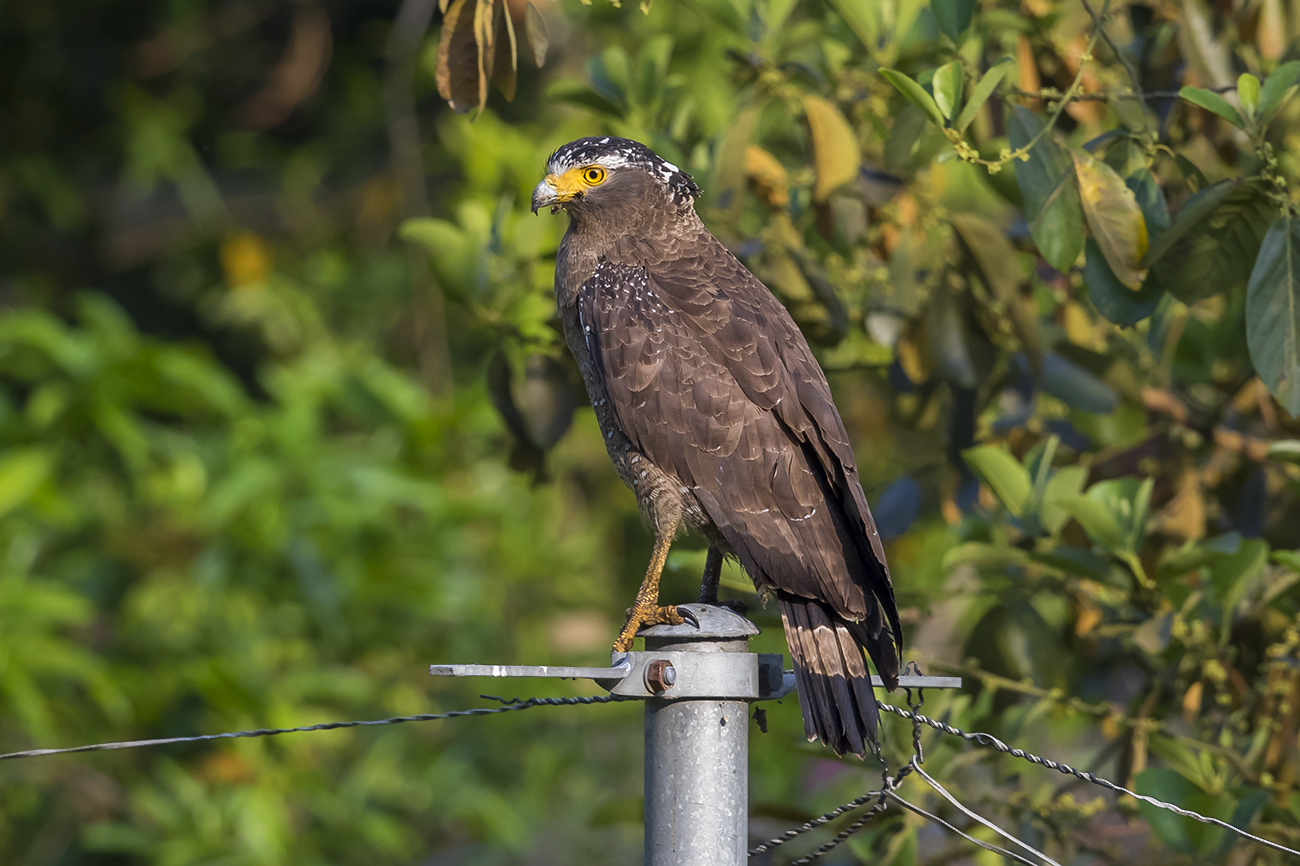
Friday morning I headed to Tai Po Kau with Long in hope for some migrating flycatchers. The weather forecast predicted a cold front to hit Hong Kong that day, although evidently the cold front had yet to arrive, as it was still fairly warm as we walked up the slope. The rather confiding Crested Serpent Eagle was again present early morning, they are simply great looking raptors to see up close.

Crested Serpent Eagle - becoming a regular at Tai Po Kau

The trails were surprisingly quiet, we barely had a bird wave, breeding season could have something to do with this, as birds often disperse and get into pairs to breed and don't form large flocks as they often do in winter. We got two interesting resident species, including a Lesser Shortwing which showed well (by shortwing standared), and a rather confiding Plain Flowerpecker which is still considered to be a fairly rare species in Hong Kong, although I heard up to three birds throughout Tai Po Kau.

Lesser Shortwing - it just need to have a twig in-between...

Plain Flowerpecker

I was surprised to have found only one Hainan Blue Flycatcher in song, I am sure more will arrive very soon. This is easily one of my favourite breeding species in Hong Kong, and likely the most good looking summer visitor.


Hainan Blue Flycatcher - male

On our way back down I heard a melodic song that was not particularly familiar, I thought it could be an Orange-headed Thrush but sounded quite different. The bird in song soon revealed itself to be a male White-rumped Shama! Although we do have one or two records here and there from time to time, they are not thought to naturally occur in Hong Kong, all records have been treated as escaped so far. This bird looked quite good, with no apparent cage damage, although it is possible that an ex-captive individual to have moulted since it's initial release. They are found in Guangxi as well as Hainan, just a few hundred kilometres from Hong Kong, so it's not impossible for us to get wild individuals, although they are such popular caged birds that ex-captive birds seems to be the most logical explanation for their sporadic appearances.


White-rumped Shama - a bit of a surprise

In the afternoon I picked up Hoiling and headed into San Tin hoping to find Oriental Plovers, the cold front had started to move through by then and we experienced very light showers while the northerly wind picked up. We failed to locate anything interesting except for a pair of Osprey looking for fish around some fishponds which allowed fairly close views. We later stopped at Mai Po for a brief visit hoping for any Blue-tailed Bee-eaters dropping in, but again saw none, although we saw the long staying Greater White-fronted Goose at pond 16/17.

Osprey

Greater White-fronted Goose

On Saturday, Hoiling and I joined a group of over 30 birders on a boat trip around southern waters in Hong Kong. The cold front advanced and we experienced strong northerly winds with gusts up to force 8 at times! It wasn't the most ideal condition for sea birds as northerly winds actually drive the sea birds away from the coast, naturally we saw very little at sea, only a few Great Crested Terns were worth noting (I even failed to get a record shot!), most of the time we only saw flocks of migrating egrets...

Sea bird watching without the birds...

One of the many flocks of migrating egrets we saw

It was a good call to stop briefly on Po Toi island, obviously the cold front had forced some migrants to ground, a flock of Ashy Minivets flew around and wasn't particularly keen in getting photographed. A single male Swinhoe's Minivet however was particularly showy, allowing prolonged views at fairly close range. This is a very scarce passage migrant in Hong Kong, we often get just a handful each year.


Swinhoe's Minivet - male

They are similar looking to Ashy Minivet, here's an old photo of an Ashy Minivet for comparison. Swinhoe's have greyish helmet while Ashy have black helmet, the white forehead on Swinhoe's also extend further back. Underparts of Swinhoe's is buffish grey while all white in Ashy. Swinhoe's also shows buffish rump while Ashy is uniformly grey from mantle to rump.


Swinhoe's Minivet (above) & Ashy Minivet (below) comparison

Other people saw Japanese Yellow Bunting and Yellow-throated Bunting, I was fortunate enough to connect with a male Yellow-browed Bunting, it showed fairly well briefly before disappearing into the thick undergrowth again. It would have been nice to get a few more Bunting species in a single day, but one is better than none.


Yellow-browed Bunting - male

Hoiling and I visited Mount Davis shortly in the afternoon after hearing upon another Japanese Yellow Bunting seen up there in the morning. The bird was already gone when we got there, we only saw a Crested Goshawk and a pair of White-bellied Sea Eagles circling above.

Crested Goshawk

White-bellied Sea Eagles

On Sunday afternoon, my dad and I gave San Tin another shot. The weather was already clearing up with a light easterly breeze. A few dried fishponds were being worked on and the bottom were bulldozed, a practice by the fishpond owners to kill off the bacteria in the mud before filling it up with water again. Oriental Plovers are known to be attracted by those type of ponds. Large flock of Barn Swallow were feeding above a fishpond, there was a single Pale Martin within them. It later perched on a wire with the other swallows.


Pale Martin

We scanned the few dried ponds with little luck at first, only a flock of Little Buntings entertained us. As we walked along we flushed a plain looking long winged wader with buffish neck and no white rump, the bird landed on one of the dried pond ahead of us. We quickly went over there to look but could not relocate the bird.

Little Bunting

We walked over to the next dried pond and suddenly an Oriental Pratincole flew in and landed on the dried pond, and just as it landed I noticed a bird standing a few feet away from it, and what else could it be but the Oriental Plover I was looking for! I was able to walk down the sloping side to a better position for photographs, the bird wasn't particularly shy and on two occasions flew towards us. This was an immature bird with fairly scaly scapulars and tertiaries, as well as pale belly and breast. Hopefully I will get a good looking male next time.

Oriental Pratincole


Oriental Plover - immature