Thursday, 14 June 2018

Dragonflies, Damselflies and Indochinese Green Magpies

It rained for a solid whole week and it seems the draught was finally over, amphibians can finally rejoice! June marks the start of the quiet summer months, where bird movement is at it's minimum. The rain certainly helped brought down the temperature, although the high humidity still make you sweat like crazy. I visited Hok Tau near Fanling for a brief morning session, I was hoping to recreate my luck with the Speckled Piculet last year, however I was disappointed to find that the patch of bamboo near where I saw one last year had been chopped down. I kept my ears out for them but heard nothing. I was however greeted by the loud and piercing calls of the Indochinese Green Magpies, I followed the calls and soon saw up to three birds moving through the forest. They were quite shy, and kept their distance with me, but one bird perched just long enough for me to grab a record shot. This beautiful species had only been recorded in Hong Kong in recent years, and seems to have rooted around north eastern New Territories, where small flocks can often be observed also at Brides Pool. I would say it's highly unlikely that they derived from genuine wild birds, although not impossible, it would seems wild birds will need to get through a lot of habitat barriers to reach Hong Kong naturally, as closest wild population is near Hainan and Guangxi.

Indochinese Green Magpie - so shy and uncooperative!

A Plaintive Cuckoo called nearby, while a few Chestnut-winged Cuckoos sang constantly, but only gave me a brief flight views. A few Velvet-fronted Nuthatch caught my attention, not that they are rare, but because a pair were attending to a few young birds. Juvenile Velvet-fronted Nuthatch lacks the bright red bill that is iconic of this species, but it's certainly cute...


Velvet-fronted Nuthatch - adult

Velvet-fronted Nuthatch - juvenile

I spotted a single female Hainan Blue Flycatcher, I wonder whether this one is single or not, but I've yet to come across a nesting pair this year. I heard Lesser Coucals but none showed, Greater Coucals were more cooperative, one perched out in the open drying off it's wings after the morning shower.

Hainan Blue Flycatcher - female

Greater Coucal

The recent rain had certainly boosted insect numbers, and there were a lot more Damselflies and Dragonflies flying around streams that are once again flowing. At a small stretch of mountain stream near Lam Tsuen I spotted some of our very colourful Damselflies, including the beautiful Common Blue Jewel Rhinocypha perforata and the metallic green Stream Glory Neurobasis chinensis (I really love their common names, why can't birds have more common names like these?). While the more humble looking Black-banded Gossamerwing Euphaea decorata also frequented the stream.

Common Blue Jewel - Rhinocypha perforata

Stream Glory - Neurobasis chinensis

Black-banded Gossamerwing -  Euphaea decorata

I also saw quite a few Dragonflies, although I probably missed quite a few, there were a lot of Black Stream Glider Trithemis festiva around, the Blue Marsh Hawk Orthetrum glaucum and the bright and colourful Crimson Marsh Glider Trithemis aurora.

Black Stream Glider - Trithemis festiva

Blue Marsh Hawk - Orthetrum glaucum

Crimson Marsh Glider - Trithemis aurora

Tuesday, 5 June 2018

Summer Birding & Herping

Brown-breasted Flycatcher

Finally able to get back on the field for some birding. We have been experiencing a draught throughout spring and some of the reservoirs had already gone dry, the Hong Kong Observatory predicted rain this week, and sure enough we started getting some rain on Monday. I visited Tai Po Kau on Monday morning, hoping to catch up with the Brown-breasted Flycatcher that had been seen there by other birders. Things started extremely quietly, the sound of cicadas drowned out most bird calls and I saw very little on the way up. Surprisingly, a Dollarbird was perched on top of a dead tree, I have never seen one in June before, so this one must be quite late.

Dollarbird - a very late record

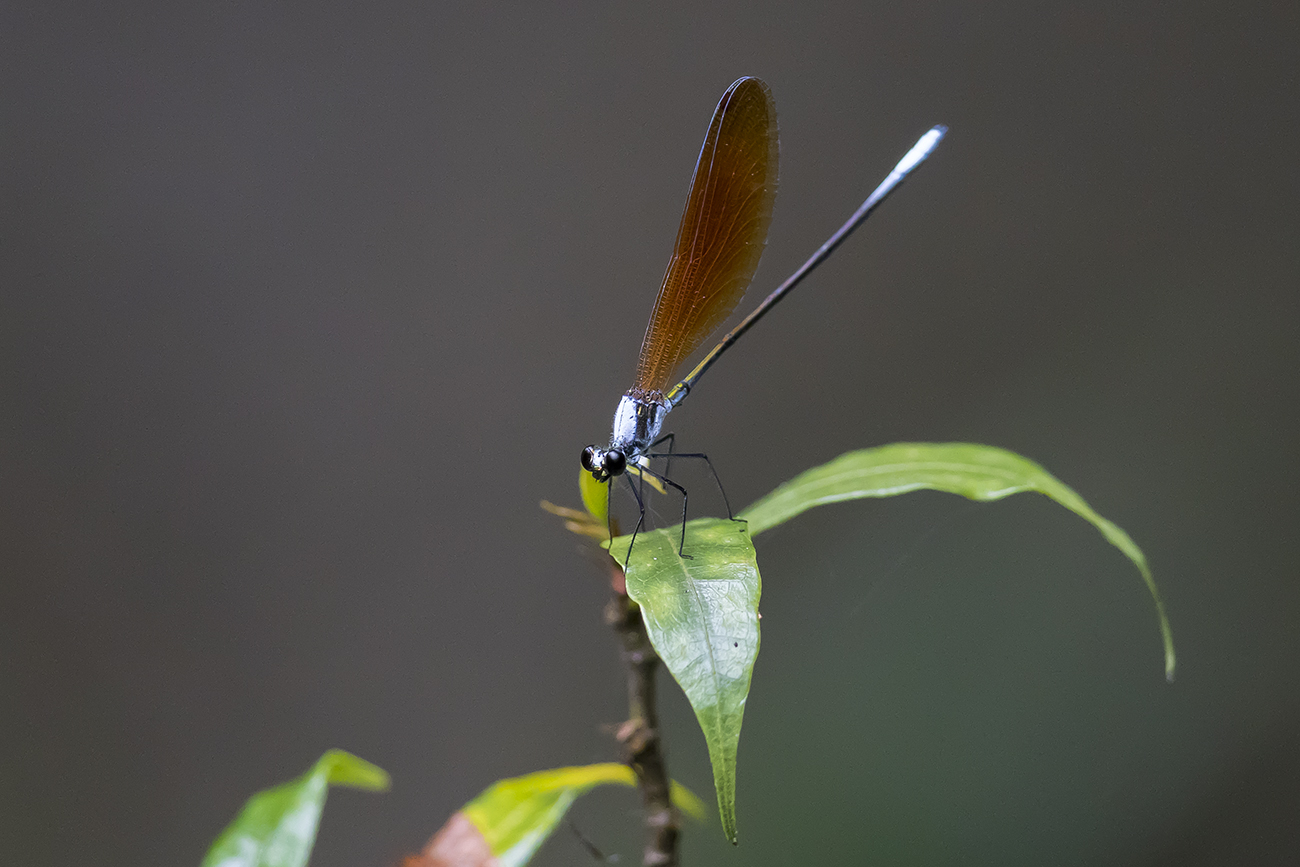
Little else showed up, I heard a Lesser Cuckoo calling in the distance, while Great Barbets called constantly. A Pygmy Wren Babbler sang loudly right next to the footpath revealed itself quickly and I had brilliant views for up to five minutes. I crossed the stream on the red walk and saw plenty of Damselflies there, including this beautiful male Indochinese Copperwing.

Pygmy Wren Babbler

Indochinese Copperwing - Mnais mneme 

It wasn't long until i spotted the bird I was looking for, a rather large headed and billed flycatcher with pale legs. Brown-breasted Flycatcher was only first recorded in Hong Kong in 2001, but had since became a regular migrant and in recent years a summer breeder. They are still rather scarce in Hong Kong, so it's always nice to see.

Brown-breasted Flycatcher

The rest of the way remained pretty quiet, two large groups of Rhesus Macaques were spotted foraging.

Rhesus Macaque

Kenneth, Bee and I gave Tai Mo Shan a try in the evening. We were hoping for Coral Snake, and the long awaited rain should help with the wildlife. Things were pretty active, we saw plenty of Hong Kong Warty Newts strolling about, Lesser Spiny Frogs were in good numbers, while there were quite a few Hong Kong Cascade Frogs at the waterfall.

Hong Kong Warty Newt

Lesser Spiny Frog

Hong Kong Cascade Frog

A Nanhaipotamon hongkongense was spotted by the road, a female carrying eggs on her underside. I guess it was trying to find a safe place to put them? This peculiar looking species is endemic to Hong Kong, often found around mountain streams.


Nanhaipotamon hongkongense

Another interesting find was a Lau's Leaf Litter Toad, a small toad species that is only found in Hong Kong and Shenzhen. Kenneth so nearly stepped onto it without knowing as it was so well camouflaged! It's a funny looking little toad and you can compare it to Bee's fingertips.


Lau's Leaf Litter Toad

Although we didn't find any Coral Snakes, we found a total of three Anderson's Stream Snake. This is the most widespread Opisthotropis species in Hong Kong, where they can be found in mountain streams with leaf litter. Outside of Hong Kong they are also recorded in Vietnam. They are very docile and gentle, never attempting to bite when handled.

Anderson's Stream Snake

Monday, 28 May 2018

Last of Spring & Owls in the City

May was extremely busy for me and I literally had no time for birding, at all! I enjoyed the last of my free weekdays at the beginning of the month, including a nice productive morning at Tai Po Kau with two friends from the US, goodies includes a rather shy but very loud Speckled Piculet which gave us a short glimpse but drummed for over ten minutes, a very handsome Crested Serpent Eagle perched at close range, distant views of a singing Great Barbet and plenty of views of singing Hainan Blue Flycatchers. We also had a singing Hodgson's Hawk Cuckoo which didn't want to show itself and a Lesser Cuckoo which gave a brief flight view.

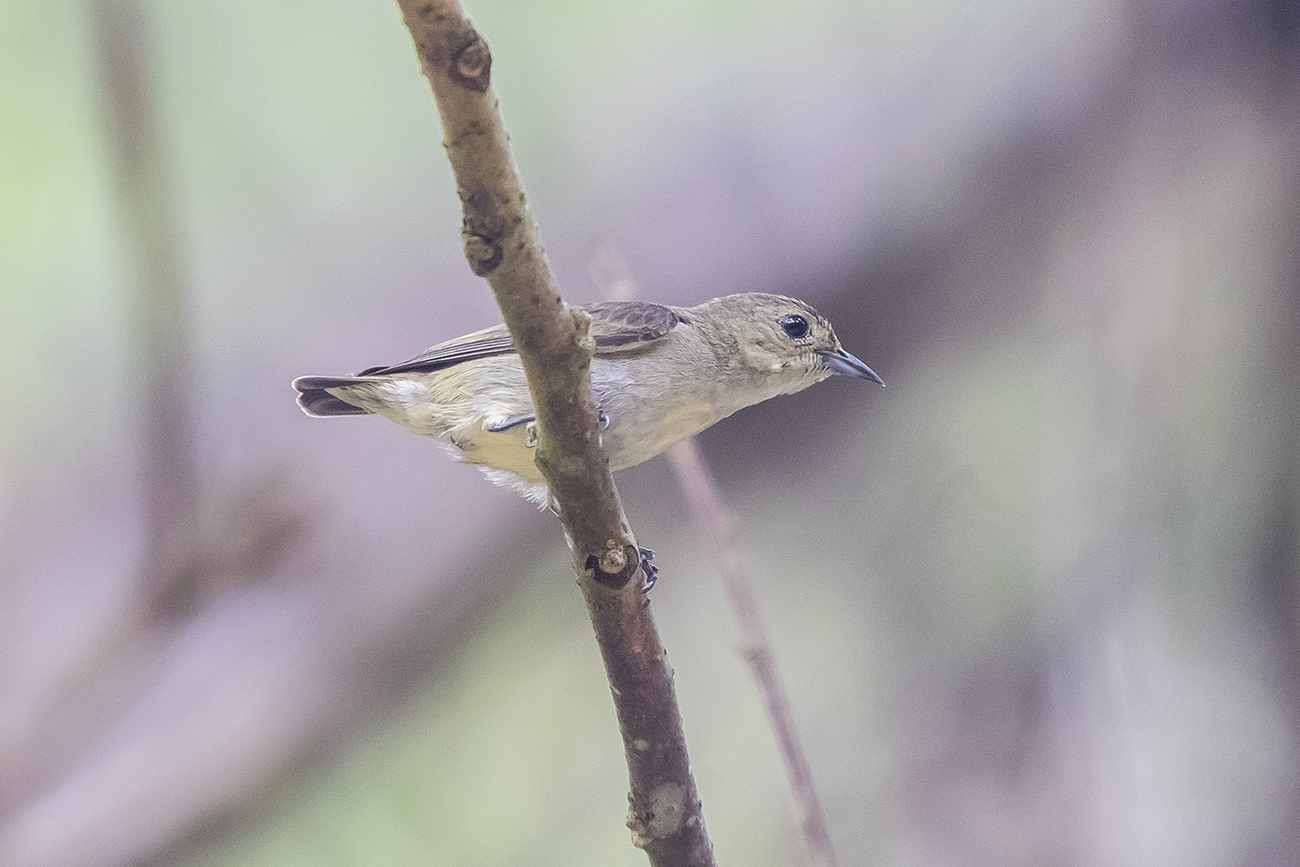
Plain Flowerpeckers were singing loudly, one of which gave good views. They are so tiny and quick that even at close range they are tough targets to photograph.


Plain Flowerpecker - plain but charismatic as always

Black-throated Laughingthrush gave fairly good views, as well as several other resident species. Two species of Minivets were seen, and a very photogenic Blue Whistling Thrush to end the morning.

Black-throated Laughingthrush

Grey-chinned Minivet - male

Blue Whistling Thrush

Earlier last month, a Collared Scops Owl nest was found at an urban park in Kowloon. It was actually first exposed when SPCA decided to make a video of their "rescue" of a baby owl which fell out of the tree hole. Naturally, it didn't take very long for people to figure out where the location was, and soon a huge crowd of photographers congregated at the park. It got slightly out of hand when people stayed throughout the night, using high intensity lighting to light up the nest for photographs...It wasn't until AFCD put someone on duty there that people stopped using artificial lighting.

I visited the pair just as the owlets started fledging, one of the adult was perched nearby, while two chicks were still visible in the tree hole. The authority had fenced off the area below the nest so no one get too close to the nest. The park itself was pretty noisy as it was without the birders and photographers, as residents with loud speakers play music as they danced during early morning. I don't think it was so much a problem to view or photograph the owls during the day, it's a shame that some people had to act selfishly and shine bright lights on the nest throughout the night, this certainly disturbs the owls and is not ethical.

It's also a shame that this perfect opportunity of public education on these wonderful birds was overshadowed by the incidents with the photographers. I saw parents with their children and elderly people casually strolling the park, it could have been such a good opportunity for some public education work to be done on how to handle with issues of nesting birds and how we should respect nature in our city. These owls could have been perfect ambassadors for such a task. I also think the LCSD (Leisure and Cultural Services Department) who is in charge of the park could have done a little more, simply by locking up the park at night and reopening it during the day for people to visit. Anyway, I truly hope these wonderful owls will grow up and prosper.


Collared Scops Owl - adult

Collared Scops Owl - owlets in the nest hole

I should be able to resume with some birding in the coming months, although it's a shame that the best of spring had already gone. I strangely dry spring this year, the draught certainly is not good for wildlife, especially amphibians...