Showing posts with label Crested Goshawk. Show all posts

Monday, 18 May 2020

Summer Is Here

Hot and humid are two perfect words to describe summer in Hong Kong, it is not for the faint hearted, as the heat can be intense at times. It is also not a great season for birds, as most migrants have gone north to their breeding grounds, very few birds stay behind to breed. One of the more exciting breeding species in Hong Kong is the Chestnut-winged Cuckoo, they are pretty widespread throughout Hong Kong, found in a wide range of habitats, but they are almost never easy to see or photograph. A few individuals near Nam Chung have been pretty showy of late, I decided to try for it early morning, sure enough I saw a pair almost immediately after I arrived. They are impressive looking birds, being quite large and colourful, even got a crazy looking crest to go with that ever repeating call that sounds almost exactly like a reversing truck.


Chestnut-winged Cuckoo

Another local species with chestnut wings is the Greater Coucal, which is very common throughout, they are usually shy but occasionally can give good views, like this individual at Tai Mei Tuk Catchment, which was evidently looking for something to eat along the dried up catchment, my thought was that it was trying to pick up some tadpoles in the gutter.

Greater Coucal

Tai Mei Tuk Catchment is a great place for raptors, I saw a juvenile Crested Goshawk the other day, it was probably hunting for a Spotted Dove but obviously not quite quick enough...it perched there for a few minutes after losing the meal and flew off into the forest.

Crested Goshawk

Tai Po Kau is also fairly quiet, the only interesting birds I recorded were Lesser Cuckoo calling in the distance, I also caught a glimpse of a Bay Woodpecker but some hikers came through and likely scared it off. The only photogenic bird there was a Crested Serpent Eagle, back on its favrourite tree. It is a species I always enjoy seeing up close, and always ends up with me taking tons of photos...It perched there for over 10 minutes, where I left it to look for snakes in peace.


Crested Serpent Eagle

It is no surprise that the Crested Serpent Eagle is out and about, as a night walk at Lung Fu Shan yielded three snakes, including two Taiwan Kukri Snakes, a very pretty species that specialize in eating eggs, they are non-venomous and usually pretty docile. The other snake being a Bamboo Pit Viper. Near Wu Kau Tang while out for night birds survey, we encountered my first ever Banded Krait! Like its cousin the Many-banded Krait they are highly venomous, although the Banded Krait is usually docile. This individual was pretty gentle and only wanted to escape when we got closer, protecting its head under leaf litter or its body.


Taiwan Kukri Snake

Bamboo Pit Viper

Banded Krait

Its been too dry for most frogs, the forecast of rain throughout the week maybe good news for our local amphibians! We often find Spotted Narrow-mouthed Frogs out and about at this time of the year, they are surely one of Hong Kong's cutest frog species. The Hong Kong Whipping Frog which is also known as the Brown Tree Frog is also a very common species throughout.

Spotted Narrow-mouthed Frog

Hong Kong Whipping Frog

It is also a good time of the year to see the Nanhaipotamon hongkongense, also known as the Hong Kong Stream Crab, they can be easily found along mountain streams, being bright red they are hard to miss. This is an endemic species to Hong kong, and recently they discovered yet another species of this genus on Lamma Island, which is also endemic.

Nanhaipotamon hongkongense

It is also a great time of the year to look for butterflies, I am not a particularly active butterfly person, but given the chance I do look at the odd one. Like this Glassy Bluebottle which stopped briefly for a drink, this is an uncommon species in Hong Kong, and I rarely get to see one so well. Another uncommon butterfly is the Indian Awlking, one of the prettier member of the Skippers.

Glassy Bluebottle

Indian Awlking

We've also had some success in rearing a few larvae, including two Tailed Jays which we collected from the Magnolia figo on our rooftop. We also reared two Cephonodes hylas larvae, both of them successfully emerged, it is a beautiful species of hawk moth, they actually have a few scales on their wings when they first emerge, but seems to wear off pretty quickly.

Tailed Jay

Cephonodes hylas

Saturday, 18 April 2020

Birds and...Mongoose!

I continued exploring my local patch for the past week, the most surprising find was however not a bird, but a Crab-eating Mongoose seen in broad daylight! This is a rare mammal locally with limited distribution in Hong Kong, as you would expect they are rarely seen by people, I never thought I would see one near home!

Crab-eating Mongoose - a rare mammal in Hong Kong

An adult male Blue-and-White Flycatcher on the 15th was probably one of my best bird at the catchment, as I have waited a few weeks for one to turn up! With many recorded throughout Hong Kong I was feeling slightly left out with none turning up at my doorstep. It was accompanied by a female nearby, making this the 3rd female here this spring.

Blue-and-White Flycatcher - male

Blue-and-White Flycatcher - female

The species of April definitely goes to Narcissus Flycatcher, this was an incredible spring for this species, with at least 14 individuals counted at Tai Mei Tuk Catchment from late march to mid april! No doubt the most Narcissus Flycatchers I have ever seen within a month. Here are a few different individuals seen in the last two weeks, including the only female I saw this spring.


Narcissus Flycatcher - male


Narcissus Flycatcher - female

To prove my point that they are not just turning up at my local patch, I was at Tai Po Kau one afternoon and found two more there! One of them was extremely photogenic, I was happy to just spend an hour there looking at this stunner.


Narcissus Flycatcher - very showy male at Tai Po Kau

At least 5 Hainan Blue Flycatchers have marked their territory along the catchment, all of them now in song. I have yet seen any females, but most likely they will start forming breeding pairs in the coming weeks or so.

Hainan Blue Flycatcher - male

The sizeable flock of Ashy Minivets continued at the catchment till the 12th of April, they always showed well and often very photogenic, thanks to the fact that trees at the catchment are generally quite low.


Ashy Minivet - male

Ashy Minivet - female

Speckled Piculet also seems to be a regular staple here at Tai Mei Tuk Catchment, the lower trees often makes it easier to spot this tiny woodpecker amongst the branches, they are often detected by their high-pitched and repeating 'sit-sit-sit-sit-sit' call, or by their loud drumming.


Speckled Piculet

A flock of Eyebrowed Thrush had been sneaking around for two weeks but I never got to see them properly, it took me a few tries but I at least got a record shot in the end, they were also accompanied by a few Japanese Thrush. Black-winged Cuckooshrikes and Grey Treepies are both regularly seen at the catchment, sometimes mixed in with the laughingthrush. A pair of Hair-crested Drongo were spotted, the first of this species for me at the catchment.

Eyebrowed Thrush

Black-winged Cuckooshrike

Grey Treepie

Hair-crested Drongo

Tai Mei Tuk Catchment always seems to attracts plenty of raptors, one of the most commonly seen here is the Crested Goshawk, an impressive looking accipiter fairly common throughout Hong Kong. A very confiding individual gave good views one morning, it fled to a higher tree after being mobbed by sunbirds and flowerpeckers. During display flights they often fluff out feathers from the vent and beat their wings rapidly.


Crested Goshawk - display flight

The much smaller Besra is also a regular here at the catchment, where you often see them flying over, but I was lucky one afternoon to find a juvenile Besra perched at close range, it remained there for 10 minutes before flying off. I first thought it was a Japanese Sparrowhawk, but the shorter primary projection suggests otherwise. Either way, it was still a treat to see such a beautiful raptor up close.


Besra - juvenile

Tuesday, 3 January 2017

Birding Between Two Years

Yellow-cheeked Tit - one of Tai Po Kau's stunning residents

Year end always seems to be exciting for birds, and somehow it feels like if you end it well, you will start it well. 2016 had been an interesting year in terms of birds, there were quite a few birds that had been very high on my wish list for years, finally getting them was exciting and made this year all that more memorable. I will go back to review the past year in another post...

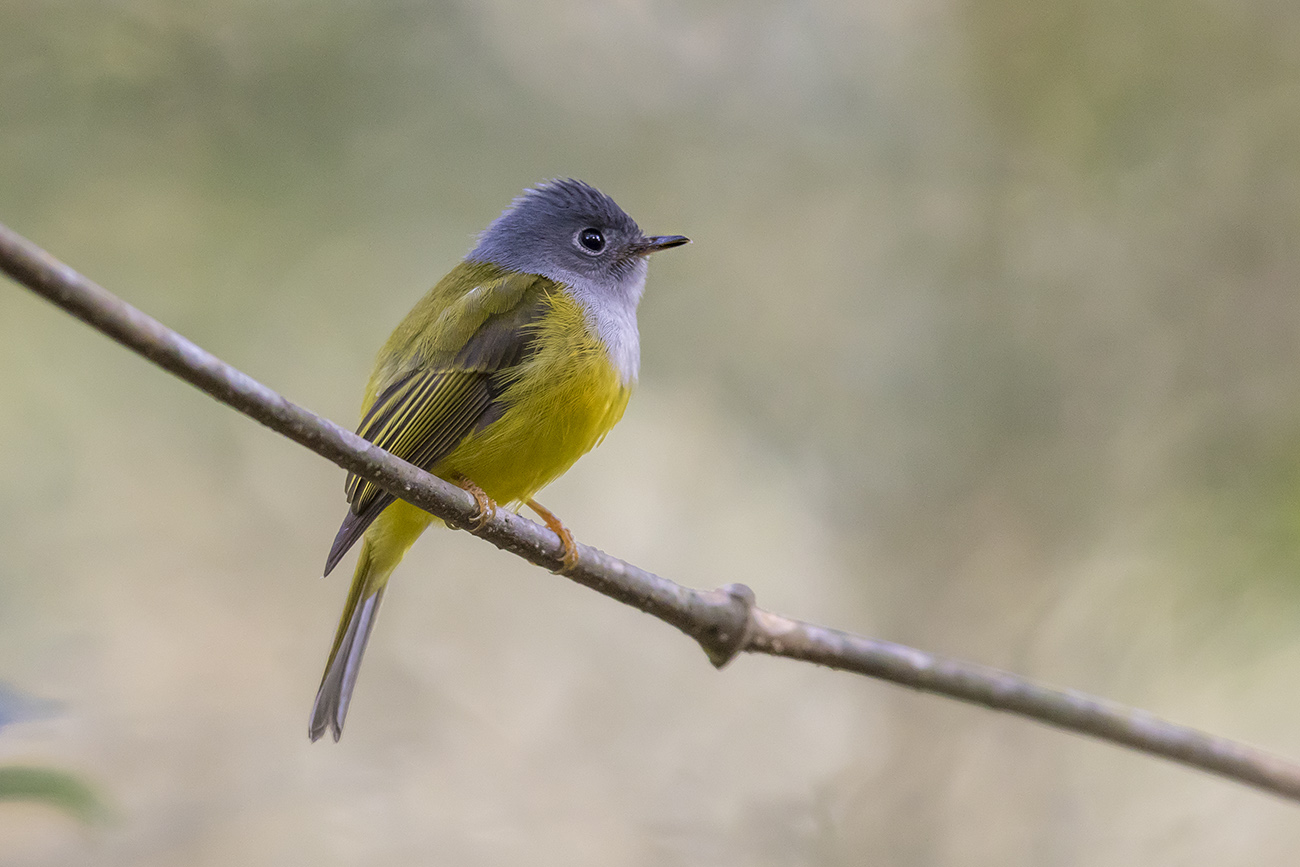
31st of December was my last birding day in 2016, Hoiling and I decided to give Tai Po Kau one last visit. Things started off pretty slowly, we didn't really encounter any proper viewable feeding flocks until we got to the AFCD warden's quarters. The first bird that greeted us was none other then the common Oriental Magpie Robin, a species I usually take little notice of, but since this handsome guy perched very still I felt bad not to take a photo.

Oriental Magpie Robin - handsome male

The feeding flock was quite high up, there were some warblers, a Grey-headed Canary Flycatcher and I spotted a single Verditer Flycatcher, but none really gave good views. A female Fork-tailed Sunbird was the only bird that gave a decent look. on the other side of the road however, a Crested Goshawk perched silently on a bare tree, seems to be enjoying the early morning sun, it gave all the birds a good fright later when it flew off.

Fork-tailed Sunbird - female

Crested Goshawk

Things got better afterwards, we encountered quite a few feeding flocks and nearly all the birds gave excellent views for as long as we wanted! Mainly the usual suspects, with exception of the Goodson's Leaf Warbler which gave a fairly good view even of it's crown stripe, the Eastern Crowned Warbler was however much less obliging and only gave a brief look. Other more common birds such as Blue-winged Minla also gave very close views, the Yellow-cheeked Tits were especially entertaining as they carefully check the branches throughly for insects. Velvet-fronted Nuthatches were again everywhere.

Goodson's Leaf Warbler - one of the most easily recognisable leaf warblers in HK

Blue-winged Minla


Yellow-cheeked Tit - male

Velvet-fronted Nuthatch

The Grey-headed Canary Flycatchers were again very cooperative. I've had so much luck with them lately after many years failing to get any decent photos! Quite a few of them were seen with a large feeding flock, again coming in extremely close. It's always so amazing to be able to get so close to these brilliant looking birds.


Grey-headed Canary Flycatcher

Other then brilliant looking birds, we also got some pretty good looking butterflies, including an uncommon Painted Jezebel, a Common Mapwing which is one of my all time favourite butterflies, and a Purple Sapphire.

Painted Jezebel

Common Mapwing

Purple Sapphire

In the afternoon, my father joined me at San Tin to look for the recently found Booted Warbler, still an absolute mega rarity in Hong Kong after last year's bird. It wasn't long before we were looking at this rare vagrant. I saw the birds from Mai Po last year but this was a lifer for my father, we ended the day with a beautiful sunset over Lok Ma Chau, a great way to end 2016!

Booted Warbler


On 2nd of January my father and I met with Jeff Lauffer; a visiting birder from the USA, to try for a few target birds he is still missing on his Hong Kong trip before he fly home. At 7am we headed into She Shan near Lam Tsuen to try our luck early morning. The first bird we saw was a pair of brilliant looking Common Kingfishers over the river. Also on the river was a rather confiding Green Sandpiper, it finally flew off when it had enough of us talking about it.

Common Kingfisher - female

Green Sandpiper

The long grass in the area is traditionally a great area for Bright-capped Cisticolas, and very soon we heard one calling in the grass, but this one did not respond much to the recording and remained largely out of sight. The Plain Prinias though were very active and were perching right out in the open. Scaly-breasted Munias were also present. We also had at least 6 or 7 calling Siberian Rubythroats in the grass, but only one gave us a glimpse.

Plain Prinia

Scaly-breasted Munia

We heard many of the species we had already seen at Tai Po Kau the other day, in addition we got Hair-crested Drongos perched in a tree nearby, managed to get a rather "artistic" shot of the bird. A few Eurasian Magpies also perched on top of trees in early morning. We heard the Lesser Coucal that Jeff needed, but the bird did not show, we still considered that to be lucky as they don't usually call often at this time of the year. We later found an Asian Brown Flycatcher at Golden Triangle which was also a target bird for Jeff.

Hair-crested Drongo

Eurasian Magpie

We gave Shek Kong Airfield a try next. Many Yellow-browed Warblers around but overall a bit quiet, there are no reports of Common Rosefinches yet, probably not quite cold enough. A tree full of mistletoe gave us fairly good views of a female Scarlet-backed Flowerpecker, we even observed the female "spreading" the mistletoe seeds with her rear end. We did manage to find two Chinese Grosbeaks, one of them perched very still for a good look. The best bird there though was probably a single Pale Thrush, easily recognisable with the two white spots on the tail.

Yellow-browed Warbler

Scarlet-backed Flowerpecker - female

Chinese Grosbeak - male

We gave San Tin a go next, hoping to get the Booted Warbler. The bird was however a no show after we waited for over half an hour, we got another of Jeff's target bird as we waited though; a Greater Spotted Eagle, soaring along the horizon of Shenzhen very far away. The ID was conclusive when just a few minutes later we spotted another eagle along the same area, but this time a much larger Imperial Eagle, with much longer tail and a bright head. Seeing that we were having no luck despite the many eyes at the Booted Warbler spot, we decided to go for lunch before we headed into Lok Ma Chau for a quick look. Lok Ma Chau only added a few common species to our day list, most notably two Purple Herons which was a first for me in this area, plus a flock of Eurasian Teals that were strangely diving like Tufted Ducks, a behaviour we have never seen nor heard...

Purple Heron - a first for me at Lok Ma Chau

Long Valley was next, we mainly hoped to find the Citrine Wagtail which was high on Jeff's wish list. Things started off slowly with a funny looking Red-eared Slider...Common Snipes were in quite good numbers as well, although we could not find any Pin-tailed Amongst them. Good news was that I managed to relocate the Painted Snipe on another pond, but they were again very very skulking and allowed only some very obscured views, at least I know where they are now!

Red-eared Slider

Common Snipe

The usual suspects were there, including many White-rumped Munias. A few Little Buntings were again on their favourite tree, they weren't doing much and mainly just sat there the whole time we were at Long Valley. The confiding Cattle Egrets had became a regular sight at Long Valley lately. We also managed to find a single Buff-bellied Pipit amongst the flock of Red-throated.

White-rumped Munia

Little Bunting

Cattle Egret

Buff-bellied Pipit

The Citrine Wagtail was not at it's "usual" spot, just as we thought we won't have any luck finding it, I spotted one in amongst a flock of Eastern Yellow Wagtails on the Arrowhead field! The bird provided amazing views for the next couple of minutes, allowing us to really enjoy all it's diagnostic features! An exciting moment for us all, and I was so glad Jeff got this lifer finally. The bird later perched along with an Eastern Yellow Wagtail with the same pose, giving a very good "comparison shot".


Citrine Wagtail - finding the bird was one of the great moments of the day!

Eastern Yellow Wagtail - taivana

To end our day, we decided to give the Booted Warbler one last try. A lot of birders were waiting for the bird when we arrived at San Tin. They were however having no luck...apparently the bird appeared only once at 1pm before disappearing again for the next few hours! We waited for around thirty minutes, locking our bins onto pretty much every warbler that foraged along the trees. Suddenly, someone spotted the warbler dropping down into the bushes next to the fishpond. We all followed and soon had some obscured but identifiable views of the warbler, the bird was kind enough to perch and preen at a single spot allowing us to get a good look, making this Jeff's 4th lifer that day! And what a bird to end our first day of birding in 2017!

Booted Warbler - could not have asked for a better bird to end the day with!