A pair of Taiga Bean Geese were spotted at Mai Po a few days ago, I finally had time to look at them this week, although they remained quite far away and the hot air constantly fogs up the photos, it was still pleasant to observe them resting and feeding along the scrape. Goose are not a common sight in Hong Kong, as we are too far south to be in their natural wintering range, although we seems to be getting more records in recent years, it is still a wonderful sight to see them flying through the scrapes.
 |
Taiga Bean Geese - my first Taiga Beans since November 2010
|
Mai Po in autumn is a very pleasant place to be, returning winter visitors as well as numerous migrants can be seen around the reserve. Both days I were there ended with a nice selection of birds, although not all of them were photographable, including a flock of Blue-tailed Bee-eaters which flew past. Two Eastern Marsh Harriers were patrolling the reed beds, soaring quite close at times.
 |
Eastern Marsh Harrier
|
At least two Black-winged Kites have been spotted around the reserve, usually hovering or perched on dead trees at a distant. They are very good looking raptors even when seen from afar.
 |
Black-winged Kite
|
While walking along the border fence, I spotted a snake on the road, which I thought was a Chinese Cobra at first, but on closer look it turns out to be a large Checkered Keelback! This one is probably as big as they get. A Black-winged Cuckooshrike was seen feeding with some bulbuls, I managed to grab a photo before it flew off to another tree.
 |
Checkered Keelback
|
 |
Black-winged Cuckooshrike
|
There were no short supply of Pheasant-tailed Jacana at Mai Po, I saw three individuals one afternoon, although none were as friendly as the long staying one at Long Valley, the one at lily pond did gave quite a good flyby view.
 |
Pheasant-tailed Jacana
|
Ducks are now returning in decent numbers, with a nice selection of Eurasian Wigeons, Teals, Garganeys, Northern Shovelers and Northern Pintails. More will be returning in the coming month, hopefully something rare will turn up with them!
 |
Eurasian Wigeon
|
The trees around Mai Po are great for migrants, there were plenty of Black-naped Orioles around, although none of which were easy to photograph. A female Japanese Paradise Flycatcher at the car park eluded my camera, although I found a female Yellow-rumped Flycatcher at the same spot, I usually see them up to the end of September, but extreme dates for this species in Hong Kong is in November.
 |
Black-naped Oriole
|
 |
Yellow-rumped Flycatcher
|
A few Yellow-fronted Canary grabbed my attention as I was exiting the reserve, I noticed a juvenile next to an adult begging for food! We usually treat this species as escapes, as they are very popular in the pet trade. Breeding in Hong Kong have never been proved, therefore this species continues to be placed in Cat-3.
 |
Yellow-fronted Canary - possibly breeding?
|
I have been patrolling my local patch, but with relatively little success. I found an Oriental Reed Warbler, took a little effort but it finally showed itself in the tall grass, although I would have been a lot happier if this was a Thick-billed Warbler...Asian Brown Flycatchers were in no short supply, one along the main road was friendly enough for a photo at close range.
 |
Oriental Reed Warbler
|
 |
Asian Brown Flycatcher
|
Yellow-breasted Buntings are now arriving at Long Valley, I saw quite a few of them on my last visit, although none of them were cooperative and flew off the second I saw them. I didn't bother with the Jacana there again, so I just took some photos of common birds there. The Chestnut and White-headed Munias were still around.
 |
Common Snipe
|
 |
Common Moorhen
|
 |
Chestnut Munia
|
 |
| White-headed Munia |
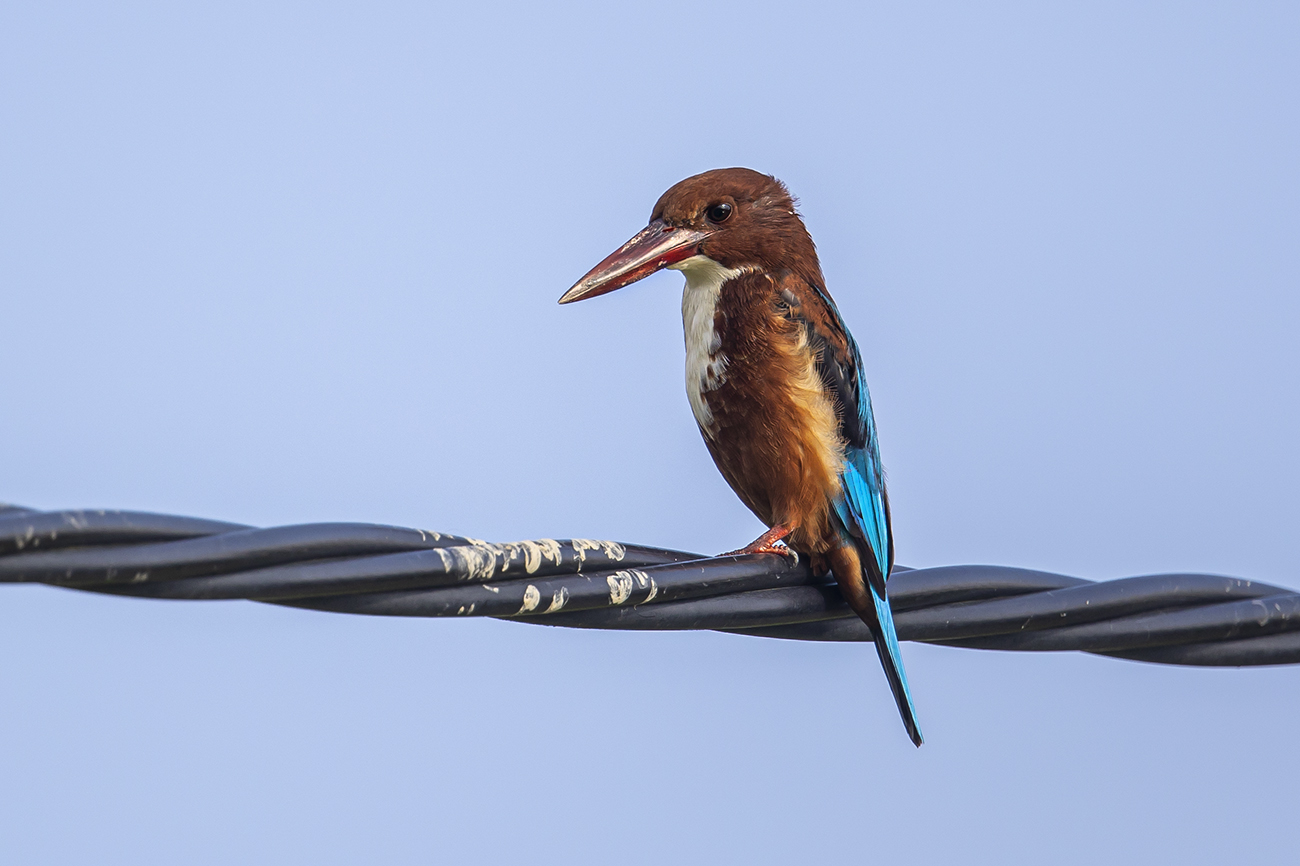
Recently I have been working with HKBWS on urban birding tours for the Wan Chai District Council, to the surprise of many local residents, the area can be quite birdy, especially for common species. Trees around Victoria Park is of course one of the best places in Hong Kong to see the Yellow-crested Cockatoo, a critically endangered species that is fortunately thriving in Hong Kong. Other birds you may encounter in the area includes Masked Laughingthrush, Black-collared Starling, Blue Whistling Thrush, White-throated Kingfisher and Red-billed Blue Magpie, all of which you can see up close within the park!
 |
Yellow-crested Cockatoo
|
 |
Masked Laughingthrush
|
 |
Black-collared Starling
|
 |
Blue Whistling Thrush
|
 |
White-throated Kingfisher
|
 |
Red-billed Blue Magpie
|
A few more interesting migrants we encountered in the area includes a Red Turtle Dove which totally caught me off guard! It was feeding with other Spotted Doves on the street, a fairly peculiar place to find this what is usually a more rural species. A Brown Shrike was also seen within Victoria Park. The best bird there was probably a single Black-naped Oriole, which I first detected by its unusual calls from up in the trees.
 |
Red Turtle Dove - a real surprise in such urban settings!
|
 |
Brown Shrike
|
 |
Black-naped Oriole
|