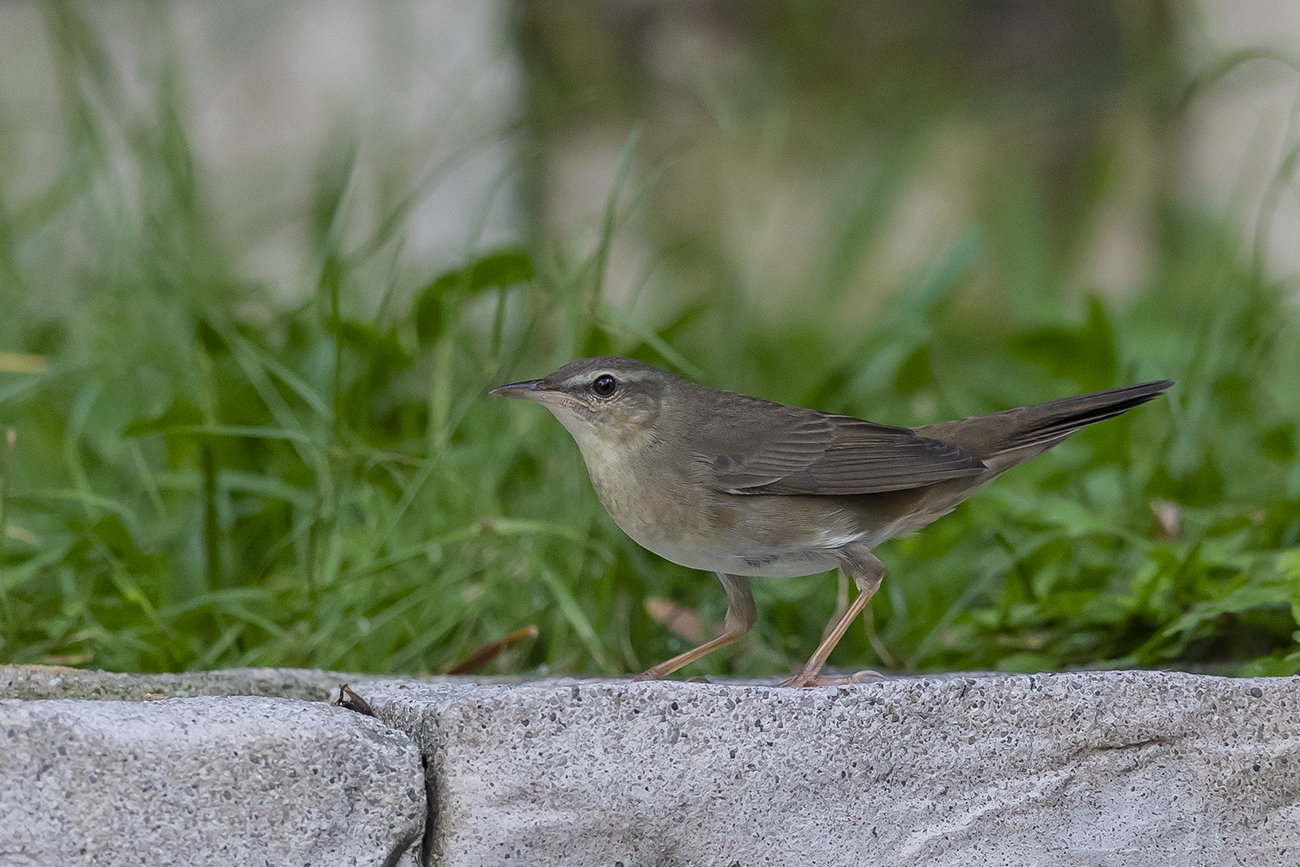
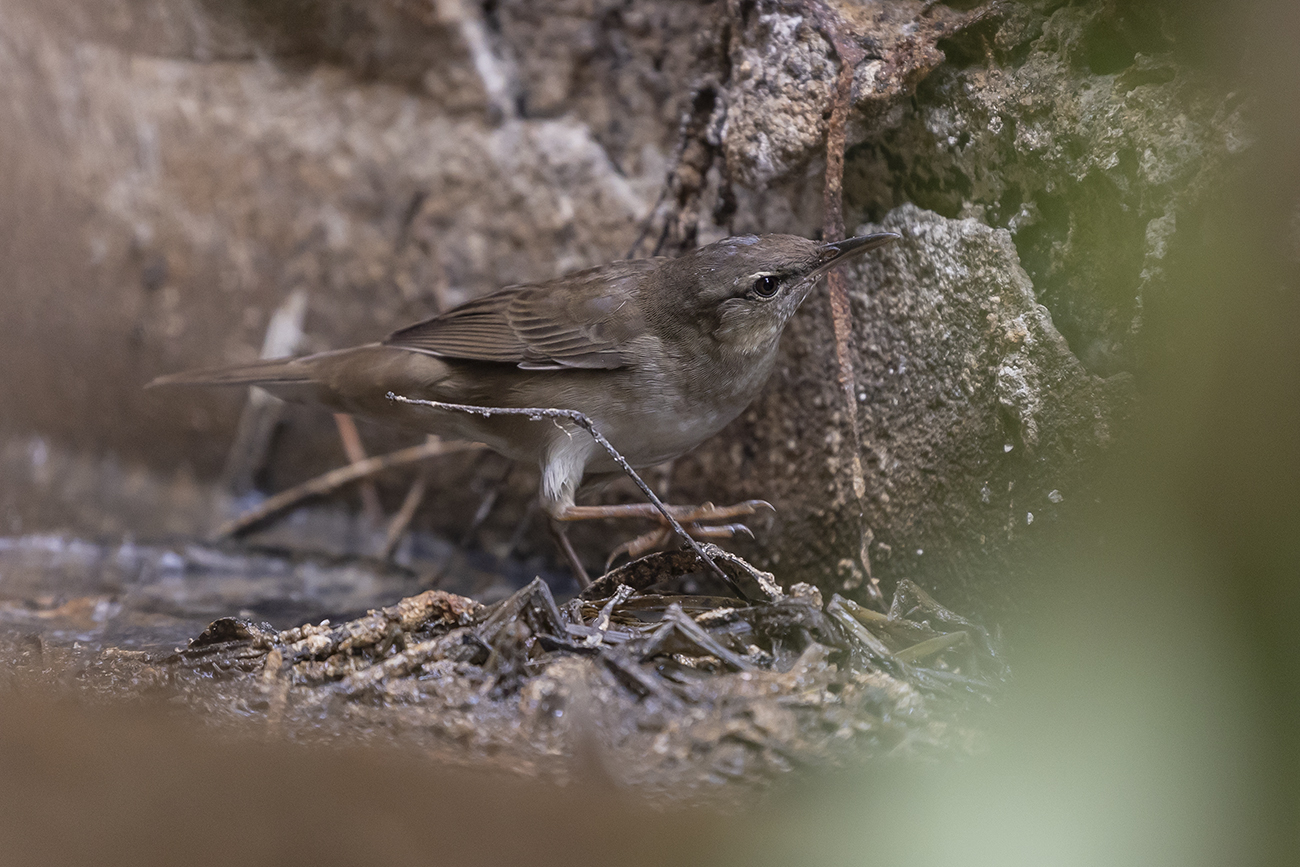
Showing posts with label Styan's Grasshopper Warbler. Show all posts

Wednesday, 5 October 2022

Autumn Migration on Po Toi

Before Ho Man Tin, Po Toi was probably the most well known migrant watching site in Hong Kong, its potential peaked in the mid 2000s, with numerous Hong Kong first recorded on the island. While it receives slightly less attention than it did a decade ago simply because it is not the most easily accessible birding site in Hong Kong, it is still considered one of the prime site for migrants in both spring and autumn. Its been a while since we received any visiting birders, and not often do I get a request to guide a day trip to Po Toi. Richard Patient, a very experienced birder from the UK joined me at Aberdeen Pier at 8am and we boarded the ferry to Po Toi, we were hoping for some migrating flycatchers. Things started off slowly, with birds being difficult and shy. The first better migrant of the day came in form of a pair of Ashy Minivets, while a fairly common migrant in Hong Kong, views of this species is by no means guarantee.


Ashy Minivet - female

Other than a large influx of Arctic Warblers, Asian Brown Flycatchers were in no short supply, we counted up to ten individuals throughout the island, there seemed to be one on every large tree on the island. There was only one single Dark-sided Flycatcher located behind the public toilet.

Asian Brown Flycatcher

Dark-sided Flycatcher - juvenile

We added a few more common migrants including numerous Two-barred Warblers, Yellow-browed Warblers, Dusky Warblers, Black-naped Oriole, Blue Rock Thrush...But most were either too quick or too far for photos. Black Drongos were in good numbers, while we only saw one single Hair-crested Drongo. A single Pale-legged Leaf Warbler type bird was seen, since Sakhalin Leaf Warbler was a target for Richard, we waited for the warbler to call, but it remained silent despite having tried the playback of both species! It is tough, but these two species are simply inseparable without the call.

Hair-crested Drongo

Finally, we had a female Blue-and-White Flycatcher at the helipad, this was one of the target species of Richard, so I am glad we connected with at least one of his targets on the island. It was a shame this was not a male, but the female showed well and perched at eye-levels for a few minutes before flying into the mangroves and not to be seen again!

Blue-and-White Flycatcher - female

Though Po Toi was not absolutely terrible, it wasn't producing anything interesting enough for us to stay, adding to the fact that it was 33°C and very humid (felt more like a spring day), we decided to cut our loses and take the 3pm ferry back to Stanley, from there we headed towards Telford Garden where we hope to get the long staying Styan's Grasshopper Warbler as Richard went the day before on his own but couldn't connect with it. We arrived to the rooftop gardens to a dozen of birders and photographers. The warbler showed immediately and gave several rounds of excellent views! This warbler is a different Styan's from my previous visits, located in the other end of the gardens, the original one was still present but now prefer the upper levels which is out of bounds to visitors. Luckily, this one decided to stay at one of the busiest part of the garden and provide excellent views for everyone. This individual looked less scruffy than the other, and seems to be less shy.


Styan's Grasshopper Warbler - star bird at Telford Garden

Other than the Styan's, we got a few Pallas's Grasshopper Warblers as well as a single Lanceolated Warbler, this was the first Lanceolated Warbler that I have seen at Telford Garden this season! I have somehow missed all the previous ones. Getting three species of Grasshopper Warblers in a matter of an hour is quite simply mind boggling, and I am certain Telford Garden is one of the very few places in the world where you can have such good views of these usually elusive warblers on passage. All in all it was an excellent day and a good sample of migrants that you may find during passage migration in Hong Kong.

Pallas's Grasshopper Warbler

Lanceolated Warbler

Closer to home at Ting Kok, nothing majorly exciting has turned up just yet, along the coast only a single Greater Sand Plover and a Kentish Plover returned, I was hoping for a few more passage waders, but perhaps it is still a little bit early. A Striated Heron along the coast was a nice find locally, I haven't seen a lot of these around. The only other notable migrant were two Black-naped Orioles at a distant.

Greater Sand Plover

Kentish Plover

Striated Heron

Black-naped Oriole

Over at Tai Lam again nothing hugely exciting, but a male Japanese Paradise Flycatcher was definitely a nice find. I usually see juveniles or females during autumn migration, so I don't see males without their long tail that often. Other than the numerous Eastern Crowned Warblers as well as a very shy Siberian Blue Robin that did not allow for any usable photos, a Dark-sided Flycatcher was the only other notable migrant that I managed to photograph. 

Japanese Paradise Flycatcher - male

Dark-sided Flycatcher

Temperature supposedly dropping further north, so hopefully some new birds will arrive with the change of weather very soon!

Friday, 30 September 2022

Telford Garden Magic & Autumn Herping

Telford Garden continue to works it migrant magnet magic, with a steady stream of Grasshopper Warblers, while I kept missing the Lanceolated Warblers which Captain sees and photograph on a regular basis lately, the newest more unusual arrival includes a Styan's Grasshopper Warbler, now also known as the Pleske's Grasshopper Warbler. This usually very shy species is a regular passage migrant in Hong Kong, most usually found along the mangroves in Deep Bay area, this one however found itself in the middle of a shopping mall roof top garden. It still baffles me how these warblers seems to be attracted to this 100% manmade habitat. Nonetheless, it is a great to be able to observe these usually obscured species up close.


Styan's Grasshopper Warbler - Finally in full view!

I can't say for certain what it's been feeding on for the past few days, it looks like some kind of grubs or pupae, but it certainly have no trouble finding them! Its been active in a flowerbed and hedge no bigger than 2m x 3m wide, but does have a tendency to disappear once in a while and reappearing again.


Styan's Grasshopper Warbler - feeding

In the same flowerbed there were up to two different Pallas's Grasshopper Warblers. This leads me to believe that this very flowerbed likely have the highest density of grasshopper warblers in the world! The Styan's certainly want to keep this spot all to itself, but those two little warblers just kept coming back, plus an Oriental Magpie Robin also claiming this flowerbed to be its territory, so it was constant chasing and fighting from these few birds.

Pallas's Grasshopper Warbler

Things were much more peaceful in other flowerbeds, with this very friendly Pallas's occupying this one all by itself. This is one of the tamest I have seen and will readily walk all the way to the edge of the flowerbed at arm's length! So, naturally this one attracted the most attention by photographers.


Pallas's Grasshopper Warbler - the friendliest of the bunch

Another one occupied the rockscape near the pool, occasionally jumping out to the open before flying back into the covers of thick vegetation. There were likely two more elsewhere and apparently a Lanceolated Warbler according to Captain, but I didn't spend too much time looking for those. All in all a great season for these warblers! I am still hoping for something much rarer like Gray's or Brown Bush Warbler to turn up, fingers crossed!

Pallas's Grasshopper Warbler

My luck for snakes seems to have improved a bit of late, first with a young Common Rat Snake that was found during a night tour! This very cute and gentle snake was a huge hit for the kids, and everyone got to see this beautiful snake up close. This species is diurnal, so we don't usually see them at night, just so happened that this one was sleeping on the side of the road. We moved it off to somewhere safer afterwards. We also found a Bamboo Pit Viper plus a young Red-necked Keelback that evening, but those I didn't bother with photos.


Common Rat Snake

I found yet another Futsing Wolf Snake while out one evening, this one was still pretty small, but certainly a feisty little snake! It gave me a good nibble twice, although no blood drawn as its teeth were still too small. It was also not a great model and constantly moved around, having photographed this species quite a few times already, I took a few record shots and let it go back about its business.


Futsing Wolf Snake

The best snake of late being a Chinese Mountain Snake, found by James while we were out birding! We had a lengthy photo session with this cute little snake, as I've yet to get any proper photos of this species. While this species is actually quite widespread, it is rarely seen during herping sessions at night, as they are diurnal and usually burrow itself under leaf litter at night, making them a tricky snake to locate. I have seen them a few times already while out birding, walking along forest tracks during the day seems to be the best way in finding these docile snakes.


Chinese Mountain Snake

Another interesting find during night walk is a Reeve's Terrapin! This is one of the native species in Hong Kong, and like all native turtles they have been heavily poached and getting rarer and rarer by the day. Reeve's Terrapin is likely the most common native species left, but due to competition with released exotic species such as Red-eared Sliders, these turtles are much rarer than they were used to. I myself have not seen one in the wild for quite sometime! It is important that if you ever find a local turtle species to keep the location TO YOURSELF! Do not share or reveal location with anyone. 


Reeve's Terrapin

Thursday, 2 May 2019

Collared Owlet - New Coloniser

Collared Owlet - new coloniser at Tai Po Kau

Many forest species in Hong Kong have only colonised Hong Kong in last two decades, species such as Pygmy Wren Babblers and Lesser Shortwings were only first recorded in year 2000. Things had changed since then, and many forest species once scarce are now fairly widespread. With Chinese Barbet spreading to Hong Kong a few years back, it is clear that Hong Kong's forest is finally good enough to hold some mature forest species. I've predicted Collared Owlet will soon follow, and sure enough someone reported hearing one at Tai Po Kau last week.

The location was somewhere along the infamous brown walk, where most birders are put off by the long trek usually. I walked up slowly, call of Chinese Barbet echoed through the forest. Soon as I arrived at the supposed location, I heard a very distant but distinctive 'Hu hu-hu hu' call of the Collared Owlet. It is a familiar call for anyone birded in China and South East Asia, as you often hear them throughout the day. I followed the call along the trail and arrived at a location where I thought was closest to the Owlet.

For the next hour I looked extremely hard, but could not locate the bird! I soon noticed a large flock of birds gathering and they started making all sorts of harsh alarm calls. A sign that a raptor is nearby, and Collared Owlets are well known to be hated by ALL birds in the forest. I followed the flock and sure enough they guided me right to where the owl was perched! The owlet was calling while other birds mobbed it from all sides. For the next few hours I was able to observe the owlet closely and counted up to 11 species of birds mobbing the poor thing. Blue-winged Minlas, Cinereous Tit, Mountain Bulbuls, Silver-eared Mesia, Red-billed Leiotrix...

Collared Owlet - calling


Mobbed by various species, Blue-winged Minla, Cinereous Tit, Mountain Bulbuls...

The owlet was so well behaved that a few of my friends were able to get to Tai Po Kau, walk up and see it as well. It was chased off by the birds once and relocated itself on another tree, this time much closer where everyone got top views of this tiny owl. Collared Owlets are known to utilise old woodpecker holes for nest, with woodpeckers increasing in numbers it seems only natural that they will take advantage and move in. Let's hope they stay and make Hong Kong their permanent home!

Collared Owlet - looking normal

Playing rock...

Paper...where are the scissors?

Good view of the 'false eyes' behind it's head

Breeding season is in full swing, and many birds are either building nest or already caring for their young. A pair of Little Grebe had decided to nest next to the footpath at Mai Po, allowing great views at their floating nest. I saw up to three eggs there and during my most recent visit they already hatched.

Little Grebe

I noticed a pair of Blue Whistling Thrush breeding at Tai Po Kau, at Kowloon Park I also saw an adult feeding it's chick, the fledgling is already as big as it's parent, but still requires much care.


Blue Whistling Thrush with chick

The most interesting nesting observation though belongs to a pair of Common Tailorbird, despite being such a common bird in Hong Kong, their nests are never easy to locate. I was very happy to found this nest coming together nicely, thanks to these two skilled tailors.

Common Tailorbird - at nest

Last week I also birded with two visiting birders Arjan Brenkman and Jan van der Laan from the Netherlands. They were on their way to East Pupua and dropped by Hong Kong for a transit, we made good use of the 9 hours and did some birding. They gave me a fairly challenging target list with Chinese Grassbird, Russet Bush Warbler, Styan's Grasshopper Warbler, Chinese Penduline Tit, Asiatic Dowitcher, Chinese Hwamei and Yellow-breasted Bunting. We connected with 6 our of 7 on the day, with an incredibly efficient morning on Tai Mo Shan! First with a singing Hwamei the moment we got off the car, Russet Bush Warbler was not behaving very well but we managed fairly good views in the end. The Chinese Grassbird showed beautifully in the mist in classic Grassbird fashion.

Chinese Hwamei

Russet Bush Warbler

Chinese Grassbird - star bird of Tai Mo Shan

Chinese Penduline Tits were pretty straight forward at Mai Po, you can always pick them out from their call within the reedbed. While out at Deep Bay the usual waders were present, Arjan and Jan got their Asiatic Dowitcher while I added Grey-tailed Tattler to my list of recent waders.

Chinese Penduline Tit - female

Over looking towards north hide

Grey-tailed Tattler

On our way out from the Deep Bay hide I picked up the song of a Styan's Grasshopper Warbler, this was probably the most difficult out of Arjan's target list, since they are incredibly skulking...We waited and sure enough we caught sight of it walking along the water edge along the mangroves! I had a fairly obscured view but Arjan and Jan got the best viewing angle. Before we got to the warden's post we even picked up a Himalayan Swiftlet, a fairly rare passage migrant in Hong Kong.

Styan's Grasshopper Warbler

Himalayan Swiftlet

Other interesting migrants of late includes a single Pale Sand Martin at Long Valley, mixed in amongst the Red-rumped and Barn Swallows. A fairly late female Narcissus Flycatcher was also present at Ho Man Tin, it gave brief but fairly good views.

Pale Sand Martin


Narcissus Flycatcher - female

The best bird at Ho Man Tin of late was a male Siberian Thrush of race davisoni. I was unable to get a clear shot of the shy bird, but I got a record shot of the most important feature, which is the daker lower belly. race sibirica have a paler underside compare with davisoni which are also known as the Sakhalin Thrush. Here's a shot of a subadult male at Shing Mun a few years ago for comparison.

Siberian Thrush - race davisoni

Siberian Thrush - old photo of race sibirica