Showing posts with label Pin-tailed Snipe. Show all posts

Wednesday, 10 September 2025

Autumn Migration in Action - Plovers, Snipe and More

Autumn migration is now in full swing, having hurt my ankle I haven't been out as much as I should, but I am hoping a bit more rest will allow my ankle to heal a bit better. That being said, I have been out a few times, mainly work related. During my monthly survey up to eight Oriental Plovers turned up to my delight, this is by no means an easy bird to see in Hong Kong, so I am happy to connect with them during work. 

Oriental Plover - juvenile

Oriental Plover - non-breeding female (I think)

The breeding White-faced Plover seems to have done its job and moved on, I last saw them around late August, the chick was already capable of flying a short distance, I did not see them again on my last visit, so my guess is that they have now moved on.

White-faced Plover - female
White-faced Plover - juvenile

Other noticeable movement of birds are hundreds of Eastern Yellow Wagtails on the move, as well as increase of Wood Sandpipers. Black-winged Stilts also seems to be on the move, with some people reported them out at sea. 

Eastern Yellow Wagtail

Wood Sandpiper

Black-winged Stilt

Many 'Swintail' Snipes are passing through Hong Kong at the moment, at Long Valley I saw at least two confirmed Pin-tailed Snipes, as you can see the tail spread in the photo, but also many 'Swintail' Snipe which I was unable to nail the ID. Greater Painted Snipes were also present as always, although after a long summer they seem a bit shy at the moment.

Pin-tailed Snipe

'Swintail' Snipe

Greater Painted Snipe - male

Also present at Long Valley was a young Besra which seems to be terrorising the munias there at the moment, I managed to find it perched on the wire between it hunting. Other notable migrant there were a few Pallas's Grasshopper Warblers, all of which gave flying views only, but I managed to capture this one in flight as I flushed it.


Besra

Pallas's Grasshopper Warbler

A brief visit to San Tin didn't yield much for me, although there were many Great Mynas juvenile present, a species which is yet to be on the HK official list, but is now showing signs of breeding and self sustaining population, so perhaps it is time to review their status in Hong Kong. A few Oriental Turtle Doves were also seen, the first for me this autumn.

Great Myna - juvenile (Crested Myna to the back)

Oriental Turtle Dove

Despite my injuries, I made the effort to try for the Javan Pond Heron at the Deep Bay mudflat, my 6 hours of waiting disappointingly ended in failure. It is never fun when you put extra effort in only to not be rewarded. A Striated Heron was perhaps the only remotely interesting bird out there.


Striated Heron - juvenile

A visit to Po Toi Island which was not really for birding rewarded me with my first Asian Brown and Yellow-rumped Flycatchers of the season, they stayed very high up on a large banyan tree, making it impossible to get any good photos of them.

Asian Brown Flycatcher

Yellow-rumped Flycatcher - juvenile

Monday, 17 December 2018

Sniping Those Snipes...

Snipes, a family of long-billed and cryptic looking wader that is both fascinating and annoying at times...They are often shy and difficult to spot amongst the vegetation, the fact that most species looks superficially similar doesn't help. Long Valley is probably the best place in Hong Kong to go 'sniping' (if that's ever a thing), three regular species of Snipes can be found here (Common, Pin-tailed & Swinhoe's), although picking up all three can be a tricky task. There's been a slight influx of 'Swintail' Snipes of late, a name us birders use to call unidentified Pin-tailed or Swinhoe's Snipe, as the two are notoriously difficult to identify in the field, even with a good photo of a perched individual it is still near impossible, your only real chance will be to catch it or take a photo of the bird with it's tail completely fanned out during landing...Like with this individual...which I managed such a photo, you can just about make out the pin-like tail feathers on the outer edge if you zoom in.


Pin-tailed Snipe - one in a million photo...

A few flight shots of various 'Swintail' type snipes remains inconclusive, although leg projection was suggested as an diagnostic feature in the past, there is some overlapping between the two species. This one with quite a clear toe projection behind the tail would have been labeled as a Pin-tailed in the past, although I wouldn't be so sure now...All my photos of other landing 'Swintail' snipes came out blurry. Close views of Common Snipes is a common sight at this time of the year, when they seem to be out a lot more. While a few male Greater Painted Snipes had been playing hide and seek with me, but I got a good view in the end.

'Swintail' Snipe

Common Snipe

Greater Painted Snipe - male

A few Black-browed Reed Warblers had been frequenting the reeds at Long Valley, one of which was particularly responsive to my pishing and came out into the open briefly for a photo, they are very handsome looking when seen well.


Black-browed Reed Warbler

Citrine Wagtails had been slightly elusive of late, not always sticking to their favourite patch or just disappearing to somewhere else entirely. I spotted one in amongst a flock of Eastern Yellow Wagtails the other day, it was ringed and skittish, whether these two features are related I am not sure.

Citrine Wagtail

Bunting numbers had dropped significantly, only a few Yellow-breasted Buntings remains, while a Little Bunting had been playing it tough, hopping out into the open only for brief seconds before jumping back into the paddyfield.

Yellow-breasted Bunting - very few that's still around Long Valley

Little Bunting

A pair of Oriental Magpies frequents the harvested paddies, probably looking for worms or insects. This recently split corvid is not exactly what you call exciting, but for those living in Europe or America this is a very likely 'armchair' tick.

Oriental Magpie - Pica sericea

A female Kestrel had been coming to Long Valley regularly of late. It's been fed grasshoppers by photographers and had habituated herself as a regular visitor. Although I do have doubts on the origins of this bird, as it suffered from what seems like bumblefoot, a disease that is common in caged birds. So, my theory is that this individual was probably released or escaped from someone's private collection sometime ago. It's talons seems to have improved and was seen flying off into the distance. Eastern Buzzards are pretty regular at Long Valley in winter.


Eurasian Kestrel - female

Eastern Buzzard - Buteo japonicus

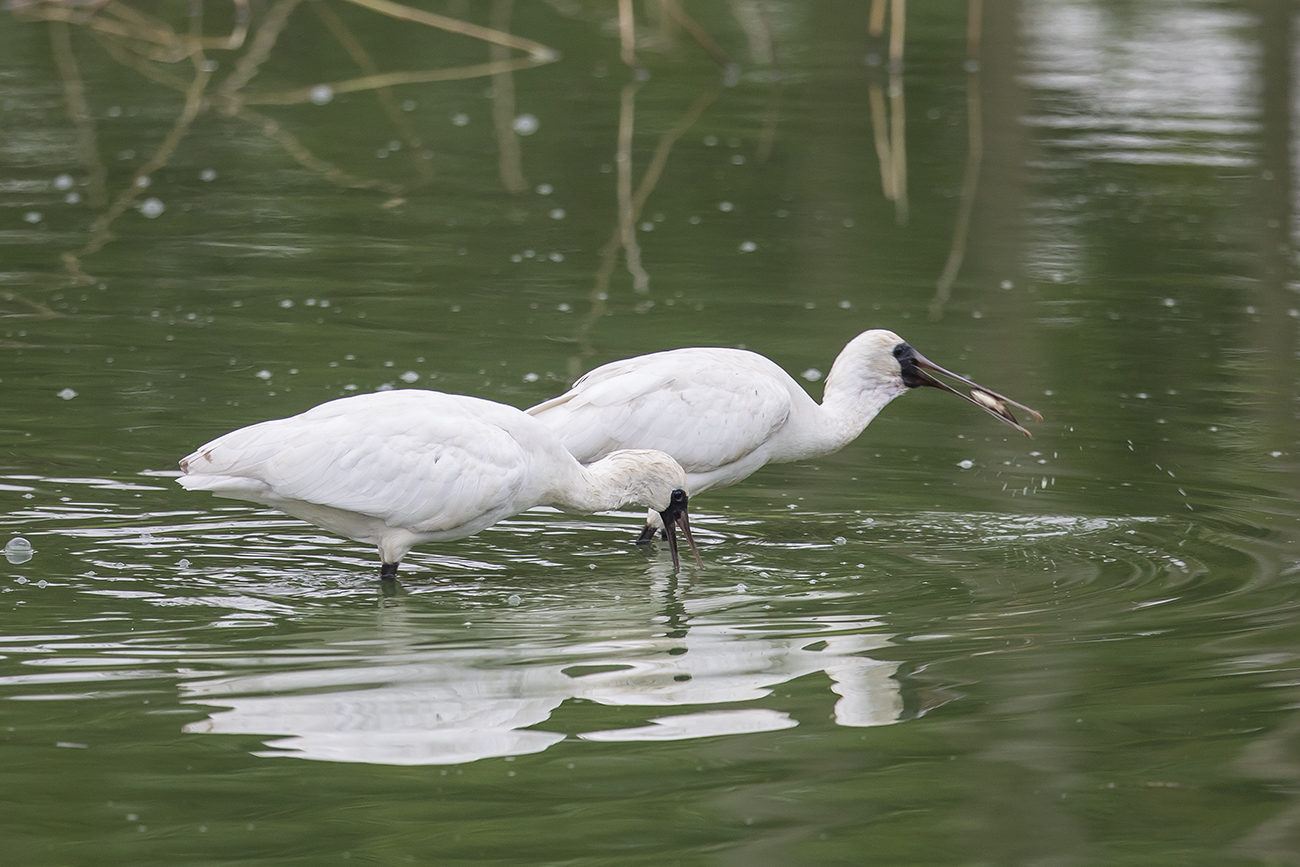
A pair of Black-faced Spoonbills had became regular visitors to a pond near Ho Sheung Heung, this is the first time I've ever seen BFS at Long Valley.

Black-faced Spoonbill - a first for me at Long Valley!

Elsewhere at Tai Sang Wai, drained fish pondd had attracted quite a lot of birds. Egrets were in good numbers, as were Black-faced Spoonbills. I counted up to two Eurasian Spoonbills amongst the Black-faced in two separate flocks.

Little Egret

Black-faced Spoonbill


Eurasian Spoonbill

I scanned for Common Starlings amongst the Silky and White-cheeked but with little luck. While it's hard to resist a good photo opportunity of a confiding Eastern Yellow Wagtails from the car, a male Eurasian Kestrel is no reason to complain either!

White-cheeked & Silky Starlings

Eastern Yellow Wagtail - race taivana

Eurasian Kestrel - male

Fish ponds near San Tin had became an unwelcoming site for birders for some reason, as fishermen now chase off any birders 'trespassing' into their ponds. Therefore I visited Tam Kon Chau Road instead, yielding a large flock of Tufted Ducks and a Yellow Bittern, both at close range.

Tufted Duck - male

Yellow Bittern

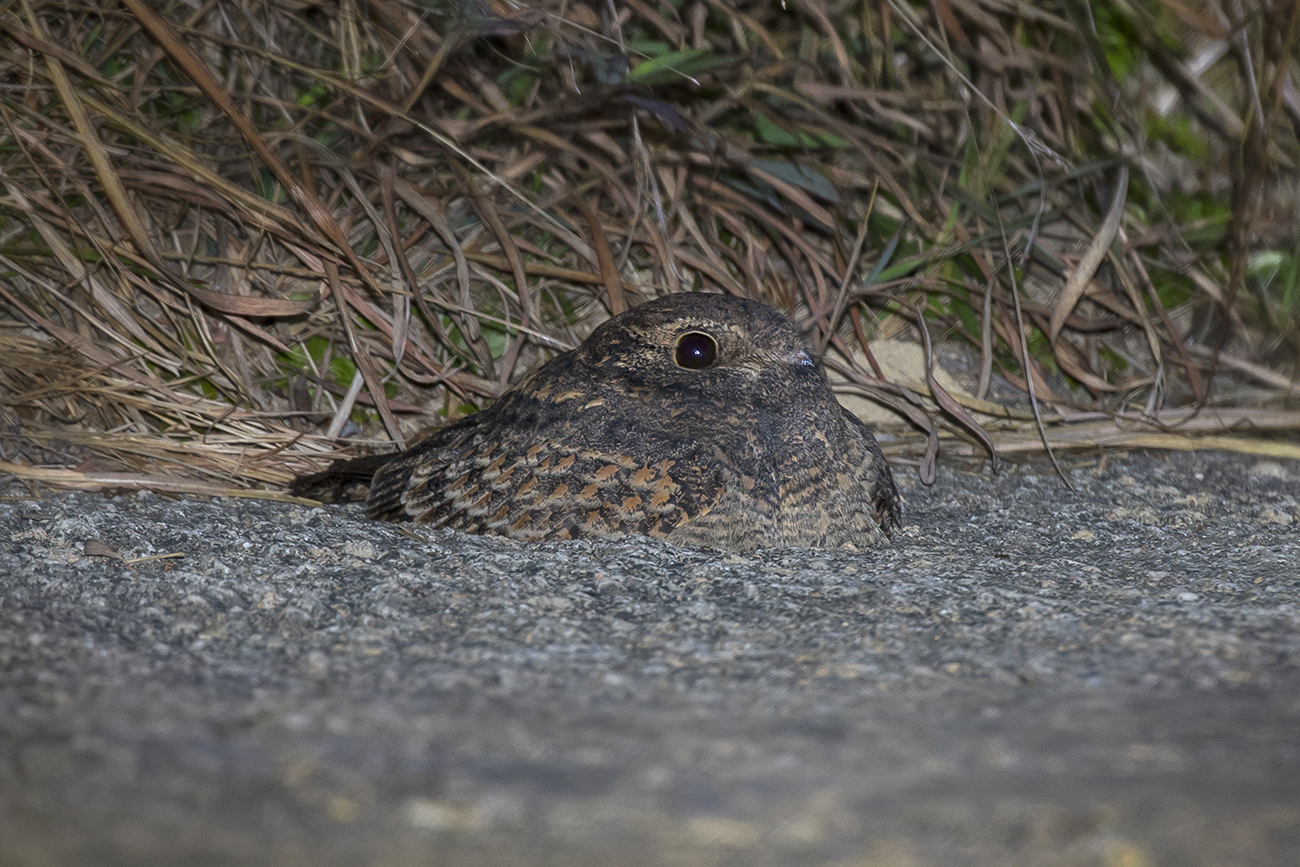
Finally, two nights of venturing up Robin's Nest ended in vain with no Oriental Scops Owls...confiding Savanna Nightjars on both nights provided some consolation, you can see the difference of plumage between the two birds, but both incredibly camouflaged.


Savanna Nightjar - master of camouflage

Wednesday, 12 October 2016

Picking Up The Pace - Long Valley

After having a lie in on Monday morning during this public holiday, there isn't an excuse to refuse the opportunity provided by the glorious weather. So, my father and I headed out for an afternoon stroll around Long Valley. It was actually a bit hot when we arrived, and we took shelter in the shade of the Tofu factory for some time before heading out at 3pm.

Things started off pretty quietly, scanning for crakes and rails along the vegetation along a pool had me looking at a Pin-tailed Snipe, or less precise but in a more politically correct term a "Swintail Snipe". In general it is believed that field identification between Swinhoe's and Pin-tailed Snipes are near impossible, as measurements from trapped birds revealed that many previously assumed field identification were in fact bollocks...or in a more scientifically correct term; many features shows significant amount of overlapped between the two species. The only reliable way to identify the two species are by looking at their outer tail feathers, you can either see that when one is preening or when a snipe is about to land and fans it's tail out. Although this one remains inconclusive, I did managed to saw a TRUE Swinhoe's Snipe during this outing, as I managed to get a clear look at it's tail as it fanned out for landing. No photos though...maybe next time.

Some beginners finds it difficult to separate stationary snipes, especially to tell between Common and "Swintails", I included here an old photo I took of a Common Snipe for comparison between their upper parts plumage, notice the two thicker creamy coloured lines along the back of the Common.

"Swintail" Snipe - although I lean towards it being a Pin-tailed for this one...

Common Snipe - an old photo for comparison

Most of the paddies were still rather fresh, only one small field were beginning to ripen, Munias were feeding in there so we waited a little while to see if any Buntings would appear. Sure enough, a pair of Yellow-breasted Buntings landed into the middle of the paddy, giving a rather obscured view, but it's still nice to see this Long Valley regular back again. We waited a little longer hoping that perhaps the Black-headed Bunting that had been around would appear as well, but that one never materialised.

Turning the lovely golden colour...

Yellow-breasted Bunting

Eastern Yellow Wagtails numbers had started to pick up, there were quite a few feeding along the fields, all of them were taivana, here's one that was a bit more confiding, picking up what looked like a worm? Near another patch of paddies we also flushed a Cinnamon Bittern out, but unfortunately was not quick enough for a photo.

Eastern Yellow Wagtail - taivana

I was scanning the Arrowhead field for Painted Snipes where I found two, when my attention was suddenly drawn to a small bird that flew out from cover and dropped back down some long grass. My initial thoughts was Bunting, so I sneaked up towards that patch of grass, only to find a small bird walking away from me, looking through my binoculars and it was pretty clear I was in fact looking at a Pechora Pipit, the diagnostic white stripes were very visible from that angle. The bird was flushed once again and landed on the footpath opposite to us, this time showing it's very white underparts. I managed a few quick shots of this smart looking bird before it flew off once again! What a flighty little thing! For the next half an hour we played hide and seek with the bird, only getting a few glimpses of the bird, never enough for a better shot. None the less, this find totally made my day!

Pechora Pipit - the only half decent record shot of this smart looking Pipit!

We also found quite a few newly arrived Red-throated Pipits for comparison. The much duller upper parts and buffish belly gives good comparison to the Pechora. They also behave very differently, where Pechoras are usually shy and prefer to land in well covered areas, Red-throated will nearly always give you a good view out in the open. Pechoras also seems to prefer damp patches of ground while Red-throated are OK with much drier fields. A good record for me anyway, as it's been a while since I last seen one at Long Valley!

Red-throated Pipit