Showing posts with label Blue-tailed Bee-eater. Show all posts

Sunday, 23 April 2023

Another Rarity - Brown-eared Bulbul

Po Toi is traditionally our best birding spot in Hong Kong to spot migrants, it is our most southerly island and often attract a good number of migrants. Over the years this is one of the best birding spot to look for rarity during spring and autumn, with some pretty incredible sightings in the past. 

Last week someone spotted a Brown-eared Bulbul on the island, this is only the 4th record in Hong Kong, with previous 3 records all just one day birds. While this is a very common species in Japan, they rarely venture to southern China, with most records concentrated to Taiwan and the east coast of China. Since the bird continued to be seen throughout the week, I thought I may as well give it a try. Luckily for me, it stayed on and after a little bit of effort on the island, I got some good views of it perched on top of a bare branch. This bird was extremely mobile, it was seen flying from one end of the island to the other, the best strategy in the end was just to stand at one spot and wait for it to come through.


Brown-eared Bulbul - a Hong Kong tick for me

Brown-eared Bulbul - showing the interesting undertail coverts

It was quite a misty day with a bit of drizzle in the air, the continued easterly winds probably helped to bring in a few birds as well. There were plenty of birds to see as we waited for the bulbul, including a male Chestnut Bunting, a male Black-naped Oriole and a few Eyebrowed Thrush. Dollarbirds were also seen, but they were perched too far away that I didn't bother taking any photos.

Chestnut Bunting - male

Black-naped Oriole - male

Eyebrowed Thrush

There was a flock of four minivets, initially I thought they were all Ashy Minivets as I saw a female perched on top of a tree, on closer inspection however revealed that the other three were actually Swinhoe's Minivets! While they are regular passage migrants in Hong Kong, Swinhoe's Minivets are considerably less common than Ashy Minivets. They gave great views for me despite perching a bit high up. The two species look quite similar, but Swinhoe's Minivets have buffish underside, while Ashy Minivets always have very pale underside.

Ashy Minivet - female


Swinhoe's Minivet - male

Along the mangrove a distant Black-capped Kingfisher showed briefly, I relocated it perched even further away into the forest later on. A Eurasian Hoopoe was a lot friendlier, this one perched only a few metres away from me for a couple of minutes, allowing me to get a few good shots before flying off.

Black-capped Kingfisher

Eurasian Hoopoe

There were good numbers of Chinese Sparrowhawks around, most were seen in flight, but some occasionally will perch for a decent view, such as this nice looking male.

Chinese Sparrowhawk - female

Chinese Sparrowhawk - male

Other birds seen in the air were numerous Pacific Swifts. A couple of Grey-faced Buzzards came through, this is another classic migrant raptor in Hong Kong, some flew low enough for me to grab some decent photos. Two birds were seen chasing each other in the air at great speed, which I initially thought were two Chinese Sparrowhawks fighting, I was a bit surprise when I reviewed the photos that it was actually a Japanese Sparrowhawk chasing an Oriental Cuckoo!

Pacific Swift
Grey-faced Buzzard

Japanese Sparrowhawk & Oriental Cuckoo

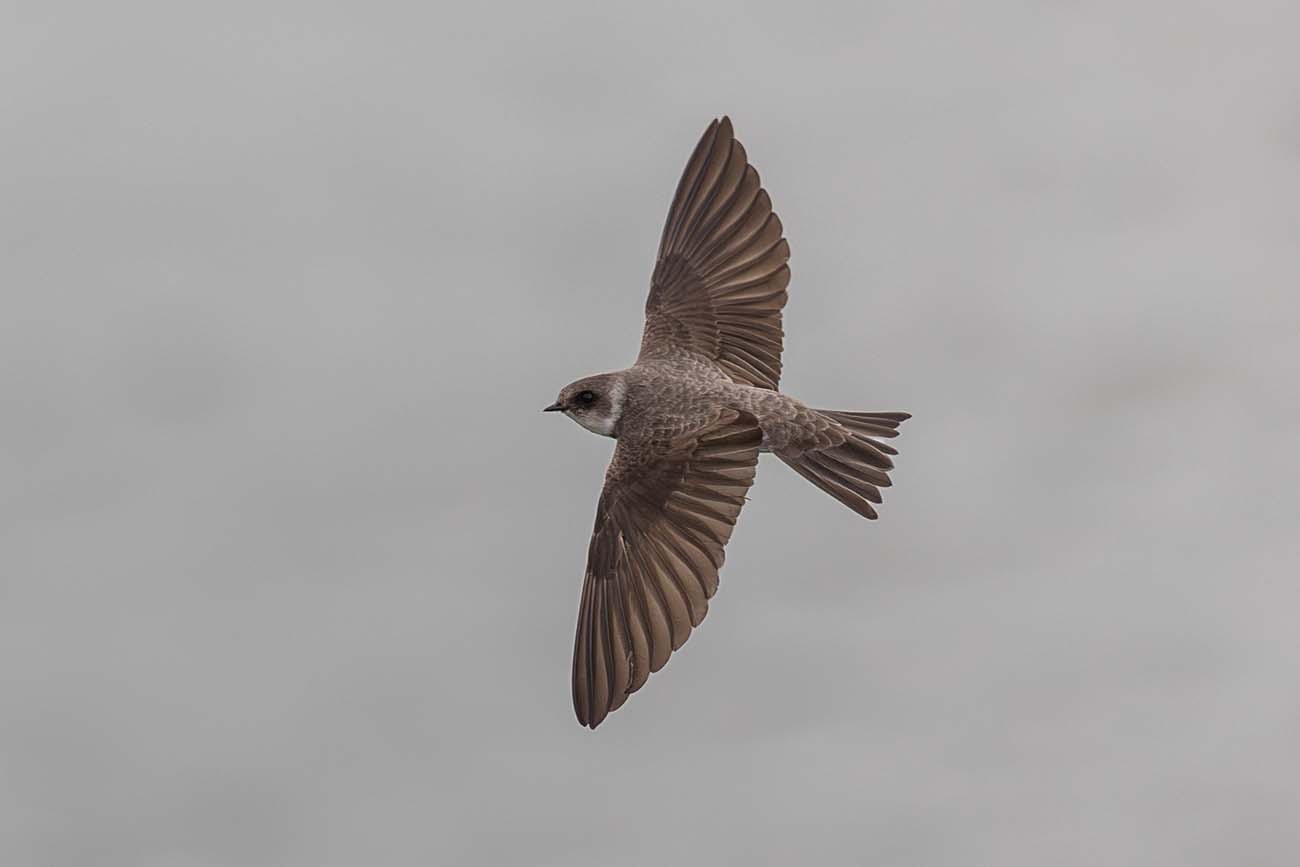
Over at San Tin, there isn't a lot of new arrivals, a small flock of Sand Martins were the best I could manage, I spent a little bit of time trying to get some photos of them in flight, here are a few that turned out decent enough.


Sand Martin

Over at Mai Po, many migrating waders are still coming through, I got some closer views of Black-tailed Godwits on the scrape the other day, while a Great Knot came up really close to the bird hide, allowing for some closeup shots. Whimbrels are also in quite good numbers now. A Black Kite came through and flushed everything up in the air, turns out it actually snatched a Red-necked Stint from the flock, the Black Kites in Mai Po is actually quite peculiar in that they actively hunt for birds instead of just feeding on carrion.

Black-tailed Godwit

Great Knot

Eurasian Whimbrel

Black Kite with Red-necked Stint

A single Pallas's Gull remains, which is quite unusual as we don't usually get them staying on this late, this is a non-breeding bird so there is actually a chance it may over summer here in Mai Po. Many Black-faced Spoonbills are still around, as well as a few Eurasian Spoonbills.

Pallas's Gull

Black-faced and Eurasian Spoonbill

Cattle Egrets are now in full breeding plumage, many were seen on the buffalo field at Mai Po, posing next to water buffalos in the most classic fashion. Good numbers of Chinese Penduline Tits can still be found around the reedbeds, although close views still require a bit of luck! Red-throated Pipits are still around, although numbers seems to have dropped from earlier in the month.

Cattle Egret

Chinese Penduline Tit - female

Red-throated Pipit

One of my better find at Mai Po were a few Blue-tailed Bee-eaters, having missed them last year I was very happy to connect with them again! While this is actually a very common species in South East Asia, here in Hong Kong we only get them as a scarce passage migrant.


Blue-tailed Bee-eater

Sunday, 14 April 2019

Spring in Full Swing

Certain migrants will remind you of certain time of the year, and Oriental Plovers are certainly one of such. Last week a flock of five Oriental Plovers were reported along Tam Kon Chau Road, which was well worth a Sunday afternoon to try and find. My dad and I found the five fairly easily at the reported site, they were dozing off under the sun on a dried fish pond, taking little notice of the few admirers sat nearby.

Oriental Plovers

Oriental Plover's Admirers...

As with most Oriental Plovers, these were fairly confiding and are fairly relaxed even when approached, no wonder they are popular for birders! There were two adults in amongst the juveniles with a beautiful red breast band, certainly got most of my attention because I never seen adult up close before!


Oriental Plover - adult breeding plumage

Juvenile Oriental Plovers are fairly attractive in their own right, especially when you consider how we only get them during a very short period of time each year! It is always a joy to encounter them in the field and should be appreciated.

Oriental Plover - juvenile

Other than the five Oriental Plovers, Oriental Pratincoles were also passing through in good numbers, I counted no fewer than 15 around the same area where they share the same habitat. Adults in breeding plumage are more vibrant and shows more orange tint on their throat and belly.


Oriental Pratincole - breeding plumage

The pair of Glossy Ibis had stayed on and made themselves comfortable at a shallow pond at Tai Sang Wai where they have been gorging on snails and worms. The pair look very healthy and seems quite contented there, I even wonder whether they may stay the summer! I certainly hope so as I certainly enjoy having this wonderful species around!

Glossy Ibis's new favourite pond


Glossy Ibis

I've also been doing a few birding tours of late, tours during spring is always exciting as you never really know what may turn up next. As was the case for a full day tour where we had an extremely productive morning at Tai Po Kau, best bird was no doubt a Brown-breasted Flycatcher, a species I hope will be able to breed successfully this year.

Brown-breasted Flycatcher - rare summer breeder

Tai Po Kau is a good place to sample most of our forest species. Hainan Blue Flycatchers are now everywhere and extremely vocal. We had luck with a Lesser Shortwing which showed briefly, a species that even I seldom see well!

Hainan Blue Flycatcher - male

Lesser Shortwing - a rare occasion to get it in full view...

Plain Flowerpeckers had been very vocal and fairly unmissable during spring, you are almost guarantee to get great views of it. The more common Scarlet-backed Flowerpeckers however don't always want to show off their most colourful feature, but males are extremely territorial and will defend their territory fiercely if another male come close.

Plain Flowerpecker

Scarlet-backed Flowerpecker - male

Fork-tailed Sunbirds can be slightly tricky to get a good look without flowering trees, but occasionally you will get singing males that show off it's iridescent plumage at eye-levels!

Fork-tailed Sunbird - male

Black-throated Laughingthrushes can often seen in song during early morning, they are great mimics and can mimic anything from a Besra to Crested Serpent Eagles. Breeding season is well underway, including a pair of Blue Whistling Thrush which seems to be nesting near the stream, we even found a Huet's Fulvetta nest during one of our outings.

Black-throated Laughingthrush

Blue Whistling Thrush

Huet's Fulvetta - at nest

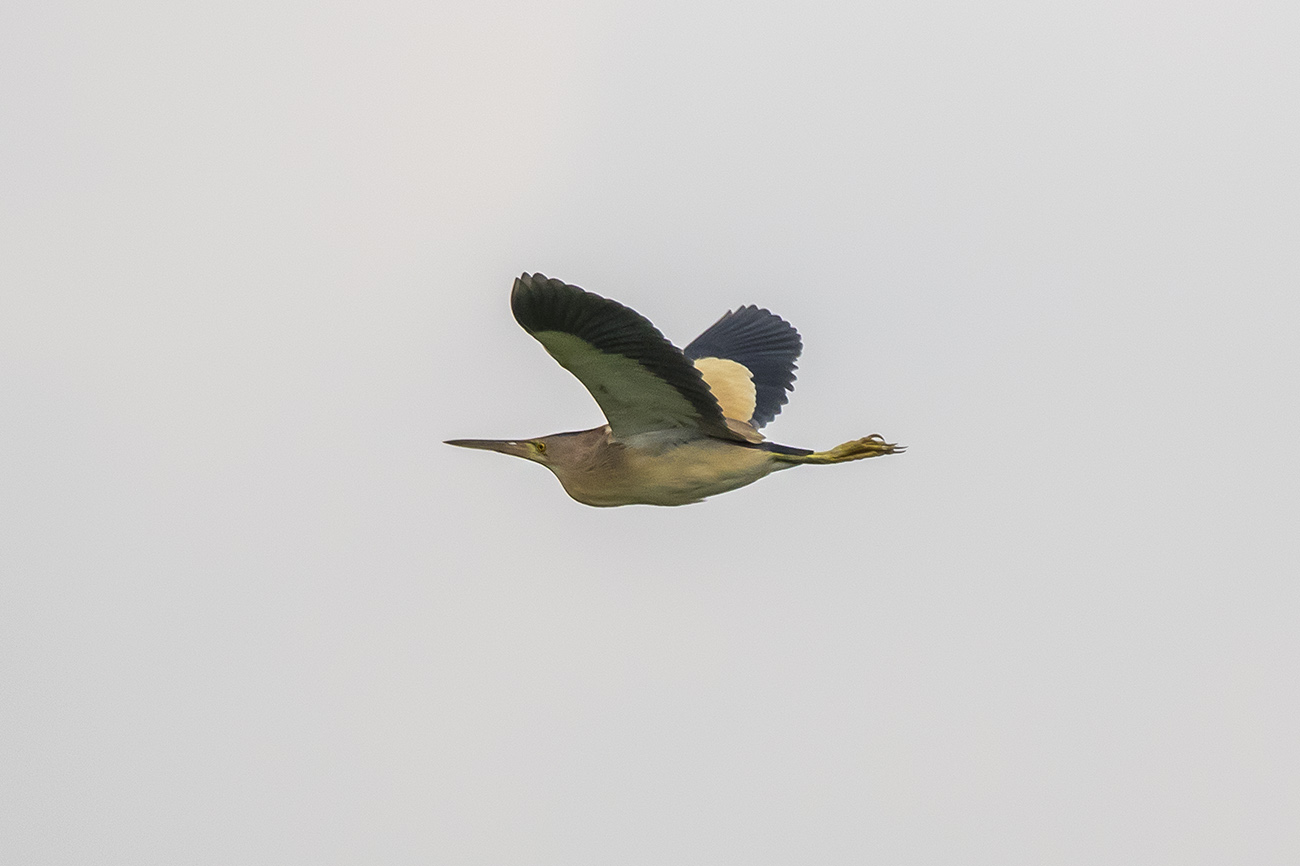
The egretry at Mai Po is fully occupied, with many Little Egrets either busy building their nest or tending to their chicks. There's also been plenty of Yellow Bitterns around, unlike their relative they don't make their nest in full view but rather discreetly in reed beds, so chances of finding their nest is quite slim.

Little Egret - collecting nesting materials

Yellow Bittern

Whiskered Terns had arrived in good numbers around fish ponds, its difficult not to stop and look at them as they are such graceful fliers. Black-faced Spoonbills had been fairly stable at a drained fish pond at Tai Sang Wai, but probably not for long as the fishermen is likely going to get all the remaining fish out soon and refill it with water.

Whiskered Tern

Black-faced Spoonbill

Another wonderful find during one of the bird tour were a few Chinese Penduline Tits, they are not always easy to see in the reed beds so I was delighted to first find one perched on the wire and later another perched next to the car for a better look.

Chinese Penduline Tit - female

Finally, finding two separate flocks of Blue-tailed Bee-eaters at both Long Valley and Tai Sang Wai was no doubt one of the highlight for me this week. These fairly scarce migrants can be hard to track down sometimes, a little bit of rain usually helps with grounding them on passage.


Blue-tailed Bee-eater - can brighten up any birding day!

Forecast of more rain in the next few days, not good weather to go outside but certainly weather that may bring in some interesting birds...We shall see!