Showing posts with label Arctic Skua. Show all posts

Tuesday, 10 May 2022

Pelagic Fun in May

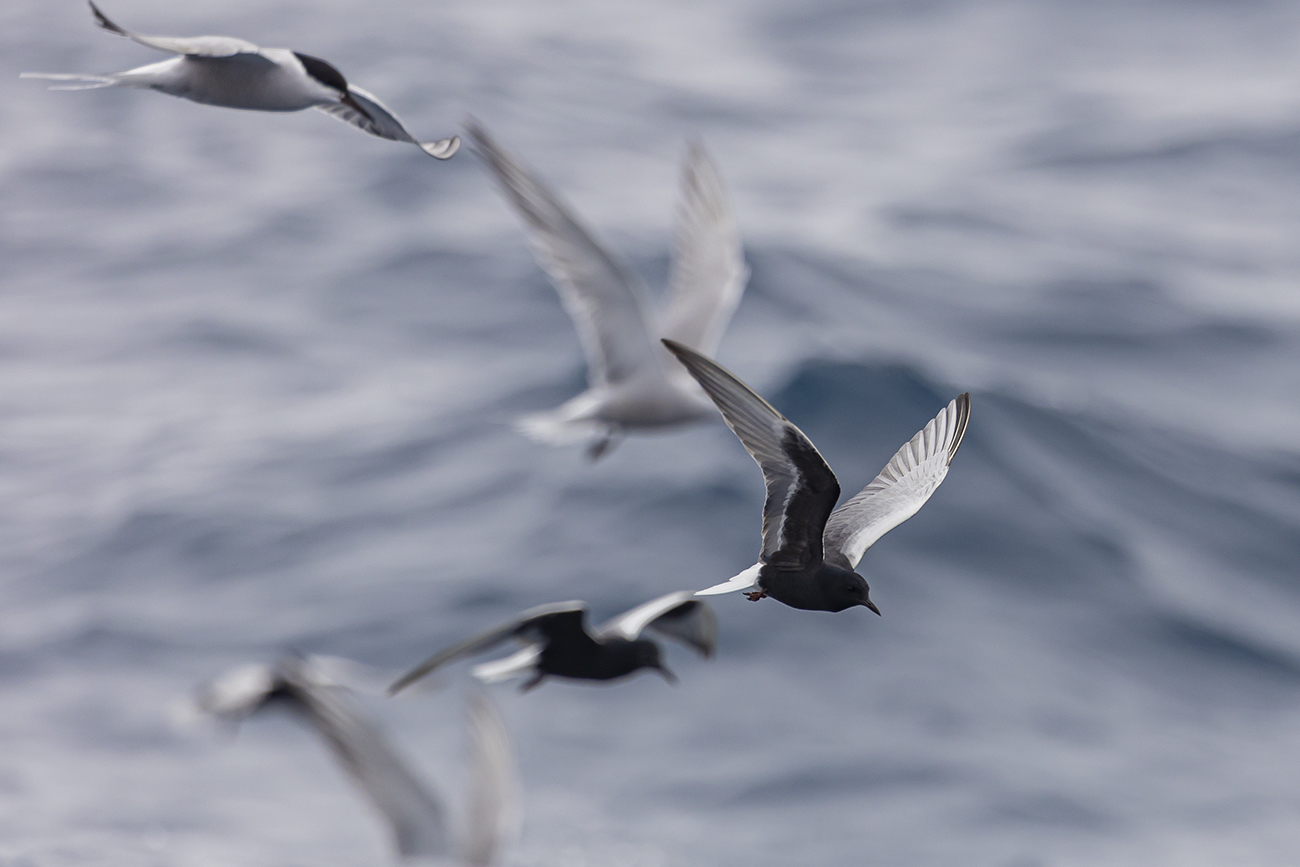
I joined two pelagic trips in the beginning of the month, hoping to catch some more seabirds before spring migration is over. Both days saw strong easterly winds throughout the day, which is not good for migrating seabirds, but great for birders! Although we didn't find anything really unusual or rare, finding at least a few Shearwaters and Skuas was already something! This is also a really good time to find migrating terns, which we saw no less than hundreds of them. The most numerous being White-winged Black Terns, these good looking birds can be fairly common during passage, and this was a particularly good year for them, as birders been seeing them almost anywhere with water! We encountered flocks of these feeding together.


White-winged Black Tern

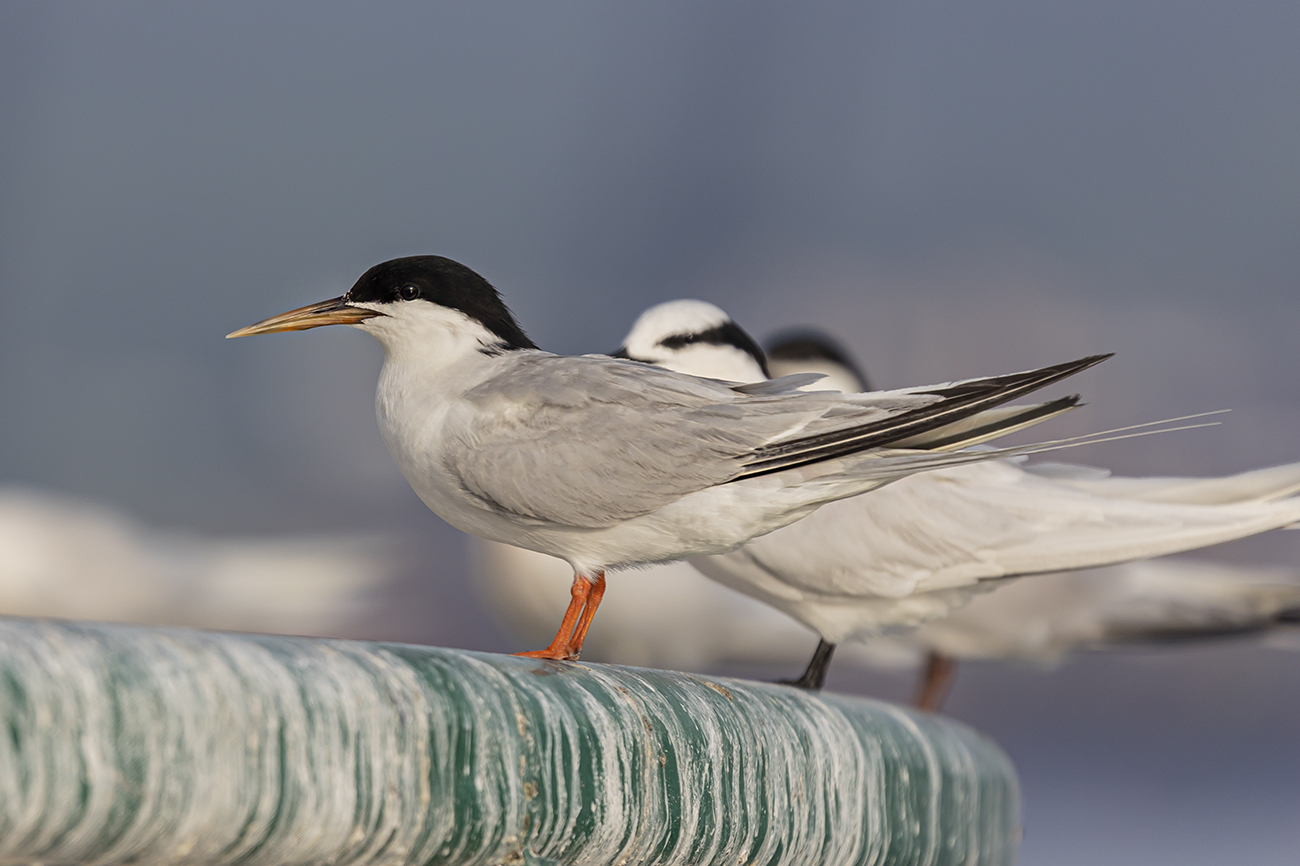
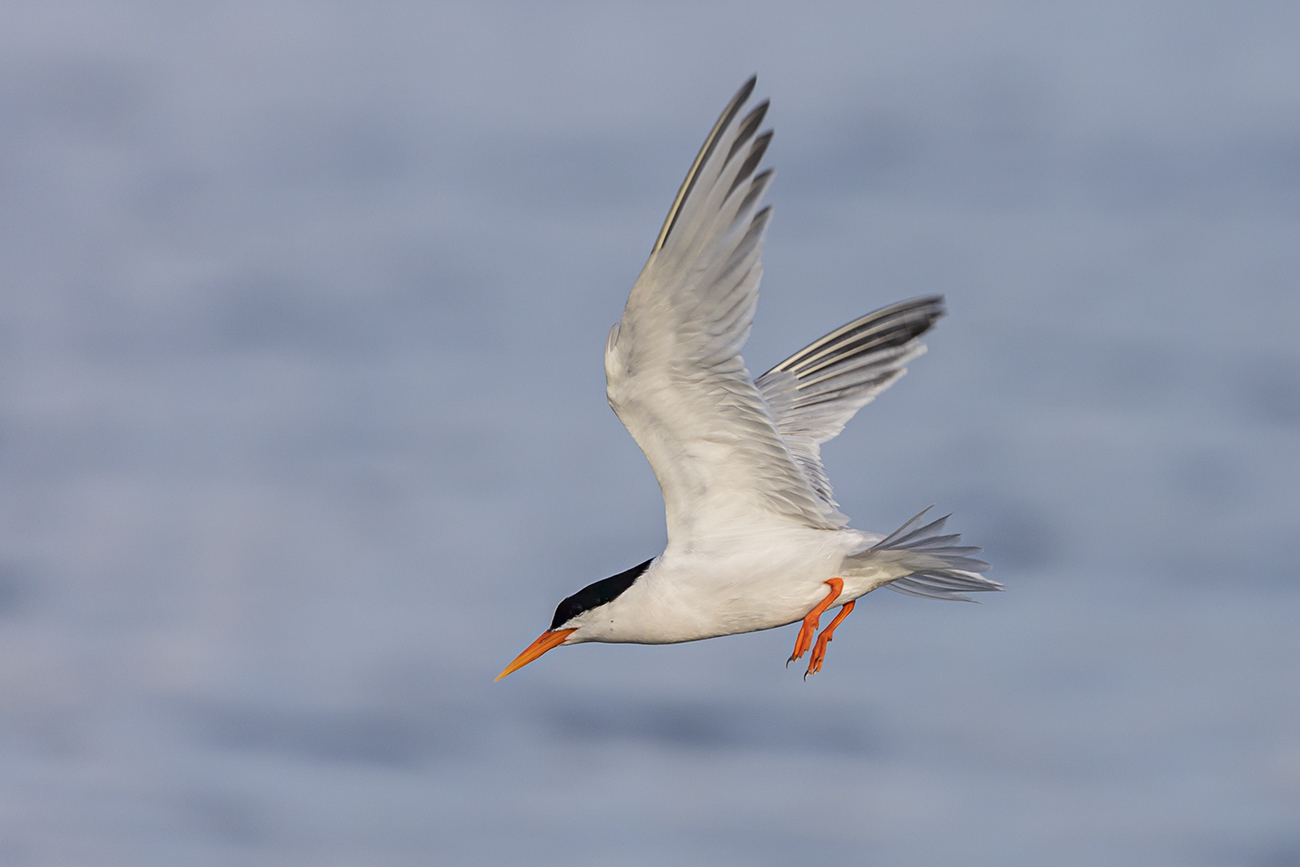
Common Terns were also seen in good numbers, we saw constant stream of these throughout the trips. Most were of race longipennis with all dark bills, only a few were of race tibetana or minussensis. Quite a few were seen resting of floating polystyrene out at sea, taking a break from their long distance migration.


Common Tern - race longipennis

Common Tern - race tibetana / minussensis

Spring is also a great time to see migrating Aleutian Terns in Hong Kong waters, it still amazes me to think that up till 80s their wintering grounds were almost unknown to ornithologists, and wasn't recorded in Hong Kong until 1992! Now, we know they winter in equatorial waters in South East Asia and as a regular passage migrant through the coast of China. We were able to get quite close to a few of these elegant looking birds as they rested on floating buoys or debris.


Aleutian Tern

Another regularly recorded species of tern throughout spring is the Greater Crested Tern, this species does not breed in Hong Kong but probably breed somewhere not far from Hong Kong, even from a distance we can usually pick them out from other terns due to their larger size.


Greater Crested Tern

The smallest of our migratory terns is the Little Tern, we saw quite a few following most of the White-winged Black Terns. They also have quicker wing beats, always looking quite 'busy'.

Little Tern

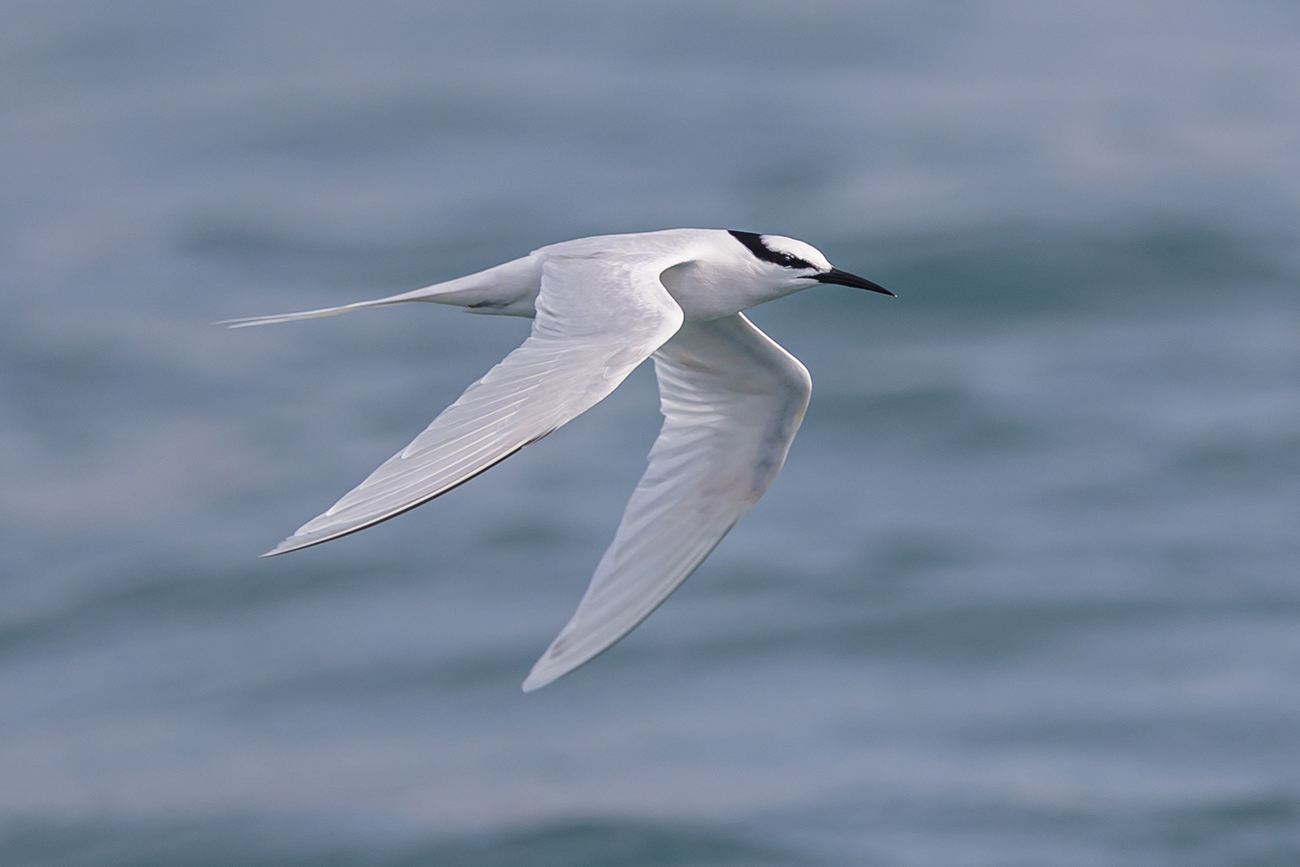
Finally, you get our trio of breeding tern species. They start arriving by late April and now starting to show signs of courtship. Black-naped Terns are the palest looking of the three species, they look almost all white from afar, with only a black stripe running across the back of their head.


Black-naped Tern

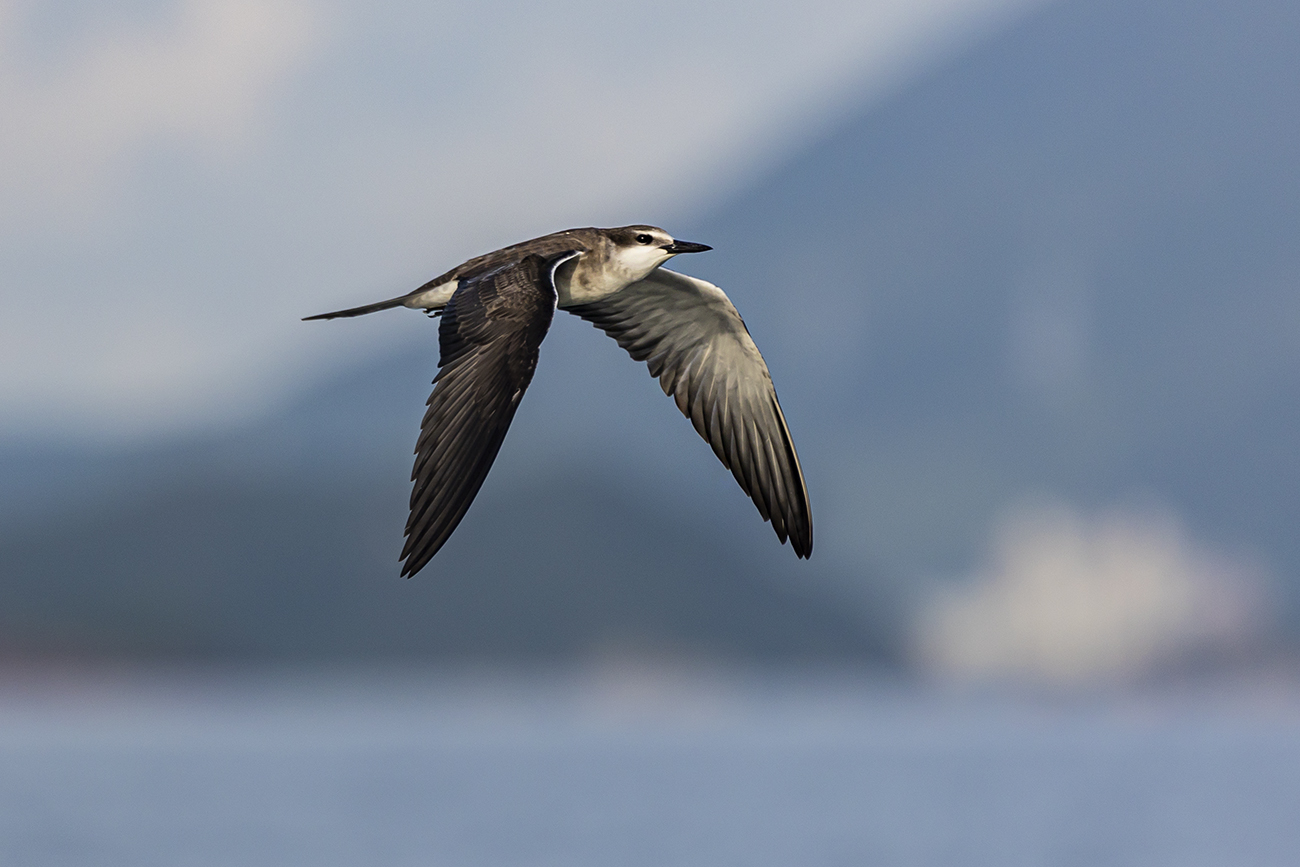
Bridled Tern is the most numerous and darkest of the three, they are also the largest and have longer wings. We saw plenty of them during the trip, but usually in pairs, I wonder if those are already paired up for the breeding season.


Bridled Tern

The least common of the trio is the Roseate Tern, we only saw a single one resting on the buoy with the Black-naped Terns. In breeding plumage their breast turns a pinkish hue, hence appropriately called the Roseate Tern.

Roseate Tern & Black-naped Tern

Hundreds of Red-necked Phalaropes migrate in flocks at sea, this arctic breeder winters throughout tropical oceans, during spring migration they are commonly found feeding on the waves. Breeding females have dark face, while males are duller in colour.


Red-necked Phalarope

On the first trip we encountered a single Arctic Skua, this seems to be the most numerous Skua species we've been getting these few years. Much thanks to dedicated sea watcher Bart de Schutter, who notified us of this incoming bird from behind our boat from his sea watching point on Po Toi! ID for adults are pretty straight forward, as they have a short streamer and slightly bulkier than Long-tailed Skuas, the large single wing patch on upper and lower wings also supports that.


Arctic Skua

No pelagic trip feels complete without find a Shearwater or two, we were lucky to find Short-tailed Shearwaters on both trips, though the best encounter was on the second trip when this individual flew in alongside to our boat! Thanks to the dedication of Hong Kong sea-watching pioneers like Geoff Welch and Bart de Schutter, we now have a much better understanding of seabirds migration in Hong Kong, it also shows the limitation of boat trips in terms of racking up species count, as we have limited visibility at sea, we are likely missing a lot of birds going past us outside of 1km radius. That being said, we do get to enjoy close encounters with these birds when we do chance upon them, so I am not complaining!


Short-tailed Shearwater

Saturday, 4 September 2021

South China Sea Pelagic - 1st & 2nd of September

Back in May my friends organized a trip to the oil rigs south to Hong Kong to look for sea birds, they had huge success that time and I was gutted I couldn't go. So, when I heard they are planning for another one again on 1st and 2nd of September, I was thrilled! I don't get sea sick too easily, but kind of anticipated the possibility of getting sea sickness from staying overnight on a small fishing boat. A total of twelve of us met up on 1st of September and headed out from Aberdeen Pier.

We saw relatively little on our way out to the oil rigs, there were good numbers of Streaked Shearwaters but most of them were extremely far away. The highlight being a pod of Pantropical Spotted Dolphins, which followed our boat for quite some time!

Streaked Shearwater


Pantropical Spotted Dolphin - note the white bill tip and 'lip'

When we got to the oil rigs, the captain and his crew started casting their fishing lines, this area is famous for sport fishing, where people often land huge fish almost as tall as a person. They certainly seemed very happy with their catch.

Bluefin Trave

Rainbow Runner - one of the most numerous fish in the area

Boat captain Mr. Chu and a Yellow-finned Tuna

Mahi Mahi - also known as Common Dolphinfish

While they were busy fishing, we scanned the sea for any birds. We spotted a Long-tailed Skua very far away, another Skua flew a little bit closer, which was likely an Arctic Skua. A bit of rain brought in more Shearwaters, mostly Streaked but Jemi spotted an all dark one which I unfortunately didn't get a photo of, it looked a bit like a Wedge-tailed Shearwater, but difficult to say for sure from such distance!


Arctic Skua

Streaked Shearwater

After sunset, most people were feeling slightly nauseated, I could barely eat anything without throwing it back up. So after a little bit of food I decided to hit the bed. I woke up at 5am, feeling much better, I was ready for some birds! Unfortunately, we weren't as lucky this time round, as they had a lot of seabirds moving around the oil rigs early morning back in May, we only saw a few migrating passerines and a Black-winged Stilt circling around us, still an interesting experience to see these birds migrating through open oceans.

Black-winged Stilt - out in open ocean

We started to make our way back by mid morning, along the way we scanned for anything flying above the ocean. Birds are not the only creatures that takes to the sky out here, flying fishes were regularly sighted during the trip, some gliding as far as 50-60 metres!

Flying Fish

Things improved slightly with a few more Streaked Shearwaters, this time a bit 'closer', but not what I would call close...Streaked Shearwaters are relatively easy to distinguish from other shearwaters based on size, their white underside and often conspicuous white forehead.


Streaked Shearwater - this was the closest we got, still very far away...

On our way back to Aberdeen we also spotted another pod of dolphins, this time likely Indopacific Bottlenose Dolphins.

Indo-Pacific Bottlenose Dolphin

Our best bird of the trip came when we almost gave up hope, a single adult Red-footed Booby gilded right across the front of our boat. Although we saw very few species in the end, it was still an enjoyable trip (minus the seasickness). The oil rigs area is mostly unexplored by birders, therefore who knows what is hiding out there! Hope we will have better luck next time.


Red-footed Booby - best bird of the trip!

I paid the breeding terns one last visit before they depart, we went there mainly to look for the strayed Bryde's Whale thats been frequenting Mirs Bay, although after three hours of waiting the whale never appeared, only to be found dead a few days later! What a shame for such a beautiful creature, although it must be said any cetaceans that venture this close to shore near Hong Kong almost always ends badly...Either way, the terns provided plenty of photographic opportunities, with mainly Black-naped and Roseate Terns on the buoy.


Black-naped Tern


Roseate Tern

A few Bridled also came into roost on the buoy, while at least two Common Terns were seen, including a juvenile. While these terns will soon head back out to the sea to spend the winter, more migrants are on their way here.

Bridled Tern

Bridled Tern - juvenile


Common Tern - juvenile