Other than the colourful migratory flycatchers, spring is one of the best time in Hong Kong to look for migratory waders. The top choice is to visit Deep Bay and Mai Po, as the tide comes in the waders comes with it. Thousands of these birds comes through Hong Kong each year, it takes a bit of patience to scan through them all, picking out the less common species amongst the common ones.
 |
| Common Redshanks & Curlew Sandpipers |
Great Knots are now in their breeding plumage, these pretty waders used to be a lot more common but now considered an endangered species due to rapid decline. I found a few Far Eastern Curlew standing amongst the Eurasian Curlews, this is also an endangered species, fairly regularly seen in Hong Kong during migratory season.
 |
| Great Knots & Curlew Sandpipers |
 |
| Far Eastern Curlew |
I scanned through the smaller waders hoping for some stints on the mudflat but only got Curlew Sandpipers, many now moulting into their brick red breeding plumage. A few Greater Sand Plovers in their breeding plumage stand out from the rest of the Common Redshanks. Some Black-tailed Godwits are also moulting, soon most of them will look like this one below.
 |
| Curlew Sandpiper |
 |
| Greater Sand Plover & Common Redshank |
 |
| Black-tailed Godwit |
Spring is one of the best time to look for Nordmann's Greenshanks in Hong Kong, on that day I counted around 10 of these endangered birds, mixed in amongst the Common Greenshanks. They are slightly shorter and compact compared the the Common Greenshank, with shorter tibia, shorter primary projection, giving them an overall rounded look, even when they are resting you can see the difference in their structure.
 |
| Common Greenshank |
 |
| Common Greenshank & Nordmann's Greenshank (right) |
 |
| Nordmann's Greenshank |
Chinese Pond Herons now moulting into their pretty breeding plumage, I also saw an Intermediate Egret in breeding plumage, I don't quite recall photographing one before. Still plenty of Black-faced Spoonbills feeding on the mudflat, always nice to see them up close.
 |
| Chinese Pond Heron |
 |
| Intermediate Egret |
 |
| Black-faced Spoonbill |
The Black-headed Gulls are opportunistic, as shown here three chasing after a Great Egret which just caught itself a nice big mudskipper. It was stolen by one of the Black-headed Gull in the end. Other than the Black-headed Gulls, Caspian and Gull-billed Terns are now in fairly good numbers on the mudflat. Quite a lot of Lesser Black-backed Gulls (heuglini) and Vega Gull (mongolicus) remains.
 |
| Great Egret mobbed by Black-headed Gull |
 |
| Gull-billed Tern, Caspian Tern and Black-headed Gull |
 |
| Lesser Black-backed Gulls (heuglini) & Vega Gull (mongolicus) |
Back out towards the buffalo fields I spotted a Grey-headed Lapwing, this brings back memories of looking for these Lapwings on the now destroyed buffalo fields at Kam Tin, it used to be one of our favourite birding spot before it turned into a residential estate.
 |
| Grey-headed Lapwing |
Mudflat out on Deep Bay is not the only place to look for migrants, drained fish ponds in area like San Tin and Tai Sang Wai can be equally productive given the right conditions! A drained pond at San Tin have been incredibly productive of late, with new waders coming in every few days. Such as Greater and Lesser Sand Plovers, Kentish Plovers and the numerous resident Little Ringed Plovers.
 |
| Lesser Sand Plover |
 |
| Kentish Plover |
 |
| Little Ringed Plover |
Long-toed Stints in their breeding plumage is always very eye-catching, they are bright orange and stand out from the dull mud. Temminck's Stints are far more reserve in their colours, often blending in so well that they are easily missed. Wood Sandpipers are fairly common in these ponds and can be quite confiding.
 |
| Long-toed Stint |
 |
| Temminck's Stint |
 |
| Wood Sandpiper |
There were quite a few Red-necked Stints as well, whenever I see Red-necked Stints I always scan for two other species, the Spoon-billed Sandpiper and the Little Stint. While finding a Spoon-billed Sandpiper in a drained fishponds maybe a bit less likely (though it happened before), we every so often get Little Stints mixed in with the Red-necked. The Little Stint I found late last month stayed on and remained quite confiding, allowing me to get some better photos than last time.
 |
| Red-necked Stint |
 |
| Little Stint |
Along the fish ponds I found a stretch of road with many Oriental Pratincole roosting, they allowed relatively close views. These are one of my favourite passage migrants, incredibly cute and full of character, they can be a lot of fun to look at.
 |
| Oriental Pratincole |
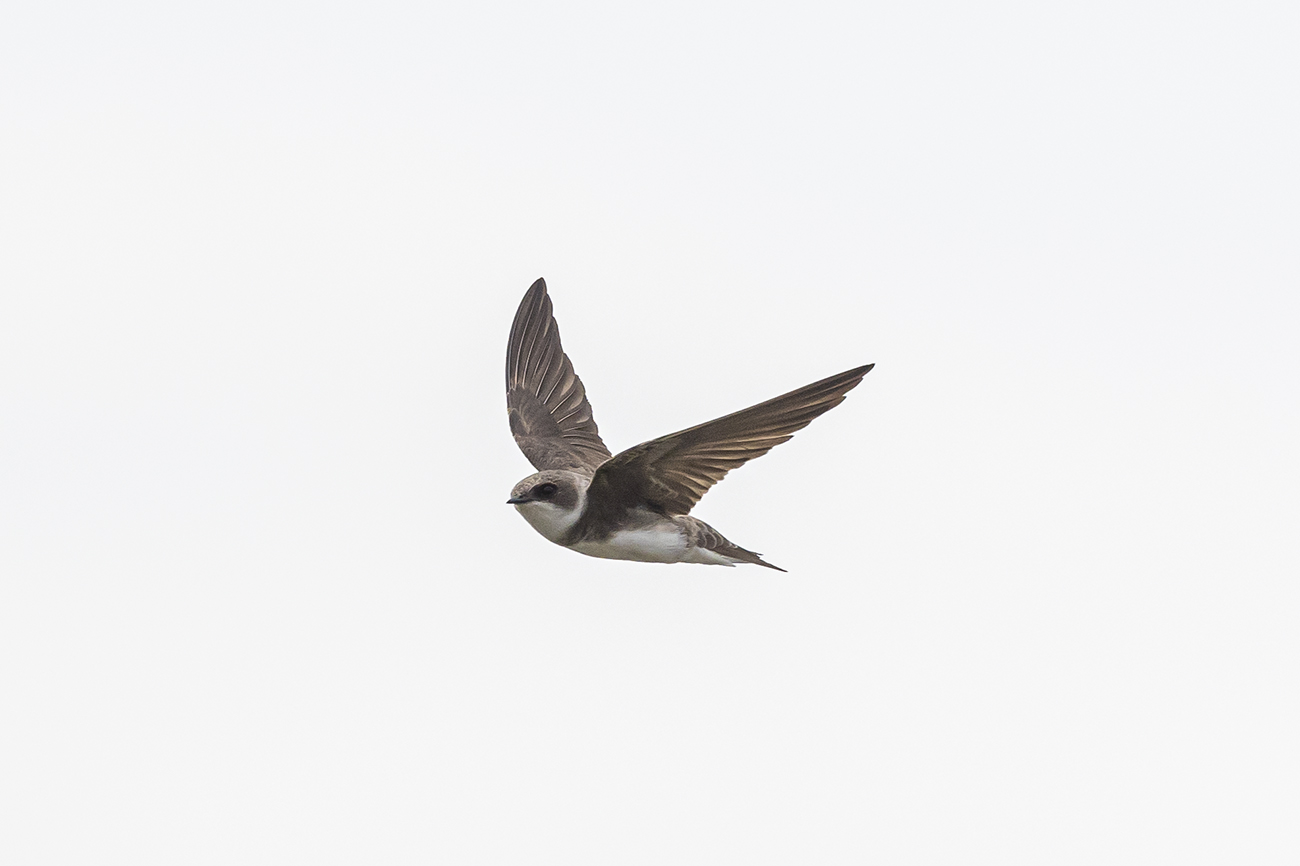
A Sand Martin been flying around with the Barn Swallows at San Tin, I didn't really bother getting good photos, but it occasionally flew in quite close. Eastern Yellow Wagtails now very numerous, occasionally you may find a few tschutschensis mixed in the usual taivana. Whiskered Terns are now starting to arrive in their elegant breeding plumage.
 |
| Sand Martin |
 |
| Eastern Yellow Wagtail - tschutschensis |
 |
| Whiskered Tern |
Over at Tai Sang Wai, I finally got a photo of one of the Golden-headed Cisticola I've heard lately but not seen. Getting there earlier in the morning seems to have done the trick, as I found it already perched up on in the open to preen, it was in fact quite confiding. Though not the breeding plumage bird I was hoping to find, it is still a nice bird to see up close.
 |
| Golden-headed Cisticola |
The best bird in my ventures around the fish ponds was a Northern Goshawk I chanced upon at San Tin. It suddenly flew out from a tree and caught me by complete surprise, it was too close to me and for my camera to react! It was flying away from me by the time my camera was able to pick up the bird on the autofocus. It was a shame I didn't get the shot I wanted, but still a thrill to see this rare raptor! Here in this photo you can just about make out the streaked breast and six 'fingers' on its right wing.
 |
| Northern Goshawk |