Thursday, 17 December 2020

Shrike Three! - 3rd Grey-backed Shrike in Hong Kong

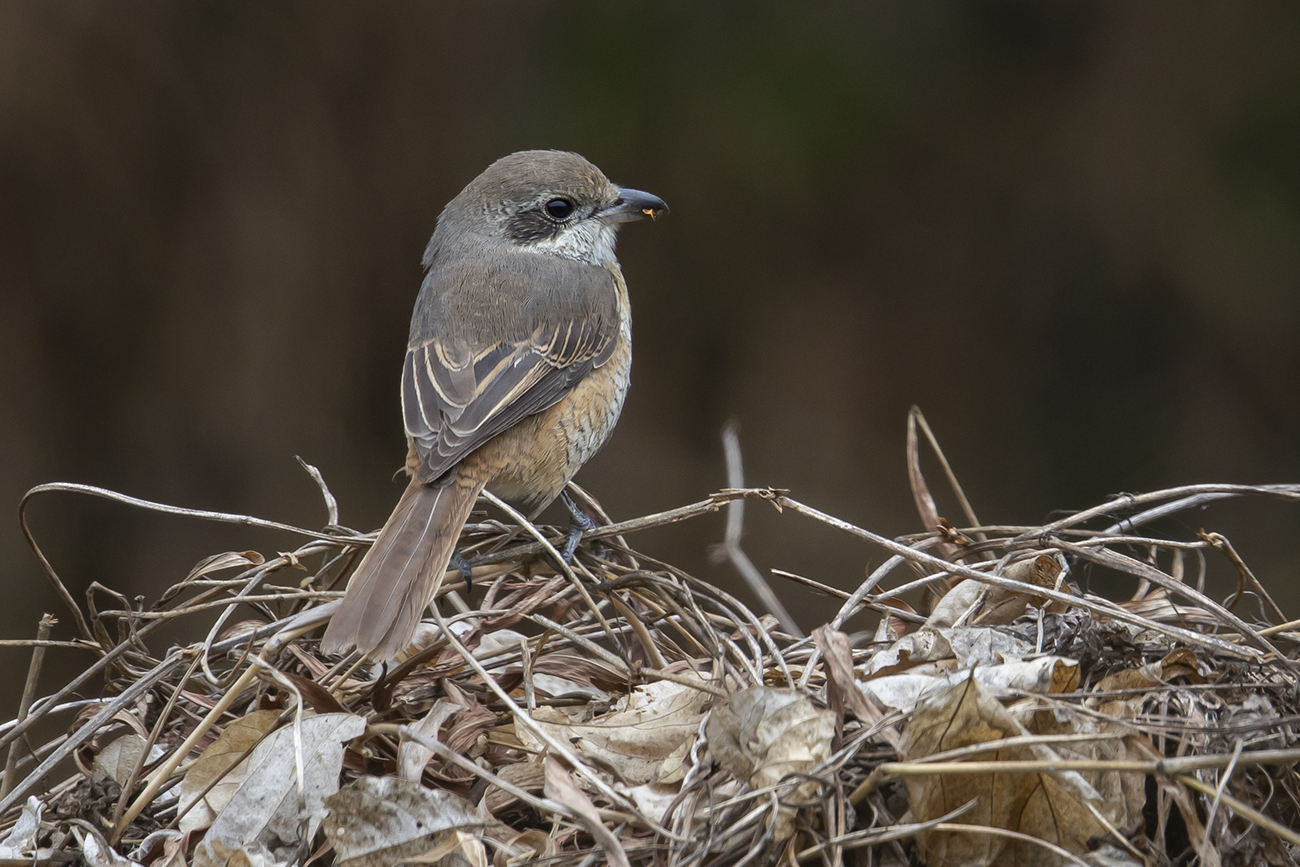
Grey-backed Shrike is quite the rarity in Hong Kong, having only been recorded once in 2015. News of another adult Grey-backed Shrike surfaced not too long ago, unfortunately the bird was within the compound of Kadorie Farm, which is closed off to visitors at the moment. This was only the 2nd record for Hong Kong and one that many birders would love to see. To our delight, John Allcock found another 1st winter bird in Lam Tsuen, where the bird was stable and showed fairly well. Most birders were able to enjoy prolonged views of this wonderful vagrant.


Grey-backed Shrike - 1st winter

Being a 1st winter shrike, you can imagine identification to be tricky and not straight forward. This was absolutely the case for this bird, as most birders including me could have easily put it down as a Brown Shrike and moved on. There are a few differences to look out for, 1st winter Grey-backed Shrike should show the following features:

1. Heavier bill
2. Longer tail
3. Greyer mantle
4. Ear patch browner
5. Heavily marked breast

Grey-backed Shrike - 1st winter

For comparison, here is a photo I took of a 1st winter Brown Shrike a few days prior at Long Valley, although the tail length is blocked by the branch, features you can see here are:

1. Very warm toned mantle
2. Ear patch darker
3. Breast lightly marked

Brown Shrike - 1st winter

Other interesting observations at Long Valley includes a Javan Mongoose strolling along the river, I have not seen one of these for a while, it is always a thrill to see a mammal in Hong Kong. Most Buntings have left by now, leaving mainly Sparrows and Munias behind, the White-headed Munias are still in good numbers, I have a feeling they are here to stay...

Javan Mongoose

White-headed Munia

Shek Kong area had been fairly productive for some, I didn't really encounter anything too interesting, although a very large flock of Minivets was an absolutely joy to behold, most of them were feeding at eye-levels at extremely close range. Velvet-fronted Nuthatches were in no short supply, while Crested Goshawk is always a thrill to see up close.

Grey-chinned Minivet - female

Grey-chinned Minivet - male

Velvet-fronted Nuthatch

Crested Goshawk

I was expecting to find Common Rosefinch or Yellow-billed Grosbeaks at Shek Kong Airport Road, despite the cooler weather they seem to be missing. I did however managed a very confiding Asian Brown Flycatcher and a lot of Hair-crested Drongos,

Asian Brown Flycatcher

Hair-crested Drongo

Things at Mai Po were slightly better, the best bird of late being a male Baikal Teal in full plumage, although it was only seen on one day and not relocated, an eclipse male was found in the scrapes and remained there for quite a few days. I have not seen this species for many years now, so it was nice to catch up with them again. The pair of Greater White-fronted Geese were exactly where I last left them, still grazing along the buffalo field.

Baikal Teal - eclipse male

Greater White-fronted Geese

You often see Eastern Imperial and Greater Spotted Eagles in Mai Po during winter months, although you are unlikely going to get good photos of them every single time. Eastern Buzzards were in very good numbers, saw no less than four around the reserve.

Greater Spotted Eagle

Eastern Buzzard

Other notable birds includes a fairly confiding Yellow Bittern, which showed very well. Black-faced Buntings were in good numbers and many were feeding along the access road. I also saw what I believe to be a Common Reed Bunting briefly along the reed bed at 8a, but views were rather brief, but it did look much warmer toned than Pallas's Reed Bunting.

Yellow Bittern
Black-faced Bunting

Tai Po Kau had been excellent for warblers, despite the fact that I missed the White-spectacled Warblers seen there by other birders, a good range of warblers have been consistently showing well. The numbers of Hartert's Leaf Warblers seems to be an all time high, with both goodsoni and fokiensis. Sulphur-breasted Warblers are in no short supply lately, at least three were seen in the bird wave.

Hartert's Leaf Warbler - goosoni

Sulphur-breasted Warbler

At least two Kloss's Leaf Warblers had been spotted amongst the warblers in the bird waves, good thing they were calling, or else I think it would have been difficult to determine their identity, as they look superficially similar to fokiensis Hartert's Leaf Warblers. Although another good indication is a good look at their undertail pattern, where Kloss's shows a much thicker pale inner edge of their tail feather, and Hartert's inner edge are often much thinner, as demonstrated by the photos below.
Kloss's Leaf Warbler

Kloss's Leaf Warbler - undertail pattern

Hartert's Leaf Warbler - undertail pattern

It felt as though there were more Grey-headed Canary Flycatchers than usual, there were at least five individuals around Tai Po Kau, and I have seen a few elsewhere as well.

Grey-headed Canary Flycatcher

The best thing I found on Tai Po Kau however was not a bird, but a beautiful Red Mountain Racer! This absolute stunner is my dream snake of Hong Kong and a rare species that is not that often seen. Unlike most snakes, this species tends to be active in cooler weather. Having been looking for one of these for many years, this was a dream come true! It was a very gentle and cooperative snake, although gutted by the fact that I did not have the proper camera gear to take good photos, the photos I took with my phone was sufficient to demonstrate just how beautiful it was.


Red Mountain Racer

Thursday, 10 December 2020

Tai Po Kau Warbler Mania - Alstrom's Warbler & More

Tai Po Kau had been quite productive of late, with a good range of warblers on offer, the most notable being an Alstrom's Warbler, a species I have missed several times. On my second try at Tai Po Kau I finally connected with this bird, it was a ringed individual, ringed by HKBWS on 12th of November. It was actively calling, making its presense known. Seicercus warblers are notoriously difficult to ID, key features of Alstrom's includes less prominent crown pattern, complete eye-ring and no wing bars.


Alstrom's Warbler - a long awaited lifer

Other Phylloscopus warblers present includes numerous Yellow-browed, Pallas's, Two-barred and Eastern Crowned. At least two Sulphur-breasted Warblers were seen amongst the large bird wave, their completely yellow underparts can be mistaken for a Seicercus warbler at first glance. There were plenty of Hartert's Warblers, including many of race fokiensis with pale underparts. 


Sulphur-breasted Warbler

Hartert's Leaf Warbler - fokiensis

Other interesting birds present in the bird waves includes a female Verditer Flycatcher, this one was particularly confiding. Grey-headed Canary Flycatchers were in no short supply, there were often more than one in each bird wave. Black-winged Cuckooshrikes were also very noticable, as they are usually the biggest bird moving in the flock.

Verditer Flycatcher - female


Grey-headed Canary Flycatcher

Black-winged Cuckooshrike

I also tried my luck at Brides Pool one morning, and was fairly productive. I scanned the numerous Swinhoe's White-eyes hoping to get a Chestnut-flanked White-eye but with little luck. The resident Velvet-fronted Nuthatches were very photogenic, while Chestnut Bulbuls came down quite low to feed.

Swinhoe's White-eye

Velvet-fronted Nuthatch

Chestnut Bulbul

I spotted a strange bird within the bird wave, turns out it was a Rufous-tailed Robin, it was strange to see this usually solitary ground dwelling bird following the bird waves in the trees. An Amur Paradise Flycatcher was a delightful surprise, as they are quite rare during winter months. Speckled Piculets were showing particularly well and came down to eyelevels.

Rufous-tailed Robin

Amur Paradise Flycatcher

Speckled Piculet

I spotted an interesting leaf warbler within the bird wave, it was obviously a Hartert's type that was not particularly pale on the underside, usually I would label this as a Goodson's and move on, but it did not 'nuthatch' like they usually do...Hartert's Leaf Warblers are well known for their nuthatch like behaviour, it is a trademark that I have observed time and time again, so this unusual behaviour baffled me. At that time other similar looking warblers went through my head...Kloss's, Claudia's, Emei etc...


Hartert's Leaf Warbler

After observing it for prolonged period of time, nothing other than behaviour was suggesting otherwise, plus the undertail pattern looked to be fairly typical of Hartert's. It wasn't a particularly vocal individual, I managed to pretty terrible recording, and after asking around it was most likely just a Hartert's Leaf Warbler just as I initially thought. The question is, why did this one behaved differently? I guess we will never really know, but it does show in warbler ID you can't often determine the true identity of a warbler with one single factor, it is usually combined factors that will lead you to the correct identification.


Hartert's Leaf Warbler

At Tai Mei Tuk Catchwater, not a huge amount of new birds were seen, I finally connected with a long staying male Black-naped Oriole, it was being quite elusive and didn't make it easy for photographs. It was seen following the large flock of Scarlet Minivets, where it blends in well with the female Minivets, although its bigger size does give it away. It was quite the stunner and probably the best looking Black-naped Oriole I have seen in Hong Kong for years. The Grey Bush Chats were still present, often show well if you give it a little time.

Black-naped Oriole - male

Scarlet Minivet - female

Grey Bush Chat - female


Wednesday, 2 December 2020

Ancient Murrelet - A Venture to the Deep South

Po Toi Island is not a particularly popular winter birding hotspot, while the island is known to be a good migrant lookout, winter birding there is usually a little slow going. Some birders still likes to visit the island during the cooler months, and last Saturday it certainly paid off when they found an Ancient Murrelet foraging in the bay! This species is a scarce passage migrant and rare winter visitor, I personally have never had any luck finding these seafaring birds. I waited till Tuesday to visit Po Toi, and luckily enough for us the bird was still there!

Ancient Murrelet

Murrelets are pretty interesting birds, as they are incredibly well adapted to dive and swim in the ocean, this individual was actively chasing shoals of small fishes around the bay, often diving for prolonged period. It certainly looks to be in pretty good shape, it was resting quite far out in the bay most of the time, but venturing in close to the shore when feeding.


Ancient Murrelet

The hunting area for the Murrelet

I was very glad that my trip to the most southerly island in Hong Kong was not wasted, and was particularly delighted to find another bird on the island to add to my annual list, a Red-breasted Flycatcher which showed up when I was having lunch! Although a regular migrant and winter visitor, Red-breasted Flycatchers are much rarer than the similar Taiga Flycatchers.

Red-breasted Flycatcher

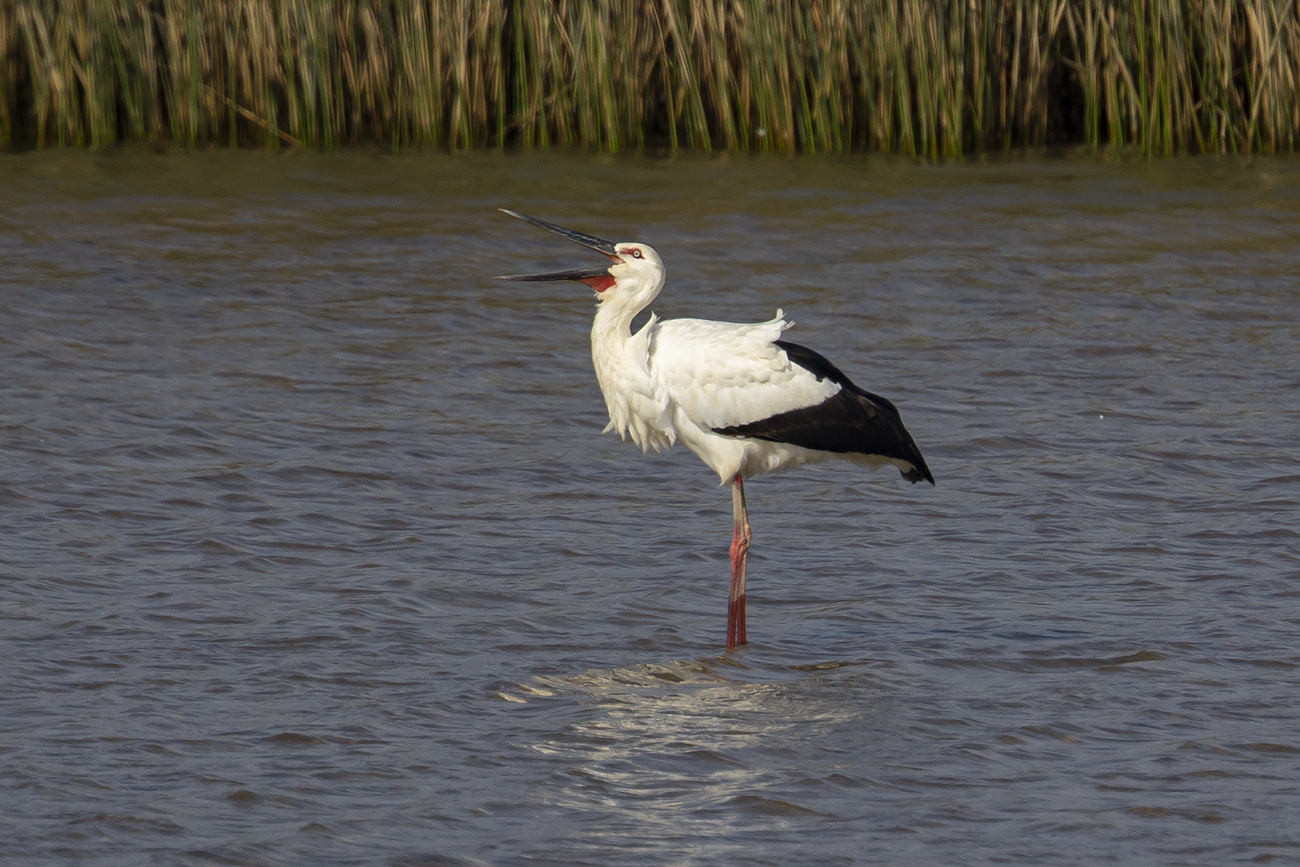
The pair of Oriental Storks stayed on and continues to show well at tower hide. I was there again one morning, hoping to get some photos in better light, although they were evidently further away than my previous visit, but the colours around their eyes and legs really show up well in the morning sunlight.


Oriental Stork

The towerhide was quite a decent spot to scan for raptors as well, many drifted past the hide including a very scruffy looking Eastern Buzzard. A pair of Greater Spotted Eagles showed well and circled back a few times at decent range, while two Eastern Imperial Eagles flew past at distant.

Eastern Buzzard


Greater Spotted Eagle

Eastern Imperial Eagle

Captain found a Rosy Starling at San Tin a few weeks back, I missed it twice while searching for it in the afternoon, turns out it really was a morning bird, as I finally saw it on my third visit, although it only showed briefly and did not give good photo opportunity, it was still a nice bird to see.

Rosy Starling

At my local patch the Tai Mei Tuk Catchwater, Speckled Piculets have been extremely vocal of late, I heard and saw up to four different individuals along there. The pair of Grey Bushchats have stayed on, they continued to show fairly well in the same area. During one of my early morning walks there I was treated to a low flying White-bellied Sea Eagle, the most majestic looking raptor in Hong Kong in my opinion.

Speckled Piculet

Grey Bushchat - female

White-bellied Sea Eagle

Out along the Ting Kok beach things remained much the same with a few Kentish Plovers and Greater Sand Plovers. A few Collared Crows foraged at close range, allowing some awesome full frame shots of this now vulnerable species. A better bird seen around the area was a single Brown Shrike.

Kentish Plover

Collared Crow

Brown Shrike