Showing posts with label Guangdong birding. Show all posts

Sunday, 2 June 2019

Quest for Silver Oriole

Silver Oriole - One of the star species of Guangdong's forests

The Silver Oriole is a relatively little known species that breeds in southern China and over winters in mainland South East Asia. It is listed as Endangered due to their limited range and heavy habitat loss of the tropical and sub-tropical forest throughout their range. They are probably one of the rarest breeding species in Guangdong, being rather elusive and not often seen. It is estimated that their global population is no more around 2000 individuals and decreasing.

I've been to Nanling in the past where they are most often recorded but failed to locate them. Last year having heard the news of a pair of Silver Orioles breeding at Liuxihe National Forest Park, I really wanted to give it a try this year. Sure enough, around mid May we got news that the pair had returned to the exact same location! Captain and Kei decided to go on the 25th of May, which I unfortunately had work. Luckily I was able to join another group organised by Principal Kwok. We wanted to get there as early as possible, so we met at 3am and transferred to the Huanggang Cross-boundary shuttle buses to go over the border, where we met with our driver at 4am. Weather was not looking particularly good, we could only hope that the heavy rain ease off by day break...

A quick nap in the van and we arrived at Liuxihe in just two and a half hours! We got off at a restaurant where the footpath up hill is located just to the back. Luckily for us, the weather did improve and we were able to remain dry for the rest of our journey!

Road next to hiking trail entrance

The location of the Silver Oriole is roughly at (23.742036, 113.843287), you can access the area through a footpath from behind the restaurant at the base of the hill, the hike is not particularly difficult, it took us just less than 40 minutes to get to the dam where the Silver Orioles are nesting.


Map of route taken

With most of us not getting any good sleep the night before, we were finding the path much tougher than it should have been, but we managed in the end. The footpath cuts through some beautiful bamboo forest, I was expecting Chinese Bamboo Partridges to be abundant here but surprisingly we got none in the morning.


Beautiful bamboo forest

We arrived at the dam just past 7am. Just as everyone were still getting their cameras ready, a saw a bird flew in from the right side, it had dark head, grey body and a red tail! It was surely a Silver Oriole! It flew in and perched on top of a bamboo where I was able to confirm it as a female due to the streaky underparts.

On top of the dam

Silver Oriole - Target achieved in less than a minute after arriving!

It was an incredible rush to be able to find our target species so quickly! A few minutes later the male also appeared and perched a little further away. This was the only perched view we had of the male during our time here.

Silver Oriole - male

For the next few hours we had good views of the female occasionally perching out on top of a bamboo, the male also flew past a few times. Views were not exactly close, even with my 500mm lens with 1.4x extender my image still needed a heavy crop, but Chun brought with him a scope, so we were able to get top views.


Silver Oriole - female

During our time there the adults never returned to the actual nest, which probably meant the young had already fledged and is somewhere nearby, sure enough Chun found the fledgling perched in one of the tall trees. The adults were feeding their young at the interval of around 15 - 20 minutes. Sightings of fledglings are not common, so we felt very fortunate to have been able to witness it! The adult brought in various of prey items, including caterpillars, cicadas and fruits.

Female with caterpillar

Female with fruit

Silver Oriole - recently fledged young

Other birds in the area while we waited included a few Slaty-backed Forktails and a juvenile Plumbeous Redstart, although both were quite far away. We also had a Black Eagle which only showed briefly, another fairly scarce species throughout Guangdong, Liuxihe is likely the most southerly limits of this species we known of so far.

Slaty-backed Forktail

Plumbeous Redstart - juvenile

Indochinese Yuhinas were quite abundant and we encountered several flocks. Black Bulbuls were also in good numbers as expected, along with Chestnut Bulbuls, Grey Treepies and Hair-crested Drongos.

Indochinese Yuhina

Black Bulbul

As we descended I spotted a Hill Prinia singing on an open branch, this is the closest encounter I've had with this species. Hill Prinias seemed pretty widespread in a few forest sites at Guangdong, including Gutian, but absent from Hong Kong. Whether this species can spread to Hong Kong remains to be seen.

Hill Prinia

Just before we got back to the restaurant, James spotted a flock of Black-throated Tits, a charismatic species of Guangdong's forests, relatively rare in Hong Kong where they are still seen occasionally. We had fairly good views of these cute birds.


Black-throated Tit

We had a brilliant lunch at the restaurant, while we were there we also noticed a House Swift nest just under the terrace, which provided very close up views, in Hong Kong this species usually nest on much taller buildings, so it's unusual to be able to see their nest up close.

House Swift - at nest

Our van departed at around 1pm, the way back to Shenzhen took slightly longer due to traffic, but we were able to get back to Shenzhen Huanggang Border at just around 4pm. It just shows such day trips from Hong Kong can be extremely productive, and open up a lot of relatively unexplored or under-birded areas in southern Guangdong. A huge thanks to Principal Kwok for organising the logistics for the trip, and it was extremely enjoyable with all the company of fellow birding friends.

Trip List:

  1. Spotted Dove (Streptopelia chinensis) 
  2. Asian Emerald Dove (Chalcophaps indica) 
  3. Large Hawk-Cuckoo (Hierococcyx sparverioides) 
  4. Lesser Cuckoo (Cuculus poliocephalus) 
  5. Indian Cuckoo (Cuculus micropterus) 
  6. Black Eagle (Ictinaetus malaiensis) 
  7. Collared Owlet (Glaucidium brodiei) 
  8. Dollarbird (Eurystomus orientalis) 
  9. Great Barbet (Psilopogon virens) 
  10. Chinese Barbet (Psilopogon faber) 
  11. Speckled Piculet (Picumnus innominatus) 
  12. Bay Woodpecker (Blythipicus pyrrhotis) 
  13. Grey-chinned Minivet (Pericrocotus solaris) 
  14. Scarlet Minivet (Pericrocotus speciosus) 
  15. Silver Oriole (Oriolus mellianus)  -  A pair feeding a recently fledged young
  16. Hair-crested Drongo (Dicrurus hottentottus) 
  17. Grey Treepie (Dendrocitta formosae) 
  18. Barn Swallow (Hirundo rustica) 
  19. Japanese Tit (Parus minor) 
  20. Black-throated Tit (Aegithalos concinnus) 
  21. Red-whiskered Bulbul (Pycnonotus jocosus) 
  22. Chinese Bulbul (Pycnonotus sinensis sinensis) 
  23. Black Bulbul (Hypsipetes leucocephalus) 
  24. Chestnut Bulbul (Hemixos castanonotus)  
  25. Common Tailorbird (Orthotomus sutorius) 
  26. Hill Prinia (Prinia superciliaris) 
  27. Indochinese Yuhina (Yuhina torqueola)  
  28. Swinhoe's White-eye  (Zosterops simplex)
  29. Rufous-capped Babbler (Cyanoderma ruficeps) 
  30. Streak-breasted Scimitar-Babbler (Pomatorhinus ruficollis) 
  31. Huet's Fulvetta (Alcippe hueti)  
  32. Chinese Hwamei (Garrulax canorus) 
  33. Oriental Magpie-Robin (Copsychus saularis) 
  34. Slaty-backed Forktail (Enicurus schistaceus) 
  35. Plumbeous Redstart (Phoenicurus fuliginosus) 
  36. Crested Myna (Acridotheres cristatellus) 
  37. Fork-tailed Sunbird (Aethopyga christinae) 
  38. Eurasian Tree Sparrow (Passer montanus) 

Wednesday, 5 December 2018

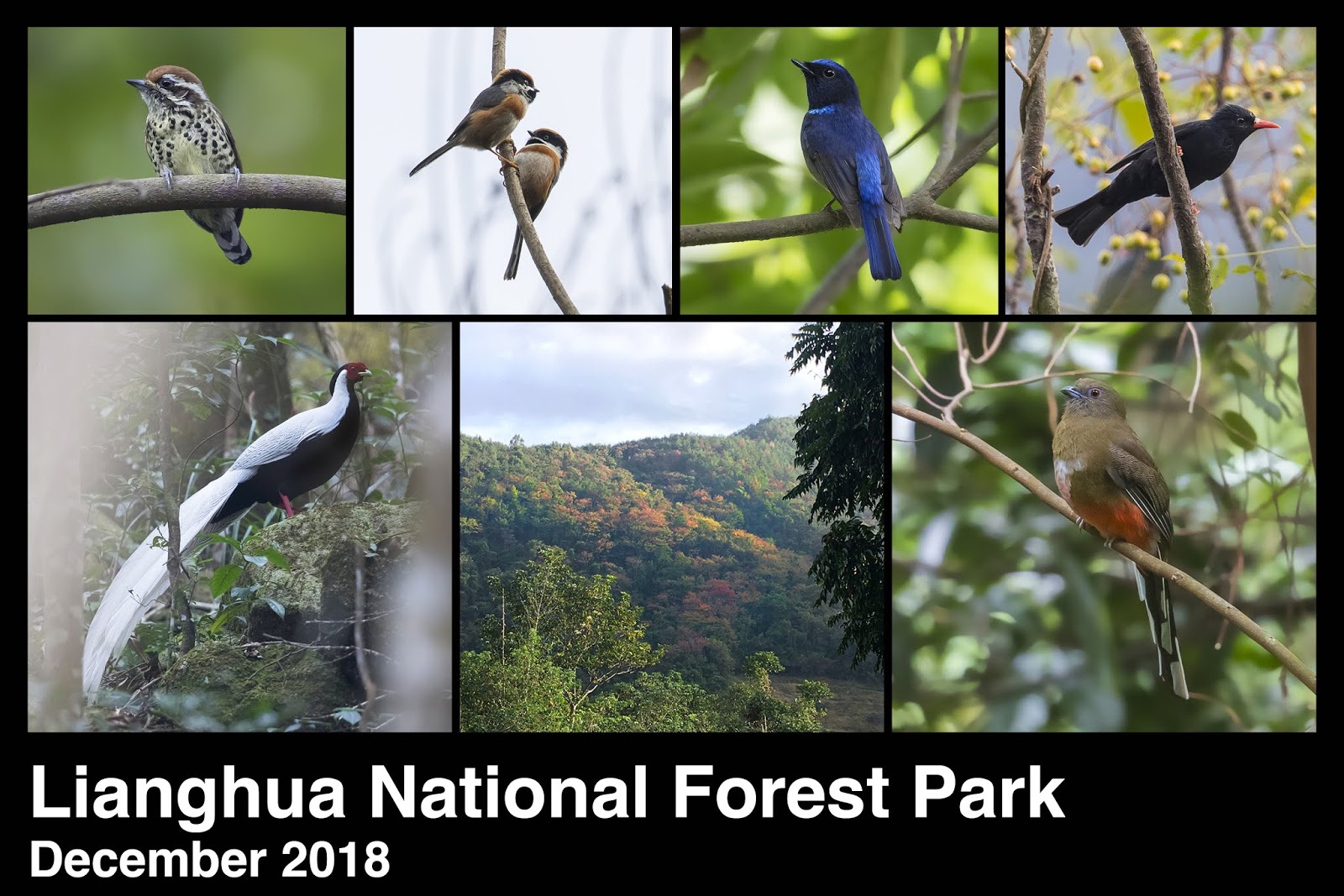
Lianghua National Forest Park - December 2018


Lianghua National Forest Park located near Huidong had became one of my favourite weekend birding destination in southern Guangdong ever since I first visited in October last year. The site forms a large patch of forested area east of Huidong along with the better known Gutian Natural Reserves. This site is just shy of 90km from HK, making it a perfect weekend getaway. Over the last few visits good birds such as Red-headed Trogon, Collared Owlet, Silver Pheasant, Small Niltava, Hill Prinia and Brown-breasted Flycatchers had kept our interest high.

The site is a popular tourist attraction during plum blossom season, otherwise it is fairly undisturbed throughout the year. Captain initially wanted to visit Dinghu Shan, but news of the site being closed off had us changing plans, and the thought of visiting Lianghua before the touristy season begin was tempting. So, Captain, Kei and I decided to give the site another try. We met on Friday evening and drove up to Huidong where we stayed a night before driving to the forest park early in the morning.

We woke up at 5:45am, bought breakfast at a 24 hours KFC next door and off we went. We arrived at the forest park before 7am. Cool morning breeze felt very 'autumny', and the red leaves looked the part as well. A flock of Black Bulbuls made an appearance near the main entrance, a few of them had handsome white heads, while a few were still in transition.

Views of Lianghua National Forest Park


Black Bulbul

A large bird wave went past, with Huet's Fulvetta being the predominant species, Scarlet Minivets were also frequently encountered throughout the day. Streak-breasted Scimitar Babblers were also found amongst the flock, although in much lower density.

Huet's Fulvetta

Scarlet Minivet - male

Streak-breasted Scimitar Babbler

A single Verditer Flycatcher was seen, this seems to be quite a regular species here, we saw a juvenile during our summer visit which indicates the possibility of breeding at this site. A Speckled Piculet was seen in the bird wave, we encountered up to 7 birds throughout the day, a clear demonstration of how common it is at Lianghua.

Verditer Flycatcher - male

Speckled Piculet

A few Buntings along the roadside made it tough for us, with a bit of patience we were able to get good views of one bird which turned out to be a Black-faced Bunting. Not quite what we were hoping for, but still not a bad record.

Black-faced Bunting - female

Things quietened down around mid-morning, but a flock of Black-throated Tits certainly kept it entertaining for us. We've not recorded this species at this site before, making this a nice addition to our site list. Orange-bellied Leafbirds were quite active throughout the day, making weird calls that confused us time after time...

Black-throated Tit - a new species to this site

Orange-bellied Leafbird - male

Small Niltava was recorded on our previous visit, so it wasn't a surprise when I heard several along the forest track. A male showed particularly well, posing front and back. This species is currently a rare winter visitor to Hong Kong, but seeing that it's status here at Lianghua is likely to be a fairly common resident, it seems logical that this species may colonise Hong Kong in the near future.


Small Niltava - male

We had an early lunch at a nearby restaurant and rested. After lunch, I suggested that we visit the area where we first saw a pair of Red-headed Trogons last year. Everything was quiet, but I noticed a previously hidden trail that goes up the river valley which looked promising. The trail went through some good habitat along the stream, looking like perfect Trogon territory!


Trogon territory...

Sure enough, Captain noticed a Trogon like bird in the distance. The bird later called which confirmed his suspicion, however it remained out of view. A burst of playback brought it closer, and with a little patience the bird finally showed! A female Red-headed Trogon gave nice perched views, although it was very shy, fluttering off in the slightest movements. We've recorded this species on nearly every trip, which indicates a healthy population at this site.


Red-headed Trogon - female

We drove further uphill, but things were generally quiet. Kei was feeling slightly drowsy so Captain and I strolled along the main road as he napped. As we were walking along I noticed two white birds upslope, it was pretty clear what they were, Silver Pheasants! I grabbed my camera and began taking photographs, Captain soon realised what I was looking at and soon joined in. There were at least 3 males and 4 females in that flock, all obscured by branches. Suddenly, an adult male hopped up onto a rock and looked at us! It's silvery white tail cascade down the rock, we were both in awe. The flock soon scuttered upslope. Just as they disappeared behind the thick foliages, Kei appeared in the car, as Captain and I laughed our heads off...Kei was not at all pleased that he dipped on this encounter.

Silver Pheasant - one of the stunning looking male

The drive back to Shenzhen was not particularly eventful, it took longer than expected as we hit some weekend traffic. With a list of some high quality birds, Lianghua always seems to deliver. There was some construction works being done along the lower sections of the park, whether that quiet status of this park will change in the near future remains to be seen. At the mean time, I can't wait until I return again!

Monday, 16 July 2018

Day Trip Surprises - Lianghua National Forest Park, Huidong

Some of our assorted surprises of the day

I visited Lianghua National Forest Park near Gutian with Captain in October last year, this forested site is near Huidong, a mere two hours drive from the Futian border crossing in Shenzhen. After our discovery that Red-headed Trogons are present at this site, Captain and the gang had returned a few more times, although I was unable to join them on those trips. So, when Captain suggested we visit again, I was more than happy to tag along. He also invited Mr. Kwok and his son James, along with brother Kei, the five of us met over the border early morning for a quick breakfast before the drive towards Lianghua.

We hit a little bit of traffic outside of Shenzhen but made up in good time, arriving at the park gate at just around 11:00am. Since it was a bit early for lunch we decided to do some birding first. We drove along the country road 008 and made a slight detour on foot just after the warden's dorms to explore a stretch of road we never birded before. A few Streak-breasted Scimitar Babblers caught our attention, but Captain saw a bluish bird, to our surprise it turned out to be a juvenile Verditer Flycatcher, clearly this species breeds here. Further along the track we added a pair of Crested Goshawks which circled fairly low. Another interesting find was a rather large orchid that should be Robiquetia succisa, it was flowering which certainly caught my attention! It wasn't until it started pouring down that we had to turn around to head back to the car.

Verditer Flycatcher - juvenile

Crested Goshawk

Robiquetia succisa

It cleared up after the brief shower, although things were pretty quiet during mid-day, so we decided to head for lunch. At the restaurant there were plenty of butterflies to keep me entertained before the food was served. An Asian Comma landed on brother Kei and came in and out of the restaurant, this is a rather rare species in Hong Kong. There were other species such as Common Jestor, Angled Castor and the Common Rose which I am more familiar with.

Friendly Asian Comma with brother Kei

Asian Comma

Common Jestor

Angled Castor

Common Rose

A Dragonfly species I don't recognised circled outside the window. There were also a lot of Brown Forest Skinks basking in the sun after the rain. The only bird I found outside the restaurant was a single juvenile Hainan Blue Flycatcher.

Dragonfly sp.

Brown Forest Skink

Hainan Blue Flycatcher - juvenile

After lunch and a little rest we headed towards the upper plum plantations, Chinese Barbets called constantly although none wanted to show. I also heard a Speckled Piculet here, but again it did not make an appearance. The only bird that gave us some excitement were up to three Hill Prinias which hopped out briefly after a burst of playback. This species was unrecorded here until Captain and the guys saw one singing during spring, it seems that there's a fairly healthy population here. Lianghua's birds are now the closest known population to Hong Kong.

Hill Prinia

Other butterflies found here includes the Yellow Coster which is quite rare in Hong Kong, Common Evening Brown and a Magpie Flat. A huge robber fly of the genus Microstylum was found perched in the middle of the road, perhaps to dry itself from the rain. An Indian Forest Skink was also spotted, although it got some rather unusual side markings which I have never seen in any individuals in Hong Kong.


Yellow Coster

Common Evening Brown

Magpie Flat

Microstylum sp.

Indian Forest Skink

We caught sight of a Collared Finchbill further up, although it was too quick for a photo. A wet patch next to the road had a lot of butterflies puddling, including a very nice looking Glassy Bluebottle, which is rare in Hong Kong, a beautiful Chinese Peacock was also present, while a White Dragontail made quick stops each time which made photographing it a real challenge, a common yet beautiful Purple Sapphire allowed very close views.

Glassy Bluebottle


Chinese Peacock


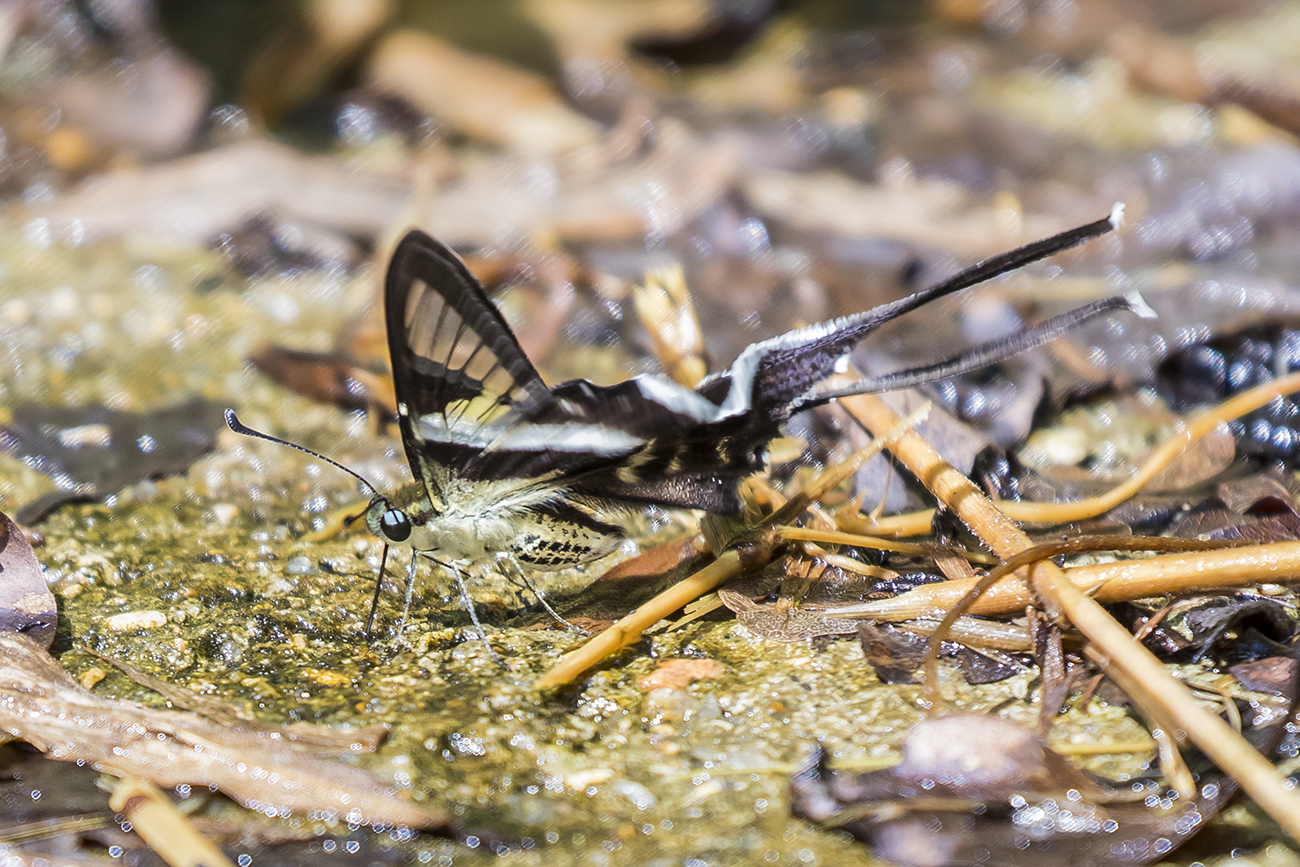
White Dragontail


Purple Sapphire

I was very surprised when the high-pitched song of the Small Niltava was heard through the trees, we soon saw up to three individuals; two males and one female. They were lightning quick, darting around in the shades of the trees, luckily the male perched long enough for me to grab a record shot. This is a new record for this site and certainly an interesting summer record, Small Niltava is often considered a winter visitor this far south, so perhaps it is possible that this species may breed in Hong Kong in the near future.

Small Niltava - male

We also heard a Red-headed Trogon calling nearby, however it never showed itself. A Mandarinia regalis was spotted, it had not been recorded in Hong Kong before, a butterfly species that have a high potential to make it onto our list in the future. A Leucauge sp. with beautiful green belly as well as a Chiasmia monticolaria provided a great macro opportunities.

Mandarinia regalis

Leucauge sp.

Chiasmia monticolaria

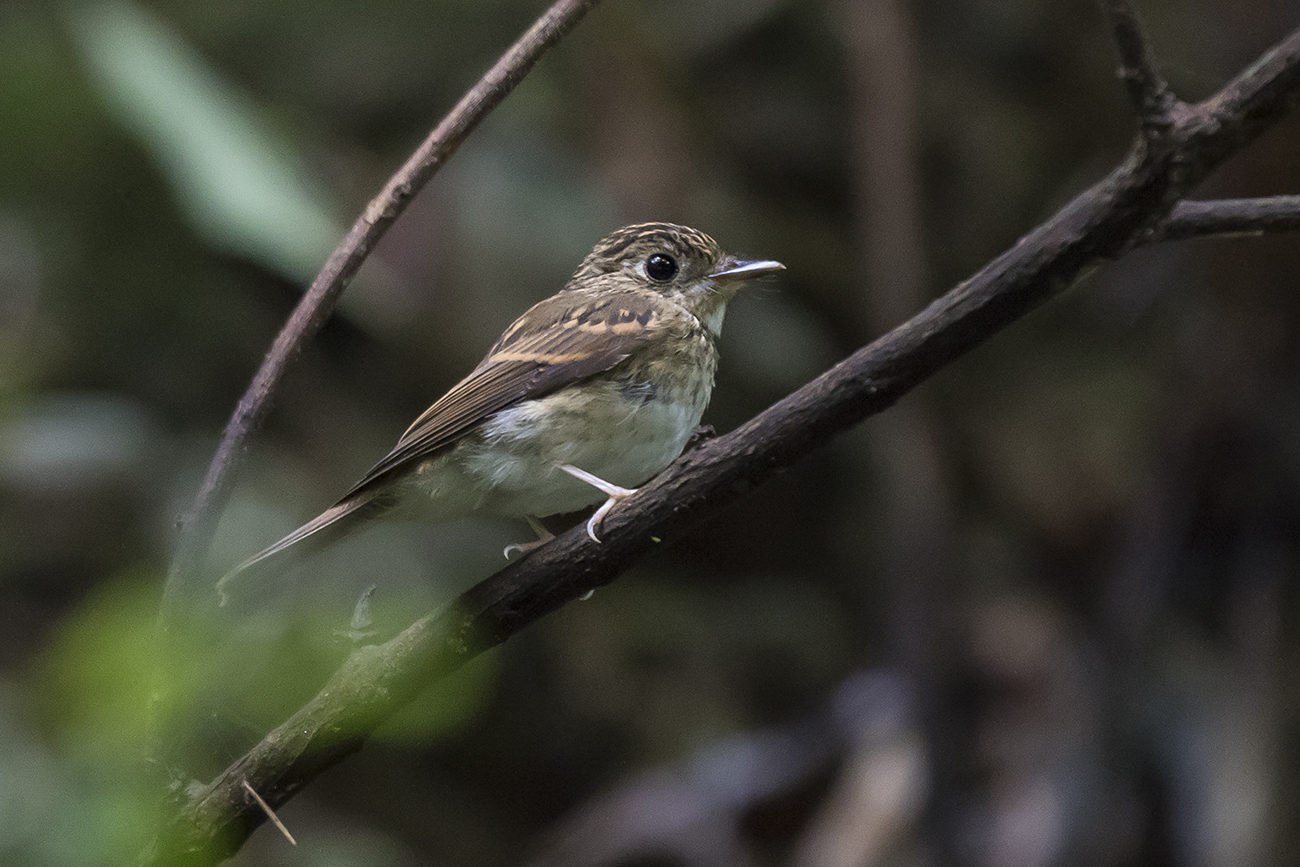
We got to the barracks which was as far as we could get to the summit, the view overlooking the valley was quite spectacular, it really gives you a sense how vast this mountain system actually is. On the way down Captain suggested we try the stretch of road that branch out from the temple, it is quite well paved but obviously not as often used as plants were evidently slightly overgrown. Here, we spotted two Brown-breasted Flycatchers, one of which was a juvenile, this was our forth Flycatcher species of the day! A few Orange-headed Thrushes made an appearance, at least one of which was a  recently fledged juvenile.


Brown-breasted Flycatcher - juvenile

Orange-headed Thrush - juvenile

Late afternoon is a good time for pheasants or partridges, as they are often active before dusk. Sure enough, I spotted a Silver Pheasant on the right side of the road! Brother Kei stopped the car just in time as the nice looking male stopped briefly to look at us before disappearing down the slope. Silver Pheasants are known to occur at Luo Fu Shan as well as many other forest reserves, although seeing them well is another matter. It is almost certain that this beautiful species once roamed the forests of Hong Kong before the extensive deforestation. It is certainly a very charismatic species of Guangdong's forests!

Silver Pheasant - male

After dinner we stayed on a little longer hoping to find some owls, we got none calling, although Brown Wood Owls, Collared Owlets as well as Mountain Scops Owls had all been heard here before. We were also hoping for some herps, disappointingly we only spotted a Many-banded Krait which slithered away before I can even get a proper look, as well as a Brown Wood Frog, a more interesting find is a single Hong Kong Cascade Frog, which was previously thought to be endemic to Hong Kong, although herpetologists later found a population here at Gutian.

Brown Wood Frog

Hong Kong Cascade Frog

As Mr. Kwok and James decided to stay on for the night, brother Kei, Captain and I dropped them off at in town and drove back to Hong Kong. It was already 11:30pm when we got to the border, but we managed to pull off a true day trip. Overall I would say it was a day pretty well spent, considering the half day birding itinerary, we picked up quite a few local specialities plus a few unexpected species in July including the Verditer Flycatcher and Small Niltava. Lianghua Gutian had continued to deliver great birds and surprised us every time, who knows, perhaps we will get a Silver Oriole here next time!